Vintage-inspired diamond cuts continue to generate interest across the jewelry market, particularly cushion-style diamonds with antique characteristics. Two cuts that are frequently discussed are the antique cushion and the old mine cut. While they share a similar outline and historical connection, their proportions, facet patterns, and visual performance differ in noticeable ways.
The old mine cut represents an early stage of diamond cutting, created by hand before modern precision tools. The antique cushion cut developed later as techniques improved and proportions became more balanced. Because of this evolution, the terms are sometimes used interchangeably in listings and discussions.
Understanding these differences helps when evaluating cushion-style diamonds and identifying the structural traits that define each cut.
What Is an Old Mine Cut Diamond?
The Old Mine Cut (OMC) is considered the direct ancestor of the modern cushion brilliant. Its name comes from the historic diamond mines of Brazil and India, which supplied most of the world’s diamonds before major discoveries in South Africa in the late 1800s. These stones were shaped entirely by hand, with cutters aiming to retain as much weight as possible from the rough crystal.
Because they were created before electric lighting, their proportions were designed to perform well under softer light, such as candlelight. This is why the old mine cut is sometimes called the “candlelight cut.” Instead of sharp sparkle, the facets produce broader flashes of light.
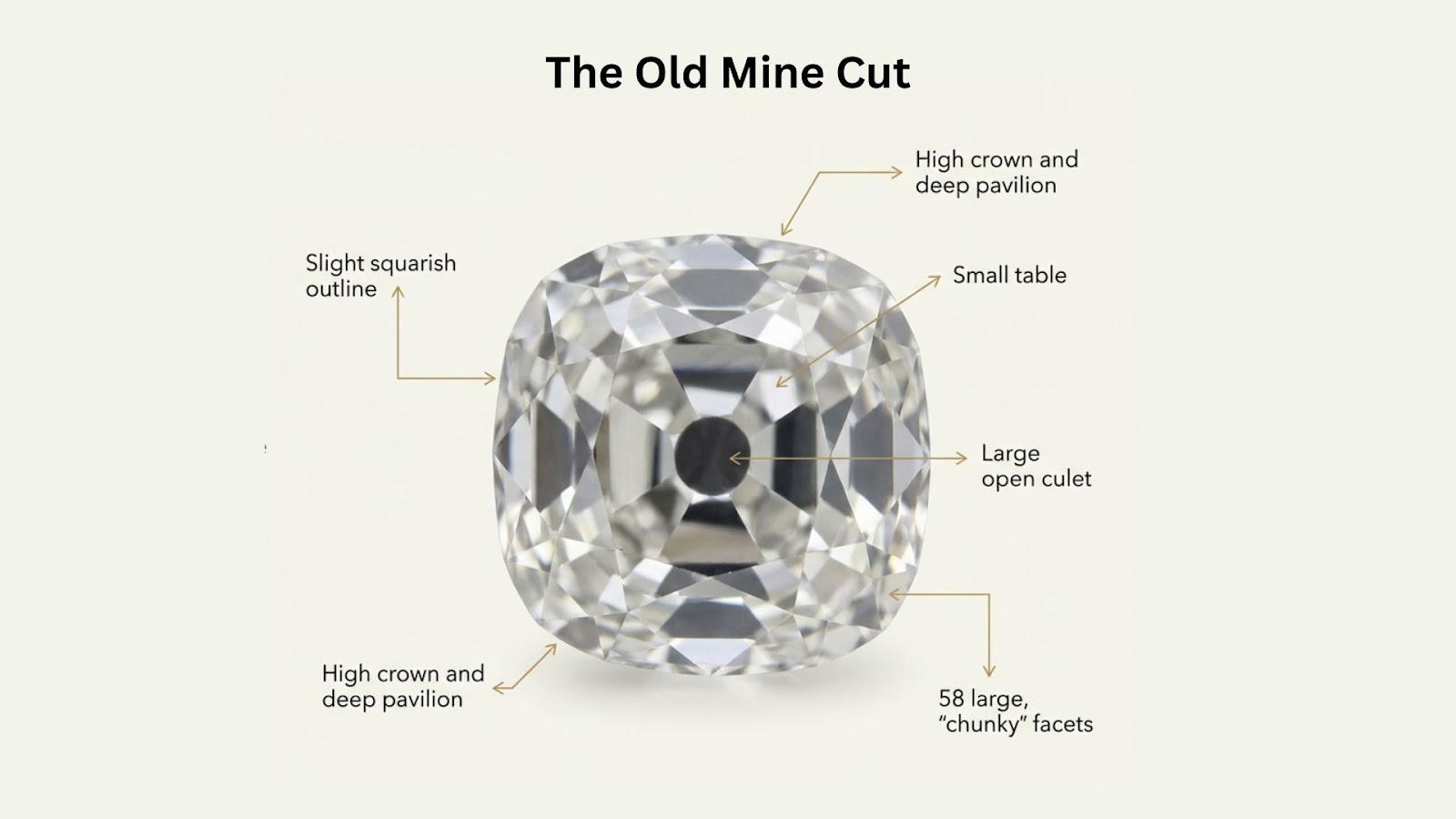
Old mine cut diamonds are typically recognized by:
- Slight squarish cushion outline
- High crown and deep pavilion
- Small table
- Large open culet
- Chunky facets
Each stone can look slightly different because it was crafted by hand, giving them a distinctive character associated with Georgian and Victorian era jewelry.
What Is an Antique Cushion Cut Diamond?
An antique cushion cut diamond represents a transitional stage in diamond cutting that developed in the late 1800s as techniques improved. Cutters began refining earlier styles like the old mine cut by improving symmetry and facet alignment while keeping the classic cushion outline.
The term antique cushion is often used as a stylistic description rather than a strict technical category. It generally refers to diamonds that retain vintage elements such as chunky facets and a visible culet. However, it may not meet the exact measurements required to be classified as old mine cuts.
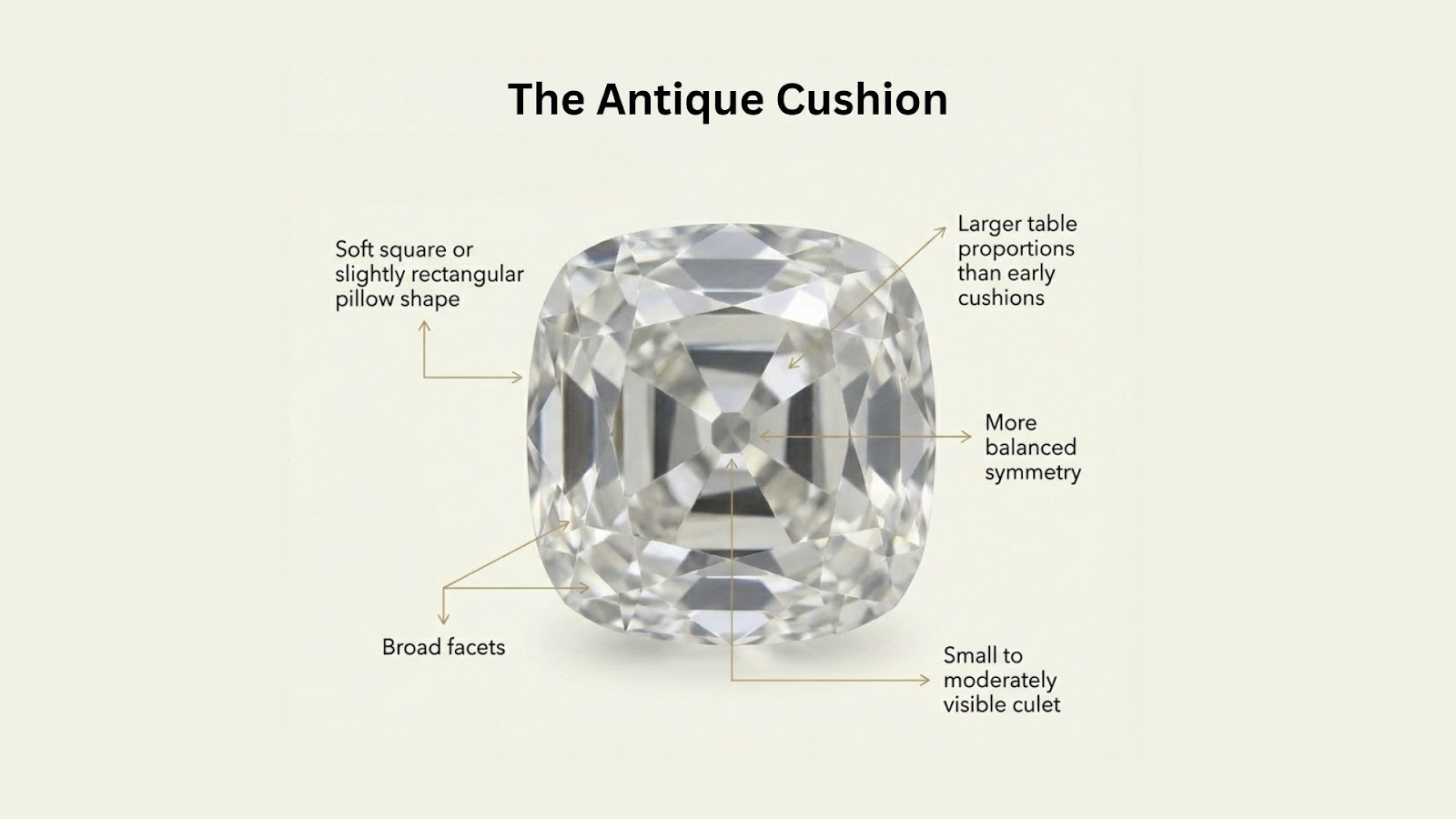
Typical characteristics include:
- A soft, square or slightly rectangular pillow shape
- Larger table proportions than earlier cushion styles
- Broad facets that create wider flashes of light
- More balanced symmetry
- A small to moderately visible culet
These features place antique cushion cuts between early antique diamonds and modern cushion cuts, combining vintage character with more refined proportions.
Antique Cushion vs Old Mine Cut
While both represent early stages of diamond cutting before modern precision techniques, they belong to slightly different periods in the evolution of cushion-style diamonds. The old mine cut is generally considered the earlier style, while the antique cushion reflects a more refined stage of the same design tradition.
|
Feature |
Old Mine Cut (OMC) |
Antique Cushion Cut |
|
Era |
Early–mid 1800s (1830s–1890s) |
Late 1800s–early 1900s |
|
Shape |
Squarish with rounded corners |
Square/rectangular (1:1–1:1.2) |
|
Facet Pattern |
40–58 irregular, large/chunky |
50–58 broader, more aligned |
|
Table Size |
Very small (30–53%, avg. ~45%) |
Small–medium (45–60%) |
|
Culet Size |
Large, open/off-center (fisheye) |
Moderate, often centered |
|
Sparkle Style |
Broad, slow fire flashes |
Broad fire, slightly consistent |
|
Symmetry |
Asymmetrical (hand-cut) |
Improved balance |
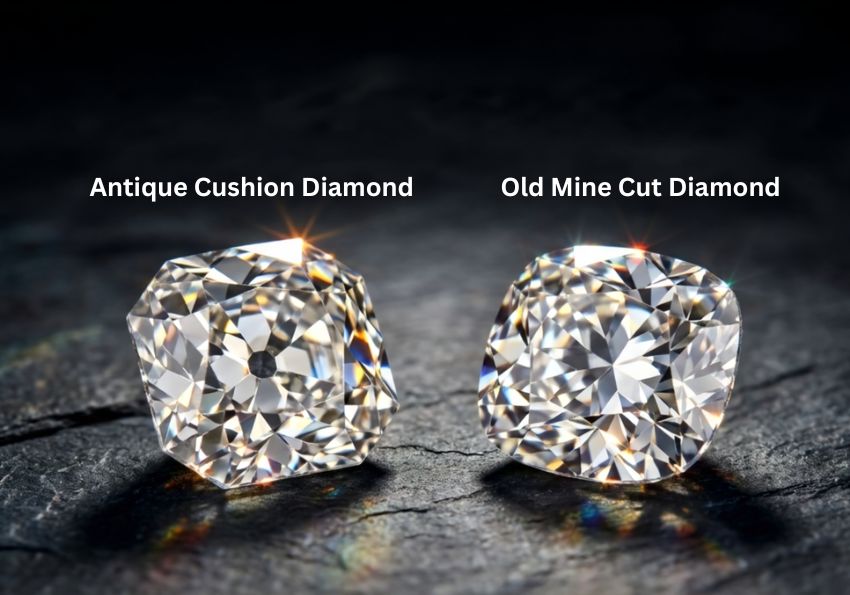
While these technical characteristics provide a clear overview of the two cuts, subtle visual differences in outline, faceting, and light performance often make the distinction more noticeable when the diamonds are viewed side by side.
Outline and Ratio
Old mine cuts often appear slightly irregular or squarish because early cutters followed the natural shape of the rough crystal. Antique cushion cuts usually look more balanced and may appear slightly elongated, sometimes around ratios of 1:1.1 to 1:1.2.
Facet Pattern
Old mine cuts feature fewer, larger facets, creating a bold, blocky appearance. Antique cushions also have broader facets but tend to look more aligned and refined.
Light Performance
Both cuts produce broad flashes of light rather than the scattered sparkle seen in many modern cushions. Old mine cuts show slower flashes, while antique cushions often appear slightly brighter.
Culet Visibility
Old mine cuts typically have a large open culet that may be visible from the top. Antique cushions usually have a smaller culet that is less noticeable.
These subtle visual differences help distinguish the two cuts when comparing vintage-style diamonds.
Why These Diamond Cuts Are Often Confused?
One of the primary reasons for confusion is that every Old Mine Cut is technically an antique cushion-shaped diamond. Historically, the OMC was the original way to cut this shape, making the terms virtually synonymous for centuries.
Furthermore, many jewelers and online retailers use the names interchangeably when describing any diamond with vintage faceting patterns.
Another layer of complexity comes from gemological lab reports. A diamond may visually appear to be an Old Mine Cut, but if its table percentage is even 1% higher than a laboratory's strict measurement limit (like the GIA's 53% threshold), it will be labeled as an Antique Cushion.
For the modern buyer, this means visual preference often matters more than the specific "paperwork" label.
Choosing Between Antique Cushion and Old Mine Cut Diamonds
Choosing between these two comes down to whether you value historical rarity or refined aesthetics:
Choose an Old Mine Cut if:
- Preference is for a genuine antique diamond with strong historical character
- Appreciation exists for the natural asymmetry of hand-cut stones
- Broad, softer flashes of light associated with vintage diamonds are appealing
- Rarity and individuality matter more than perfect symmetry
Choose an Antique Cushion if:
- The vintage look is appealing, but with better balance and symmetry
- A cleaner, more standardized cushion outline is preferred
- Compatibility with modern or vintage-style settings is important
- Slightly elongated proportions that can appear larger on the finger are desirable
Both cuts are excellent at hiding color tints and imperfections due to their facet patterns. Experts recommend opting for grades of J color or above and SI2 clarity or above for the best value.
Final Thoughts
Both the Old Mine Cut and the Antique Cushion offer a distinctive take on cushion-style diamonds. Each reflects a different stage in the evolution of diamond cutting, with Old Mine Cuts known for their handcrafted character and softer, broader flashes of light.
Antique Cushion cuts carry that vintage look forward while introducing more balanced proportions and a cleaner outline.
When comparing these cuts, proportions on a report provide guidance, but the visual appearance of the diamond is just as important. Looking closely at the facets, outline, and overall presence of the stone often reveals the real difference.
Solitaire Lab Diamond showcases detailed imagery and views of each stone, making it easier to evaluate structure, sparkle, and craftsmanship before choosing the right diamond.
Browse our wide range of lab-grown diamonds.
FAQs
What is the difference between antique and regular cushion cuts?
Antique cushion cuts feature larger facets, softer symmetry, and often a visible culet, reflecting earlier hand-cut techniques. Whereas regular or modern cushion cuts are more symmetrical, precisely cut, and designed to maximize brilliance and consistent sparkle.
Does a cushion cut diamond look bigger?
Yes, a cushion cut diamond can appear larger depending on its proportions. Elongated shapes and wider tables spread more across the finger, which can make the diamond look slightly bigger than some other cuts of the same carat weight.
Are cushion cut rings out of style?
No, cushion cut rings remain popular. Their soft shape, vintage appeal, and balanced brilliance keep them in demand for both classic and modern engagement ring styles.
Which cut sparkles more?
Modern cushion cuts maximize white light brilliance. However, antique styles like OMC and Antique Cushion maximize "fire" as the rainbow flashes of light. The Antique Cushion typically appears slightly livelier than the softer OMC.
Why do antique diamonds have large culets?
Historically, the culet was cut to prevent the bottom point from chipping and to help the diamond perform better in the limited lighting of the 18th and 19th centuries.