Choosing between a brilliant cut and a step cut diamond is not just a question of which one looks better. It is a sourcing commitment that affects which clarity grades you carry, how you evaluate stones remotely, and which settings you recommend.
The brilliant cut vs. step cut diamond decision shapes your inventory strategy more than most retailers realize, especially when comparing step-cut diamonds across different shapes and specifications.
This guide covers faceting differences, GIA grading implications, clarity and color thresholds, setting compatibility, and margin considerations across both cut styles.
What is a Brilliant Cut diamond?
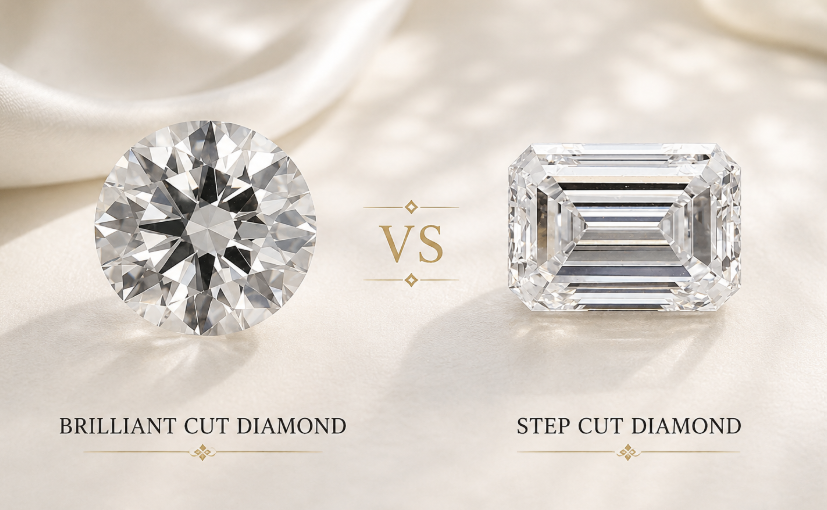
A brilliant cut diamond uses a facet arrangement designed to maximize how the diamond reflects light, creating the brightness, fire, and scintillation associated with diamond sparkle. The classic round brilliant cut has 57 or 58 facets, while brilliant-style faceting is also used in other diamond shapes. Because shape and cutting style are not the same thing, a diamond's outline and facet arrangement should be evaluated separately.
For natural D-to-Z diamonds, GIA provides an overall cut grade only for eligible standard round brilliant diamonds. Fancy-shaped diamonds are instead described using factors such as proportions, symmetry, and polish, along with their individual face-up appearance. That distinction matters at the sourcing stage because it changes how you evaluate and compare stones from different suppliers.
Brilliant cuts can make some inclusions and body color less noticeable because their facet pattern creates more visual movement and light return. However, the right clarity and color grade still depend on the individual diamond, its size, proportions, and the buyer's expectations.
What is a Step Cut diamond?
A step cut diamond features long, linear facets arranged in parallel or concentric rows, creating the broad flashes and "hall of mirrors" effect associated with this cutting style. Emerald cut diamonds and Asscher cuts are the best-known examples, while baguette, tapered baguette, and carré diamonds also use step-cut faceting.
Compared with brilliant cuts, step cuts tend to show larger, more defined reflections rather than a pattern of rapid sparkle.
GIA does not assign an overall cut grade to step-cut shapes. Instead, buyers and trade professionals need to evaluate factors such as proportions, symmetry, polish, facet arrangement, and face-up appearance alongside the grading report. Because there is no single overall GIA cut grade for these shapes, visual evaluation becomes especially important when comparing step-cut diamonds.
Step cuts can make inclusions and body color easier to see because their broad, open facets provide less visual distraction. As a result, many buyers prefer higher clarity and color grades for step-cut center stones, although the right specification depends on the individual diamond.
Brilliant Cut vs Step Cut diamond: Key differences
Both faceting families produce beautiful diamonds, but they perform differently across every sourcing and retail variable that matters. Here is how they compare.
|
Factor |
Brilliant Cut |
Step Cut |
|
Look |
Bright, lively sparkle |
Clean, mirror-like flashes |
|
Facets |
Radiating brilliant-style facet pattern |
Long, generally parallel step facets |
|
Light |
More sparkle + fire |
Broader, slower flashes |
|
Clarity |
Inclusions may be less noticeable |
Inclusions can be easier to see |
|
Color |
Color may be less noticeable |
Color can be more noticeable |
|
GIA Cut Grade |
Yes, for standard round brilliants |
No overall GIA cut grade |
|
Popular diamond shapes |
Round, oval, pear, radiant, cushion |
Emerald, Asscher, baguette |
|
Best for |
Versatile, designs with brilliant sparkle |
Geometric, understated designs |
1. Facet structure and light behavior
Brilliant-cut diamonds are designed to create enhanced sparkle through strong brightness, fire, and scintillation through the arrangement of the diamond's facets and its proportions. Their smaller, more numerous triangular facets generally create a pattern of lively sparkle compared with the broader flashes of step cuts.
When comparing diamonds with the same carat weight, their different facet structures can also affect how large they appear face-up.
Step cut diamonds produce broader, more defined light reflection because of their long, linear facets. Rather than the rapid sparkle associated with brilliant cuts, they create the "hall of mirrors" effect that gives emerald and Asscher cuts their distinctive appearance.
2. Clarity and color grading differences
Brilliant cuts can make certain inclusions and body color less noticeable because their facet pattern creates more visual movement. An SI1 or SI2 diamond may be eye-clean in some cases, but the inclusion's size, type, location, and the individual diamond's appearance matter more than the grade alone.
Step cut diamonds require closer visual inspection because their larger, open facets can make inclusions and body color easier to see. Many buyers prefer VS2 or higher for step-cut center stones because inclusions can be easier to see through the broad facets.
Similarly, higher color grades may be preferred when a bright, white appearance is important, particularly in platinum or white-gold settings. These are buying preferences rather than fixed requirements, so the individual diamond should always be evaluated.
3. GIA grading implications
The standard round brilliant is the only diamond shape that currently receives an overall GIA cut grade under GIA's standard D-to-Z diamond grading system. For a deeper look at this faceting style, see our guide to round brilliant diamonds.
That grade provides a useful standardized reference for comparing round brilliant diamonds, but the grading report should still be considered alongside the diamond's actual appearance.
Fancy shapes, including emerald and Asscher cuts, do not receive an overall GIA diamond cut grade. Instead, buyers should review the grading report for details such as color, clarity, symmetry, and polish while also evaluating the stone's proportions, facet pattern, and face-up appearance. For step-cut center stones in particular, photos or video can be useful when evaluating a stone remotely.
These fancy cuts can have a rectangular or square shape, depending on the diamond style.
Which diamond cut is better for your inventory?
Brilliant and step cuts can serve different roles in a jewelry collection. Brilliant cuts offer broad consumer appeal and flexibility across several unique diamond shapes, sizes, and specifications. Round brilliant diamonds in particular have a long-established place in engagement rings and fine jewelry.
Step cuts appeal to buyers looking for clean lines and geometry, broad flashes, and a more understated style. Because their broad facets can make color, clarity characteristics, and facet patterns easier to see, selecting individual stones carefully is particularly important.
For lab-grown inventory, availability and pricing can vary by supplier, shape, carat weight, size, and specification. Rather than assuming one cutting style is more profitable, retailers should compare acquisition cost, expected demand, available specifications, and turnover when deciding which styles to stock.
Best settings for Brilliant cut and Step cut diamonds
Setting choice connects directly to faceting style, and understanding this connection helps you advise retail clients more confidently and reduces the risk of a setting that works against the stone.
Settings for Brilliant cut diamonds
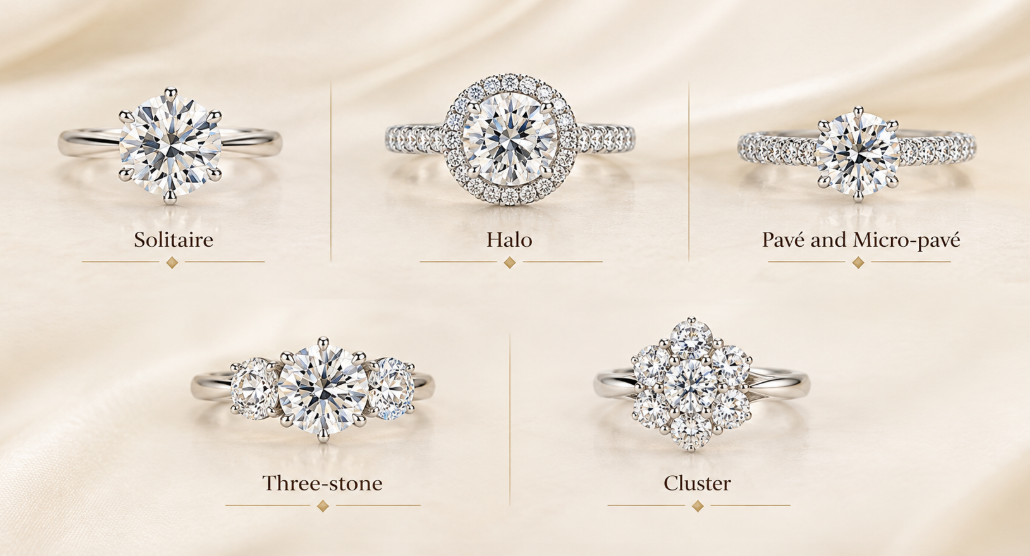
Brilliant cut diamonds are versatile and work well with a wide range of ring settings. The right choice depends on the diamond's shape, proportions, design style, and the amount of protection and visibility the setting provides.
- Solitaire: A classic choice for a diamond ring with a brilliant-cut center stone. Four- or six-prong designs keep the center diamond prominently visible while providing security.
- Halo: Surrounding pavé diamonds amplify the center stone's sparkle and increase the overall visual size of the piece.
- Pavé and micro-pavé: Brilliant-cut accent stones add additional sparkle along the band and can complement the center stone's faceting style.
- Three-stone: Brilliant-cut side stones (oval cut, pear cut, or round) complement a brilliant cut center without competing visually.
- Cluster settings: Multiple brilliant-cut diamonds arranged together create a combined sparkle effect that suits fashion jewelry and statement pieces.
Settings for Step cut diamonds
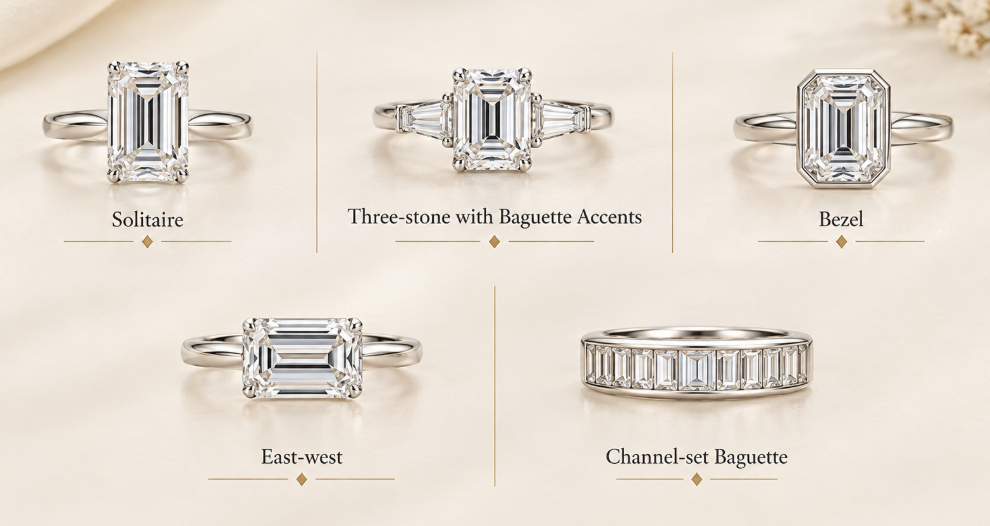
Step-cut diamonds often look best in settings that complement their clean geometry and broad flashes rather than compete with them. The right setting also depends on the diamond's shape, proportions, corner design, and the level of protection desired.
- Solitaire: A classic choice for emerald and Asscher center stones because it keeps the diamond's outline and facet pattern prominent.
- Three-stone with baguette accents: Baguette side stones reinforce the geometric character of a step-cut center and create a strong look inspired by the Art Deco era.
- Bezel settings: A bezel can complement the emerald cut's rectangular shape and outline and pointed corners while providing additional protection around the stone's perimeter.
- East-west settings: Rotating an emerald cut 90 degrees creates a contemporary look while preserving the stone's classic step-cut faceting.
- Channel-set baguette arrangements: Baguette cut accent stones in channel settings suit both engagement rings and fine jewelry pieces where the geometric lines of the step cut are the design priority.
Conclusion
Brilliant cuts can offer broader consumer appeal and flexibility across different shapes and specifications. Step cuts appeal to buyers who prefer geometric lines, broad flashes, and a more understated look.
For retailers, the better choice depends on customer demand, sourcing availability, acquisition cost, and the specifications that make sense for the business.
Understanding both faceting styles can help retailers have more specific conversations with clients, evaluate stones more deliberately, and recommend settings that complement the diamond's shape and appearance.
Lab-grown diamonds can provide access to a broad range of shapes, sizes, and specifications, but availability and pricing can vary by supplier and inventory.
If you're sourcing brilliant-cut or step-cut lab-grown diamonds, explore Solitaire Lab Diamond's inventory of certified stones.
Frequently asked questions
1. Does GIA assign a cut grade to step cut diamonds?
No. GIA does not assign an overall cut grade to step-cut shapes. The grading report provides information such as color, clarity, polish, and symmetry, but buyers should also evaluate the stone's proportions, facet pattern, and face-up appearance.
2. Can brilliant and step cut diamonds be combined in the same piece?
Yes, and this is a popular design approach in custom and fine jewelry. A step-cut center stone flanked by brilliant-cut side stones, or a brilliant-cut center with baguette accent stones, creates a deliberate contrast between the two light behaviors that many buyers find more interesting than a single faceting style throughout.
3. Are step cut lab-grown diamonds certified the same way as natural ones?
Not necessarily. Grading depends on the laboratory issuing the report. IGI uses the 4Cs for lab-grown diamonds and offers cut grading for fancy shapes, while GIA's current system uses Premium or Standard assessments for eligible lab-grown diamonds. GIA's overall cut grade applies to round brilliant diamonds, not fancy shapes.
Resources: