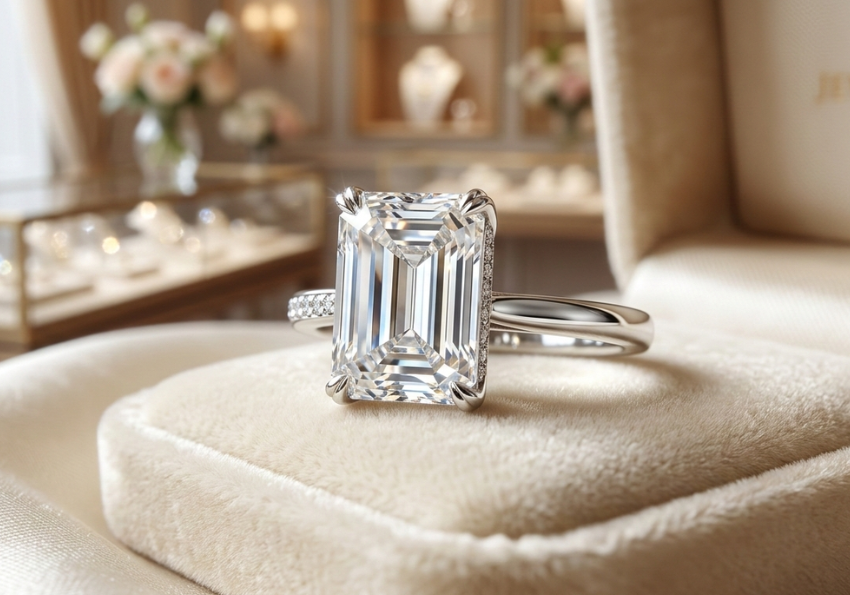
If you are drawn to diamonds that combine architectural elegance with strategic value, the emerald cut is an ideal choice. Its elongated rectangular shape maximizes surface area, often making it appear larger face-up than round diamonds of the same carat weight. Instead of intense sparkle, this step-cut creates a captivating "hall-of-mirrors" effect, with broad flashes of light that highlight the diamond's internal clarity.
Popularized during the Art Deco era, the emerald cut is closely associated with old-world Hollywood glamour and royalty. From Grace Kelly's iconic 10.48-carat Cartier emerald-cut diamond engagement ring to modern pieces worn by Beyoncé and Amal Clooney, the emerald cut continues to embody timeless elegance and understated luxury.
This guide explores the technical details of the emerald cut, its performance in different lighting conditions, and the key benchmarks for selecting a high-quality stone.
What is an Emerald Cut Diamond?
An emerald cut diamond is a rectangular or square step-cut diamond with long, parallel facets. Known for its clean lines and symmetrical structure, it offers a sophisticated, elegant appearance. The emerald cut diamond features a broad, open table, which allows for a distinctive play of light, often referred to as the "hall-of-mirrors" effect.
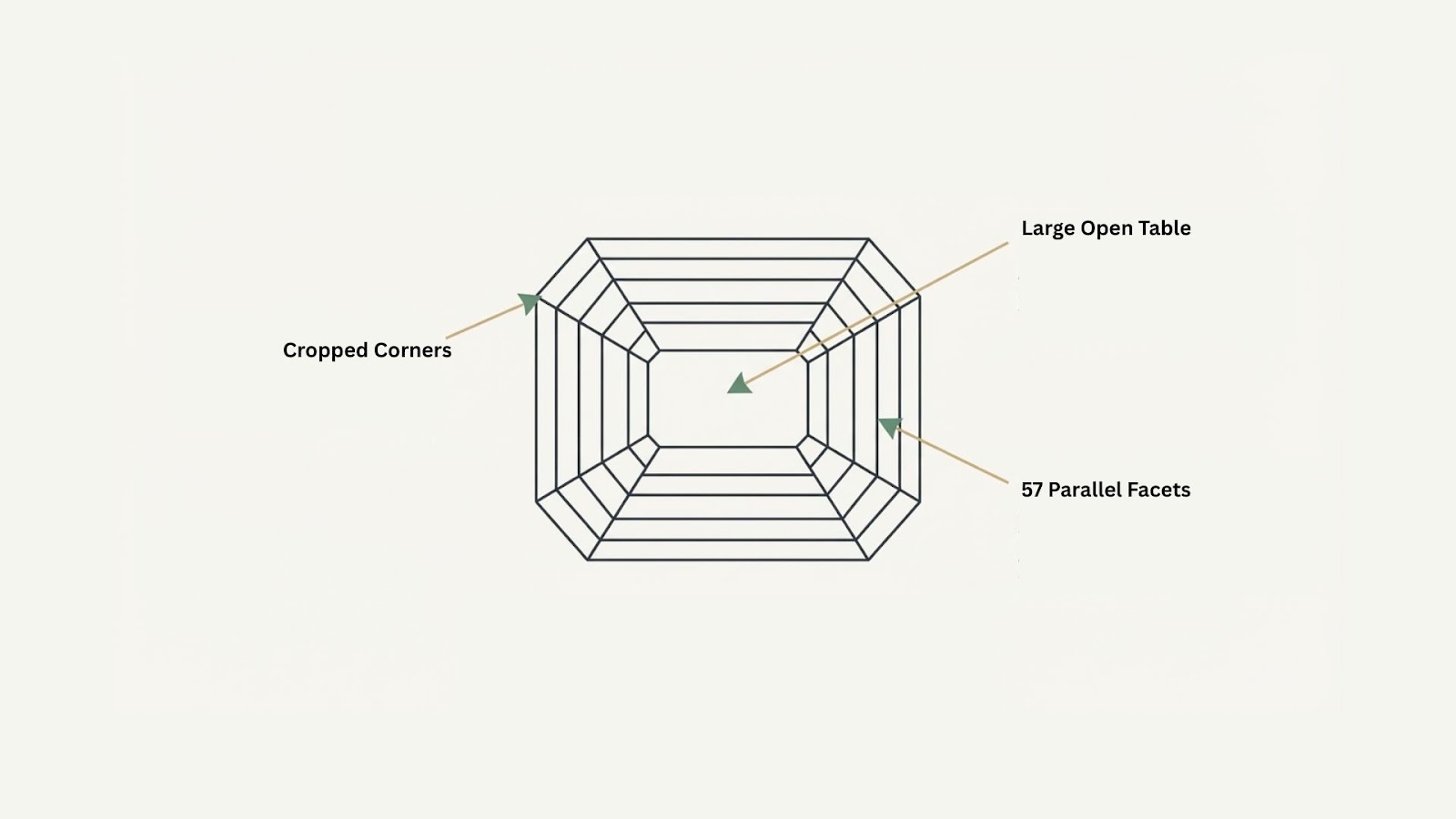
Contrary to brilliant cuts, which focus on maximizing sparkle, the emerald cut emphasizes clarity and transparency. The step-cut design of the emerald cut diamond highlights the stone’s internal characteristics, making it a preferred choice for high-quality diamonds. The style’s refined elegance and timeless appeal make it a favored option for both engagement rings and fine jewelry.
For those seeking a diamond cut that offers visual depth and emphasizes clarity rather than intense sparkle, the emerald cut remains a classic choice.
The History of the Emerald Cut Diamond
The emerald-cut diamond has a rich history dating back to the 1500s, when it was initially used to cut emerald gemstones. Its design, with long, flat facets and a large, open table, was later adapted for diamonds in the 1920s during the Art Deco era. This cut became synonymous with sophistication and glamour, frequently featured in luxury jewelry worn by royalty and celebrities.
Over the decades, the emerald cut has maintained its appeal, especially for those seeking a timeless, elegant alternative to more traditional diamond cuts. Today, it remains a popular choice for engagement rings and fine jewelry.
Emerald Cut vs. Other Diamond Cuts
Understanding the differences between the emerald, radiant, and asscher cuts can help you choose the perfect diamond shape for your style.
|
Feature |
Emerald Cut |
Radiant Cut |
Asscher Cut |
|
Shape |
Rectangular with cropped corners. |
Rectangular with trimmed corners, slightly more brilliant. |
Square, step-cut with a distinctive "X" pattern. |
|
Light Reflection |
"Watery" architectural glow, subtle light play. |
"Crushed ice" brilliance, intense sparkle and fire. |
High brilliance with a deeper "hall-of-mirrors" effect. |
|
Sparkle |
Subtle, refined sparkle, less intense than brilliant cuts. |
Maximum fire and sparkle due to more facets. |
More brilliance than emerald cut, especially in light play. |
|
Brilliance |
Focus on clarity, minimal brilliance. |
Designed to maximize brilliance and fire. |
More brilliance than an emerald cut due to its deep facets. |
|
Shape and Aesthetic |
Elegant, vintage-inspired, sleek rectangular look. |
Modern, bold, and fiery with a more geometric feel. |
Vintage, unique, and architectural, with a distinct "X". |
|
Best for |
Those who prefer elegance and clarity over intense sparkle. |
Those who prefer a brilliant, fiery look with sparkle. |
Those who prefer a vintage feel with high brilliance and depth. |
Each cut offers distinct qualities, allowing you to select the one that best suits your aesthetic and light performance preferences.
Why Choose an Emerald Cut Diamond?
The emerald cut diamond is a perfect choice for those who appreciate understated elegance and timeless design. Its clean lines and distinctive light reflection make it a refined alternative to traditional brilliant cuts. Here’s what makes it special:
- Sophisticated Look: With its rectangular shape and long, clean facets, the emerald cut offers a sleek and elegant appearance that stands apart from popular cuts like round or princess.
- Emphasizes Clarity: The large, open table highlights the diamond’s internal clarity, allowing the natural beauty of the stone to be clearly visible.
- Unique Light Play: Instead of intense sparkle, the emerald cut produces a distinctive “hall-of-mirrors” effect, creating broad flashes of light that add depth and character.
- Timeless Appeal: Popular since the Art Deco era, emerald cut diamonds are associated with vintage glamour and classic Hollywood elegance.
- Versatility: Emerald cut diamonds work beautifully in many ring styles, including solitaire, three-stone, halo, and modern east-west settings.
Choosing an emerald diamond means investing in a design that combines timeless sophistication with lasting visual impact.
How to Choose the Perfect Emerald Cut Diamond?
When selecting the perfect emerald cut diamond, it's essential to consider several key factors to ensure a high-quality stone:
1. Clarity (The Most Critical "C")
The emerald cut’s large, open table and long facets highlight inclusions more than other shapes. Look for diamonds with a clarity grade of VS2 or higher to ensure the stone appears clean to the eye.
2. Color Sensitivity
The emerald cut’s broad facets expose the diamond's body color more than other cuts with higher scintillation. A color grade of H or above is ideal for a crisp, white look. However, diamonds graded G or H offer a warmer tone that pairs beautifully with yellow or rose gold settings.
3. Cut Proportions for Performance
Since emerald cuts don't have an official cut grade, evaluating key dimensions such as depth percentage (61%-67%) and table percentage (61%-69%) is critical. The ideal length-to-width ratio typically ranges from 1.40 to 1.50 for a classic rectangular shape.
4. Length-to-Width (L/W) Ratio
This ratio determines if your diamond appears elongated or nearly square. A ratio of 1.40 to 1.50 is the industry standard for a classic rectangle. These stones range from elongated rectangles at a 1.60 ratio to nearly square looks at 1.30. If you prefer a perfectly square look, the Asscher cut is a similar step-cut alternative.
By carefully considering these attributes, you can select an emerald cut diamond that aligns with your aesthetic preferences and quality standards.
How to Ensure Quality and Clarity of Emerald Cut Diamond?
A common technical risk with emerald cut diamonds is "windowing". It is a flaw where light passes through the bottom of the stone instead of reflecting to the eye. This results in an area of the diamond that lacks proper light return, diminishing its visual appeal.
Windowing can be spotted as a gray or transparent area under the table of the diamond. This can be especially noticeable when the diamond is tilted at certain angles, as it allows light to pass through rather than creating the desired light reflection.
To avoid windowing, always request HD video of the diamond or, ideally, view the stone in person. This ensures the emerald cut maintains its signature "hall-of-mirrors" effect and performs well in all lighting conditions and tilt angles, preserving its brilliance and clarity. Solitaire Lab Diamond offers a 360-degree view of diamonds, making it easier to assess and purchase with confidence.
FAQs
What does it mean to wear an emerald ring?
Wearing an emerald ring often symbolizes elegance, clarity, and timeless sophistication. In jewelry design, emerald-cut diamonds are associated with refined taste and vintage glamour, as their clean lines and step facets highlight the stone’s clarity and architectural beauty.
Is an emerald cut diamond good for an engagement ring?
Yes, an emerald cut diamond is an excellent choice for an engagement ring. Its elongated rectangular shape flatters the finger, while the step-cut facets create a sophisticated “hall-of-mirrors” effect, offering timeless elegance and a distinctive alternative to traditional round diamonds.
Are lab-grown emerald cut diamonds worth it?
Lab-grown emerald cut diamonds offer the same chemical, physical, and optical properties as natural diamonds but at a significantly lower price. They are an excellent option for buyers seeking larger stones, ethical sourcing, and high-quality emerald diamond engagement rings.
Who should not wear an emerald ring?
Emerald-cut rings may not suit buyers who prefer intense sparkle. Because step-cut facets emphasize clarity rather than brilliance, those who prefer maximum fire and scintillation often choose brilliant cuts like round or radiant diamonds instead.
Is a 3 carat emerald diamond too big?
A 3-carat emerald diamond is considered large but not excessive. Due to its elongated shape and large table, an emerald cut often appears bigger than other shapes of the same weight, making it a bold yet elegant statement choice.
Quick Recap!
The emerald cut diamond is valued for its clean design, clarity, and timeless elegance. Its long step facets create the signature “hall-of-mirrors” effect, offering depth and sophistication rather than intense sparkle. Because of its elongated shape and large table, an emerald diamond engagement ring often appears larger per carat, making it a practical choice for creating high-impact designs.
For modern buyers and jewelry brands, lab-grown emerald diamonds provide the same chemical and visual properties as natural stones at a more accessible price.
Explore the Solitaire Lab Diamond curated collection of emerald cut lab-grown diamonds and find the perfect diamond for your next masterpiece.