
If you are drawn to diamonds that stand out visually while offering excellent value, the marquise cut is worth considering. Its elongated shape creates a larger face-up appearance and gives the illusion of longer, more elegant fingers. Combined with brilliant faceting, this shape delivers strong sparkle without requiring a higher carat weight.
It also adapts well across a range of settings, from classic solitaires to modern layouts. In this guide, we’ll explain what a marquise cut diamond is, how it performs, and what to look for when choosing one.
What Is a Marquise Cut Diamond?
If you are looking for a diamond that makes a statement while telling a story, you might want to consider the marquise cut. It is a shape that stands out because of its elongated body and sharp, pointed ends. You might hear it called the navette cut, which is a French word for "little boat". While its look is undeniably modern and striking, its roots go back to 18th-century France.
Its history is shaped by romance. Legend says that King Louis XV commissioned the cut around 1745 to resemble the perfect smile of his mistress, the Marquise de Pompadour. Since then, the shape has been a symbol of luxury and aristocratic taste.
It experienced a major surge in the 1960s and 70s, but it is currently seeing a new renaissance. Modern couples are often drawn to its "old soul" energy while appreciating how well it fits into sculptural, nature-inspired, or minimalist settings.
Understanding the 4Cs for Marquise Cut Diamond
When you start shopping, you will notice something different about marquise grading. Unlike round diamonds, the GIA and other major labs do not provide an official "cut grade" for marquise diamonds.
This means you cannot just look at a certificate to tell if it is a well-cut stone. Instead, you have to look at its proportions and symmetry yourself.
For color, marquise diamonds are a bit more demanding. Because they are shallower at their tips, they tend to reveal more of their inherent body color in those areas.
If you are setting the diamond in white gold or platinum, choosing a G or H color grade usually ensures it faces up white. If you choose a warm metal like yellow or rose gold, you can often get away with a lower grade, such as I or J, because the metal helps hide the yellow tint.
In terms of clarity, marquise diamonds are quite forgiving. They are part of the brilliant cut family, meaning they have 57 facets (33 on the crown and 24 on the pavilion) that create a lot of sparkle. This scintillation is excellent at hiding small internal inclusions.
You can often find an eye-clean diamond in the VS2 or even SI1 range, which allows you to put more of your money toward carat weight or color.
Why People Choose a Marquise?
One of the most obvious reasons to choose a marquise diamond is its size management. Because of its long silhouette and large surface area, a marquise diamond usually appears bigger than other diamond shapes of the same carat weight.
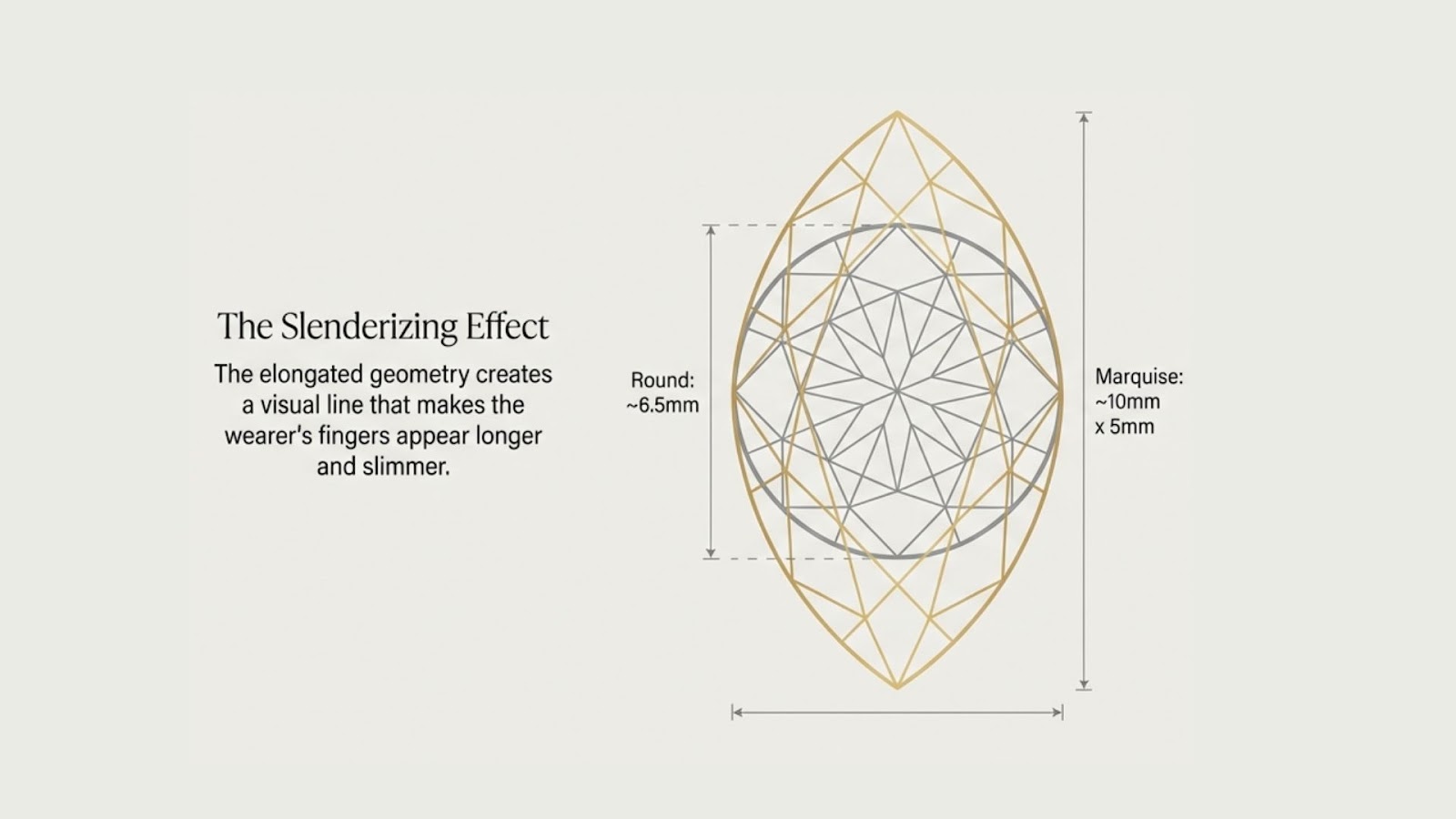
In fact, it can look approximately 10% to 15% percent larger than a round diamond of the same weight. This makes it a smart choice if you want to maximize your budget and get more visual impact for your money.
Beyond the size, the shape is very flattering. When set vertically (North to South) on a ring, the lengthening effect of an elongated silhouette can make short fingers appear leaner and longer. If the traditional look feels too formal, you can set it horizontally (East to West) for a more contemporary style.
Key Considerations for Marquise Cut Diamonds
There are two specific things you need to watch for with a marquise.
1. Bow tie effect
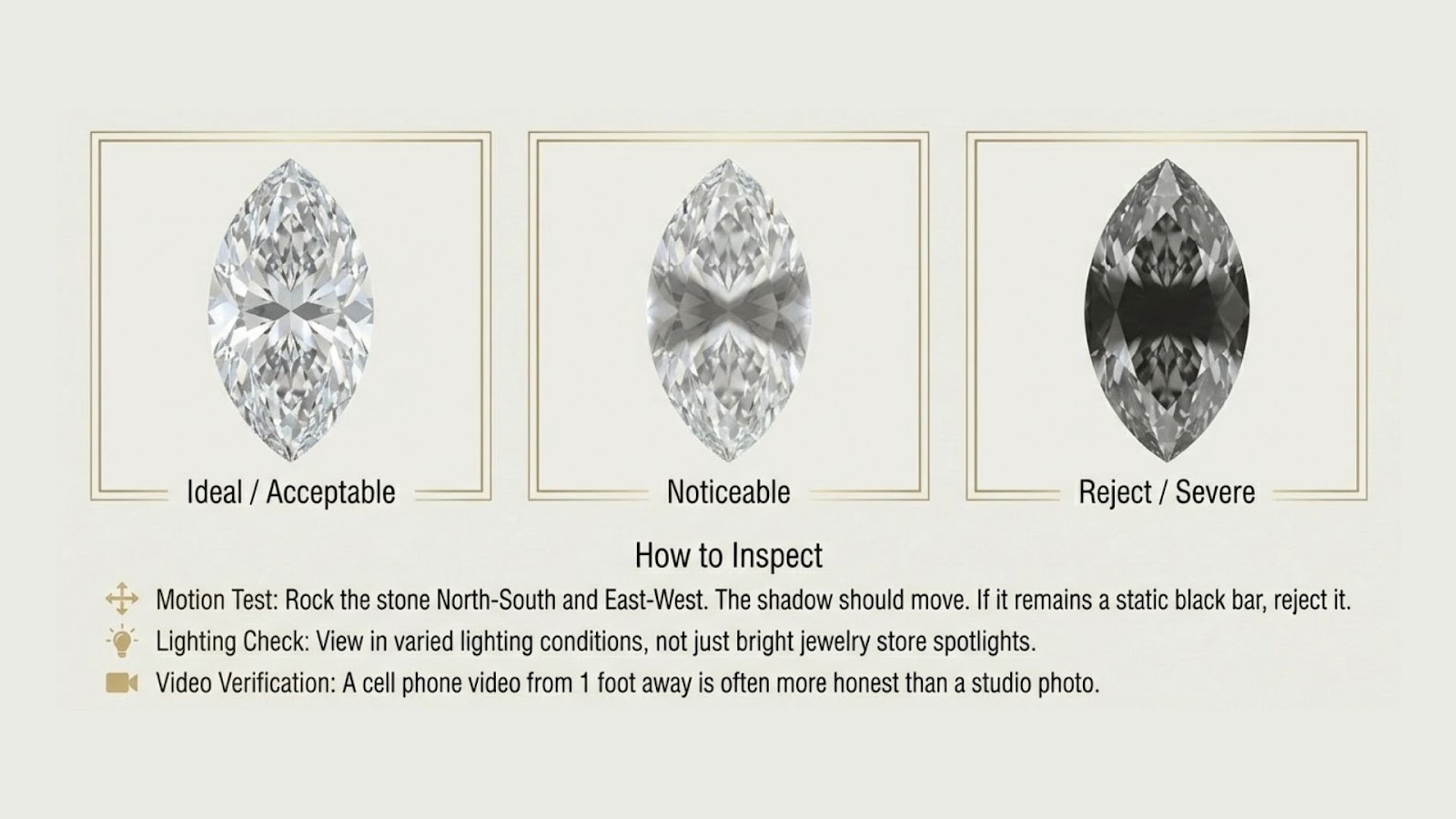
Because of how these stones are faceted, almost all elongated cuts will have a dark shadow in the center that looks like a bow tie.
A light bow tie is fine and can even add character, but you should avoid stones where the bow tie is so dark that it kills the sparkle in the middle of the diamond.
2. Pointed tips
These ends are the most vulnerable parts of the diamond and can chip when hit against a surface. So, always look for a setting that protects these points.
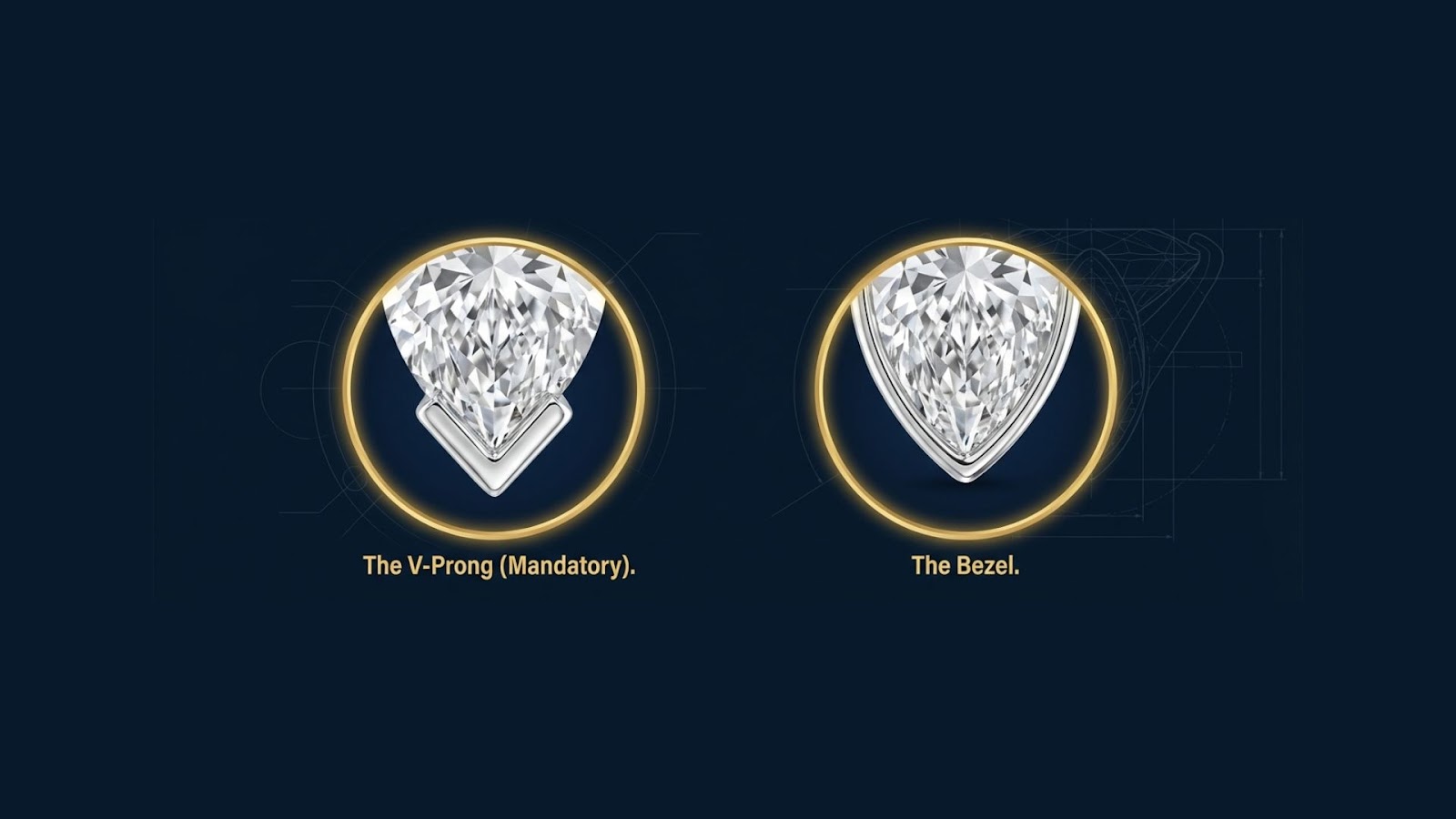
V-prongs are the standard choice because they wrap around the tip to keep it safe. Alternatively, a bezel setting, which surrounds the entire edge of the stone with metal, offers the best protection for an active lifestyle.
Setting Your Marquise Diamond
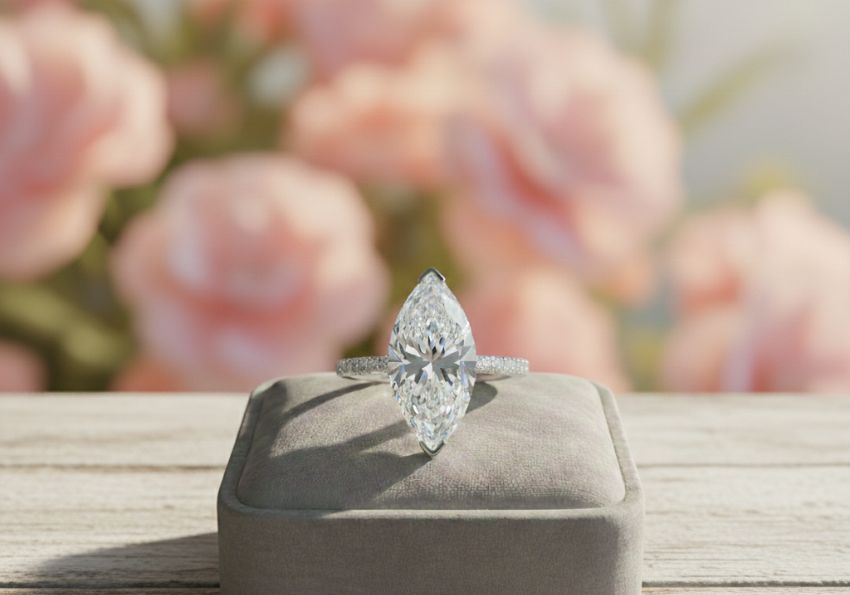
The setting you choose will define the ring's personality. A solitaire setting is timeless and keeps all the focus on the unique shape of the stone.
If you want even more brilliance, a halo setting adds a circle of smaller diamonds around the marquise, which can also help prevent the pointed ends from snagging on your clothes.
For someone with larger hands, a three-stone setting is a great choice. Since the marquise is naturally narrow, flanking it with side stones can help balance the proportions on the finger.
Choosing a Marquise Cut Diamond
While lab-grown and natural diamonds share the same physical and optical properties, lab-grown marquise diamonds are an ideal option for those seeking a more sustainable choice. Created in weeks rather than over geological time, they offer the same brilliance, hardness, and durability as mined diamonds.
A marquise cut diamond delivers a strong visual impact without compromising strength. Its exceptional hardness makes it suitable for everyday wear when properly set, and this performance remains consistent across both lab-grown and natural stones.
For collections or custom designs that require reliable quality and sourcing flexibility, lab-grown marquise diamonds offer clear advantages in pricing and consistency. Solitaire Lab Diamond offers certified lab-grown marquise cut diamonds selected for symmetry, light performance, and durability. Explore our collection or contact our team for wholesale access and tailored sourcing support.
FAQs
Why is it called a marquise cut?
The marquise cut is named after the Marquise de Pompadour. According to legend, King Louis XV commissioned a diamond shape in the 18th century to resemble her smile. The elongated shape later became known as the marquise cut.
Is Marquise Cut good for small hands?
Yes, the marquise cut is often flattering on small hands. Its elongated shape creates a slimming effect on the finger, making it appear longer and more balanced, even at lower carat weights.
How to tell if a marquise diamond is real?
To check at home, try the fog test. Breathe on the diamond. A real diamond disperses heat quickly and clears almost instantly. You can also place it in water. Real diamonds usually sink due to high density. For reliable confirmation, look for a laser-inscribed GIA report number on the girdle or have a jeweler perform a professional thermal conductivity test.
Is Marquise Cut diamond good for an engagement ring?
Yes, a marquise cut diamond is a striking choice for an engagement ring. Its elongated shape maximizes perceived size, offers strong brilliance, and creates an elegant, vintage-inspired look that stands out from traditional round styles.
Does Marquise cut hide inclusions?
Yes, the brilliant-style faceting of a marquise cut diamond generally helps hide small inclusions well, making it possible to choose clarity grades like SI1 or SI2 and still achieve an eye-clean look.