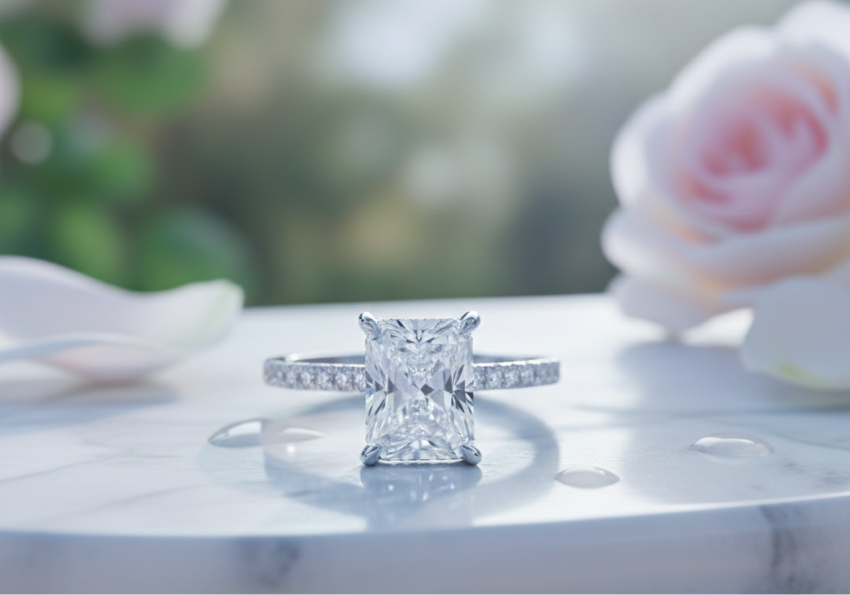
The radiant cut diamond is often described as a modern classic that offers a unique bridge between traditional elegance and high-quality brilliance. It takes the sophisticated, architectural silhouette of an emerald cut and infuses it with the intense fire of a round brilliant.
This makes it a true diamond hybrid, capturing the best attributes of two very different styles.
While many people first discover this cut while searching for engagement rings, its appeal goes far beyond the engagement ring segment.
It is a versatile "statement-maker" that adds a touch of glamour to everyday wear, whether set in a pair of diamond studs, a tennis bracelet, or a custom pendant.
If you want a diamond that reflects a bold personality and a love for light, the radiant cut is designed to deliver exactly that.
What Is a Radiant Cut Diamond?
The radiant cut is a modern square or rectangular stone with a 70-facet brilliant-cut design, known for strong sparkle. It was invented in 1977 by a master cutter named Henry Grossbard.
Before Grossbard’s invention, rectangular diamonds were almost exclusively step-cuts, like the emerald cut. These are beautiful but offer a more understated, "hall of mirrors" effect rather than high-intensity brilliance.
Grossbard wanted to change that. He spent years perfecting a way to apply the complex faceting of a round brilliant onto a rectangular frame. His success created a diamond that changed how people view rectangular stones.
Today, the radiant cut is a go-to style for combining elegance with everyday wear.
Radiant Cut Diamond Shape and Faceting
The secret to the radiant cut's light performance lies in its facets. A standard radiant cut typically has around 70 facets. These kite-shaped and triangular facets radiate outward from the center to maximize how light bounces inside the stone.
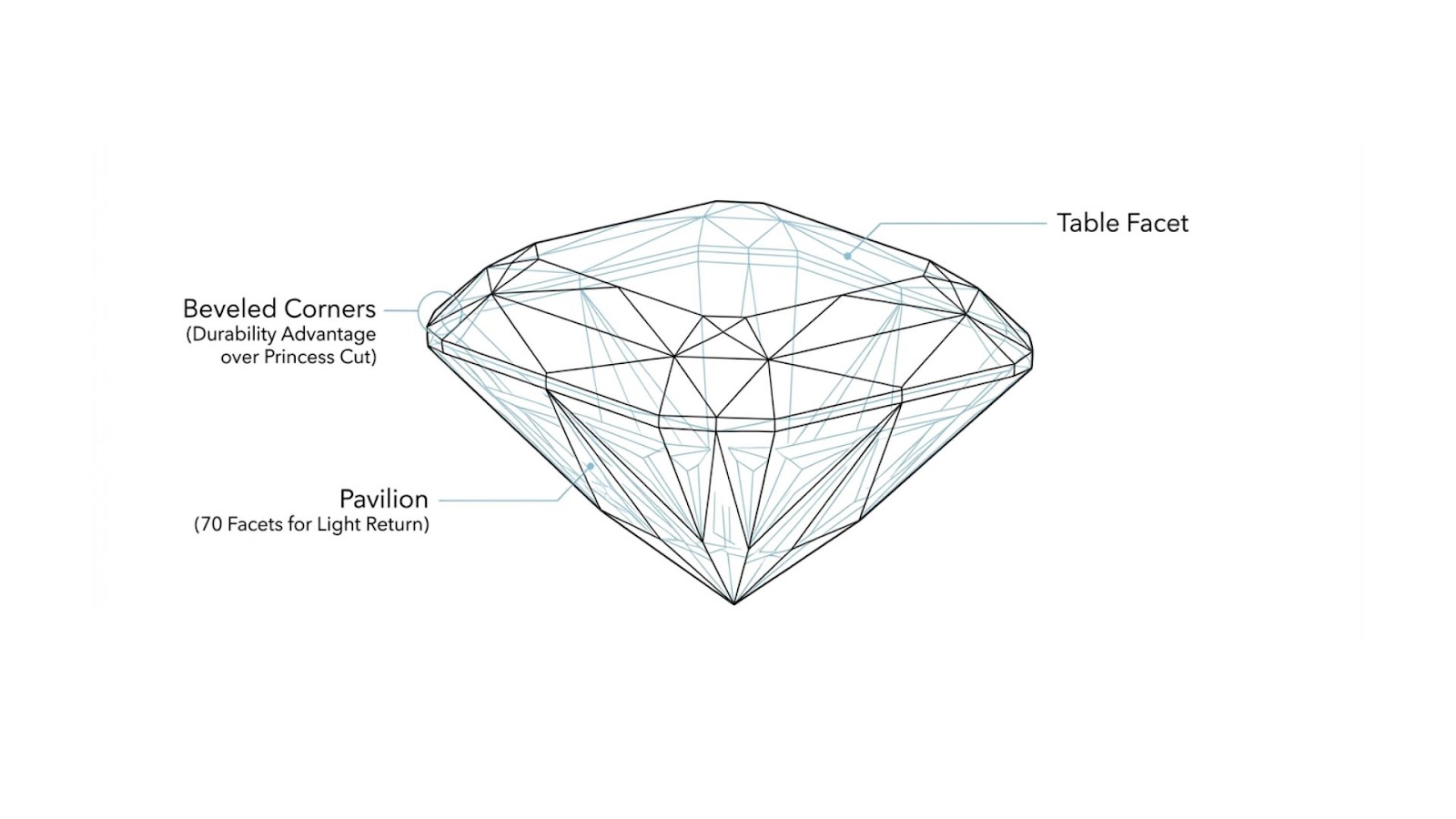
The outline is usually rectangular with cropped or beveled corners. On a grading report, you might see it listed as "Cut-Cornered Rectangular Modified Brilliant" or "Square Modified Brilliant," depending on its proportions.
Those beveled corners make the diamond much more durable than a princess cut, as they're less likely to chip or catch on clothing.
Understanding the Technical Cut: Long Mains vs. Short Mains
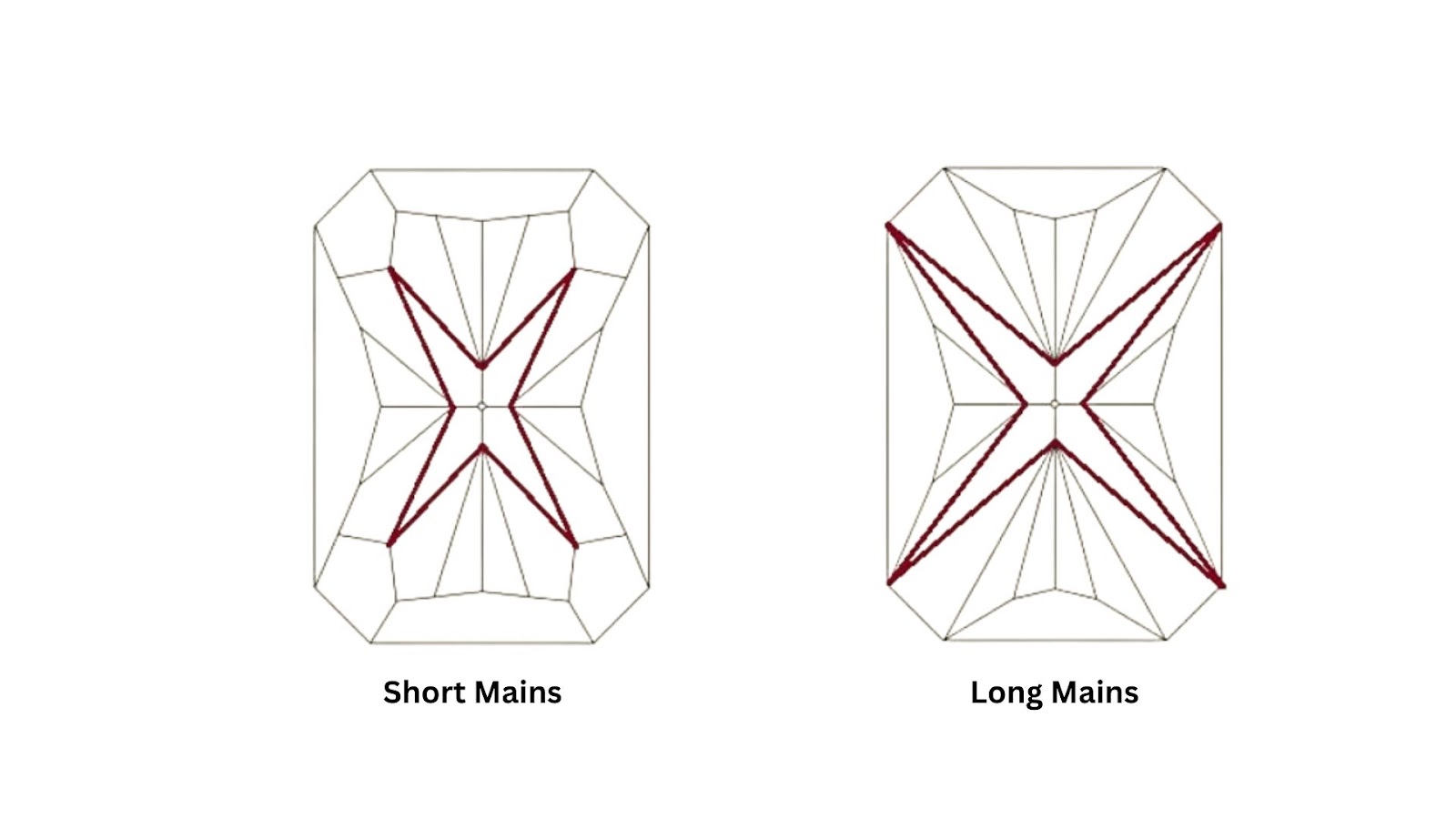
When evaluating a radiant cut, look beyond surface sparkle to understand the faceting structure. Check if the diamond has long mains or short mains. This detail isn't mentioned in grading reports, but it's visible on the certificate's cut diagram.
Long main radiants feature facets that extend all the way to the edges of the stone. This style is cut to maximize brilliance, and these diamonds often appear approximately 5% larger than short main diamonds of the same weight.
Short mains are often cut to maximize carat weight rather than fire. While a jeweler might price a short main stone higher because of its weight, it may lack the beauty of a long main cut.
To identify a long main, check the certificate diagram for a "cross" pattern that reaches the edges of the stone.
Why Choose a Radiant Cut Diamond?
The most obvious reason to choose a radiant cut is the sparkle. It is engineered for fire. If you want a diamond that can be seen from across the room, this is a top contender.
However, some practical benefits are just as important.
One of the best things about the radiant cut is how well it hides inclusions. Because the faceting pattern is so complex and splintered, it creates what some call "sparkly distractions". These tiny flashes of light make it very difficult to see small flaws.
This means you can often choose a lower clarity grade, like an SI1, and still have a diamond that looks perfectly clean to the naked eye. This is a great way to maximize your budget without sacrificing beauty.
Furthermore, the radiant cut is excellent at hiding color issues in certain situations, though it is also used to enhance color in fancy stones like yellow diamonds.
For a standard white diamond, the brilliance helps mask a slightly lower color grade, allowing you to opt for stones in the G or H range while still achieving a bright look.
Size and Color Considerations
Radiant diamonds are cut with a deep pavilion (the bottom half of the stone), so they tend to carry a lot of their weight below the surface. This means that a one-carat radiant might look slightly smaller than a one-carat round brilliant when viewed from the top.
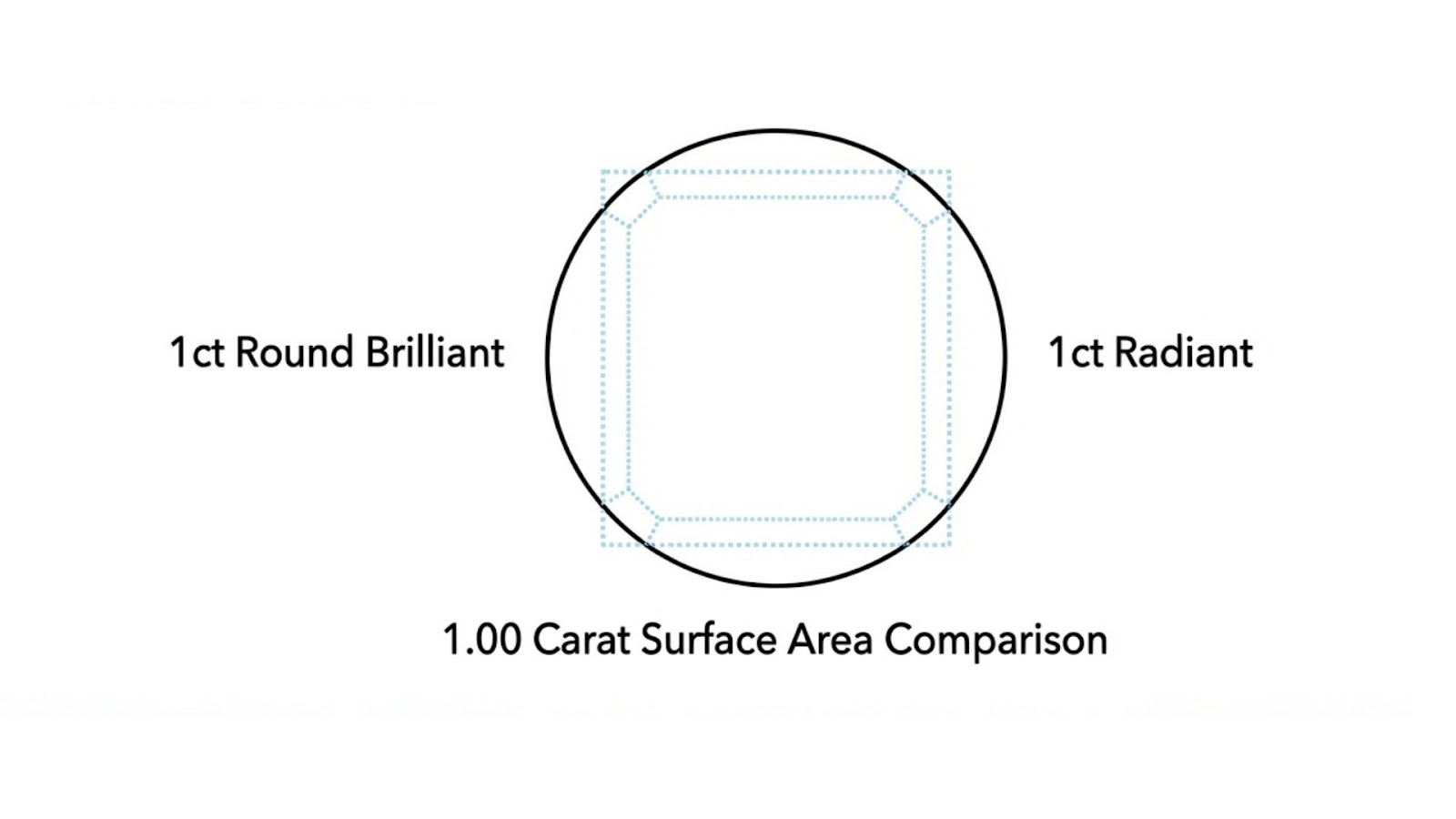
If visual size is your main priority, you might find yourself looking at stones with a slightly higher carat weight to get the "spread" you want.
Another thing to watch for is color retention. While the sparkle can mask color, the depth of the stone can also sometimes trap and emphasize it. If you are sensitive to warm or yellowish tones, it is usually safer to stay with a G grade or higher to ensure the diamond looks crisp and white.
How Radiant Cut Compares to Other Shapes?
The radiant cut occupies a unique space when compared to other classic shapes:
- Radiant vs. Round: Both offer high-intensity sparkle, but radiants are often more cost-efficient per carat. However, because they are cut deep, they may have a smaller "face-up" size than a round brilliant of the same weight.
- Radiant vs. Emerald: While an emerald cut uses long step-cuts for a "hall of mirrors" effect, the radiant uses brilliant facets for fire. The radiant's complex facets are much better at hiding inclusions than the open, transparent facets of an emerald cut.
- Radiant vs. Cushion: A cushion cut has soft, rounded corners and broader flashes of light. The radiant cut offers a more structured rectangular outline with beveled corners and a finer, "splintered" sparkle pattern.
Read about the differences between cushion brilliant and cushion modified brilliant.
Buying Tips for Radiant Cut Diamond
Selecting a radiant cut diamond requires attention to a few key details that influence both appearance and value.
- Prioritize a well-balanced cut with strong light return, as sparkle matters more than carat weight in radiant diamonds.
- Understand the difference between long mains and short mains. Long main radiants are cut to enhance brilliance and often appear slightly larger face-up, while short mains prioritize weight retention at the expense of sparkle.
- Although the main styles are not listed on grading reports, they can be identified from the cut diagram. A cross pattern that reaches the edges of the stone indicates a long main radiant.
- Look for a depth percentage around 67–70% to maintain a balance between brilliance and face-up presence.
- Avoid stones that are cut too deep or too shallow, as both can negatively impact light performance and visual appeal.
- Take advantage of the radiant cut’s ability to hide inclusions, which allows flexibility with clarity grades while still achieving a clean appearance.
- Always review high-quality images or 360-degree videos to evaluate sparkle, symmetry, and facet balance.
- Consider the final setting during selection, as the way a radiant cut performs visually can vary depending on how it is mounted.
With these buying considerations in place, it is easier to understand why the radiant cut stands out as one of the most versatile diamond shapes.
If you are exploring radiant cut diamonds for your next collection or designing a custom piece, Solitaire Lab Diamond offers a curated selection of high-quality lab-grown radiant cut diamonds with consistent grading and transparent sourcing, with a 360 Degree view feature.
Explore the collection to find a radiant cut that fits your design and performance needs.
FAQs
What is the best carat size for radiant cut?
Carat size depends on personal preference, budget, and finger size. However, radiant cuts look balanced and impressive from 1.20 carats and above, where their brilliance and shape are more noticeable.
Is radiant diamond good for an engagement ring?
Yes, a radiant cut diamond is an excellent choice for an engagement ring. It offers high sparkle, durability due to trimmed corners, and a modern yet timeless look that works beautifully in solitaire, halo, or three-stone settings.
How big is a 3 carat radiant cut diamond?
A 3 carat radiant cut diamond typically measures around 9.5 x 7.5 mm in length, depending on proportions and cut depth. Exact dimensions vary, but it creates a bold, noticeable presence on the hand.
Is radiant cut good for shorter fingers?
Yes, especially in elongated rectangular proportions. A radiant cut diamond with a longer length-to-width ratio can create a slimming effect on shorter fingers, making them appear longer and more balanced.
Radiant cut vs Emerald cut: which is better?
Radiant cuts offer intense sparkle and better inclusion masking due to their 70-facet brilliant-cut design. Whereas emerald cuts feature clean, step-cut facets that highlight clarity and elegance. The better choice depends on whether you prioritize maximal sparkle (Radiant) or understated elegance (Emerald).
Does radiant cut hide inclusions well?
Yes, radiant cut diamonds generally hide inclusions well. Their brilliant-style faceting creates strong light reflection and sparkle, which helps mask small internal flaws better than step-cut shapes like emerald or Asscher cuts.
Is radiant cut good for wedding bands?
Yes, radiant cut diamonds work well in wedding bands, especially in eternity or shared-prong settings. Their trimmed corners add durability, while the brilliant facets provide strong sparkle, making them a stylish and practical choice for everyday wear.