Step cut diamonds have a distinct appearance that sets them apart from brilliant cuts. Their long, linear facets create broad flashes of light and make clarity, color, proportions, and symmetry important when sourcing them.
The step-cut family includes shapes such as Emerald, Asscher, and Baguette. Each cut has different applications and inventory considerations.
This guide is written for jewelers, designers, and trade buyers who need a working understanding of step-cut diamonds across the full family, from center stone selection to accent stone sourcing strategy.
What is a Step cut diamond?
A step-cut diamond is defined by its faceting style rather than its outline shape. Step cuts use rows of elongated, generally parallel facets arranged in a stair-step pattern. The term describes how the stone is faceted rather than simply its outline when viewed from above.
Step cuts became strongly associated with the geometric jewelry designs of the Art Deco era, particularly during the 1920s and 1930s. For natural diamonds, GIA does not assign its standard overall cut grade to fancy shapes such as emerald and Asscher.
IGI, however, offers overall cut grading for eligible fancy shapes using polish, symmetry, proportions, shape-specific craftsmanship criteria, and light-return assessment.
Key characteristics of Step-cut diamonds
Step-cut diamonds share a set of visual and structural characteristics that distinguish them from brilliant cut shapes, particularly in their facet pattern and light reflection.
- Parallel lines: Facets are generally arranged in parallel or nearly parallel rows, creating a structured, architectural appearance.
- Staircase pattern: Rows of generally parallel facets form a stepped pattern across the crown and pavilion, creating the architectural appearance associated with this cutting style.
- Geometric outlines: Step-cut faceting is commonly seen in rectangular and square outlines, but it can also be applied to other shapes depending on the design.
- Broad reflections: Step cuts commonly use larger, less complex facets that produce a distinctive hall-of-mirrors effect rather than the more complex sparkle of brilliant cuts. These larger facets can also make body color and inclusions more apparent.
Understanding these characteristics helps trade buyers evaluate step cuts more consistently during sourcing.
Types of Step-cut diamonds
The step-cut family includes a range of shapes and styles, including square and rectangular designs. Each has different applications, sourcing criteria, and inventory considerations.
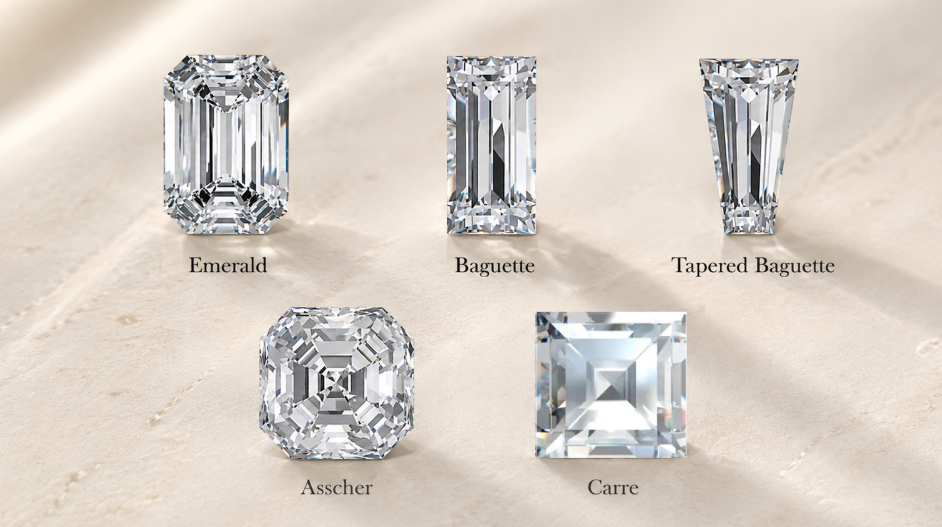
1. Emerald cut
The Emerald cut has an elongated rectangular outline with cropped corners and a large open table.
The Emerald cut is one of the most widely recognized and commercially important Step-cut shapes in the jewelry market. It is known for its elongated outline, broad step facets, and hall-of-mirrors effect, which gives it a different visual character from brilliant-cut shapes.
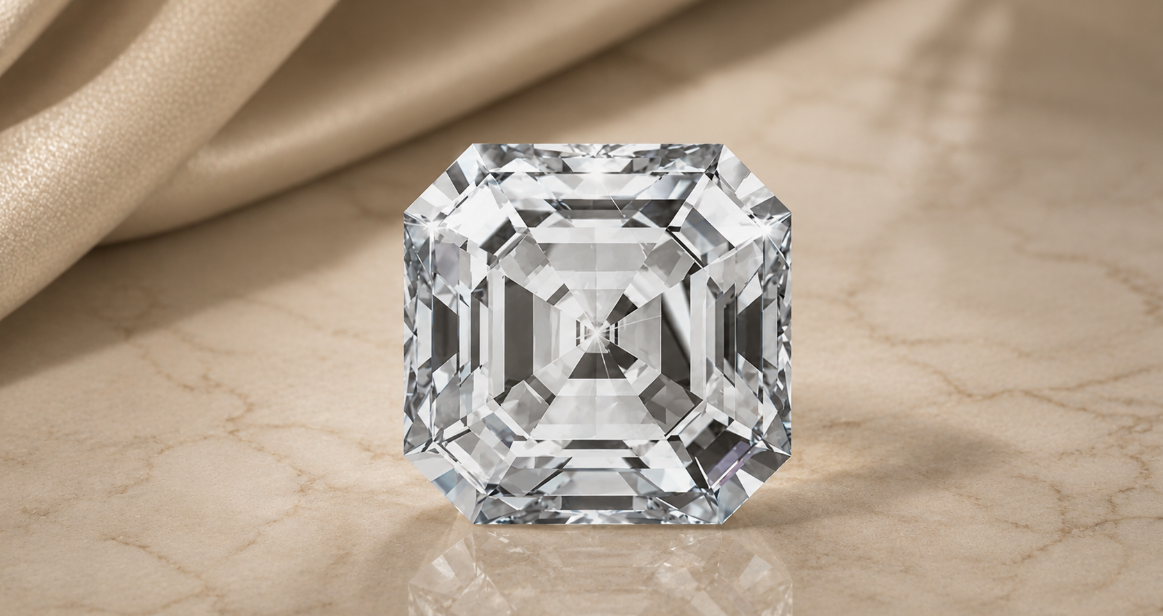
2. Asscher cut
The Asscher cut has a nearly square outline with cropped corners and a distinctive concentric step-facet pattern. The combination of these proportions can produce a pronounced hall-of-mirrors appearance and the distinctive windmill-style facet pattern visible from above.
For trade buyers, the Asscher is particularly relevant when a square outline and distinctive windmill-style facet pattern are priorities.
3. Baguette cut
The Baguette cut has a long rectangular outline with straight corners rather than the cropped corners of the emerald or Asscher. It is primarily used as an accent stone in channel settings, eternity bands, and Art Deco-inspired fine jewelry. Baguettes are often sourced in matched pairs, calibrated sets, or parcels, particularly for projects requiring consistent dimensions.
4. Tapered Baguette
The tapered baguette is a trapezoidal variation of the standard baguette. It is commonly used as a side stone in three-stone rings and other designs where the accent stones taper toward the band. For matched pairs, consistent dimensions, taper, outline, color, and cutting style are critical to achieving a balanced finished setting.
5. Carré cut
Carré cuts are commonly used as an accent stone in vintage-inspired settings and geometric jewelry where a square step cut provides a cleaner geometric look than a cropped-corner Asscher.
6. Specialty Step-cut shapes
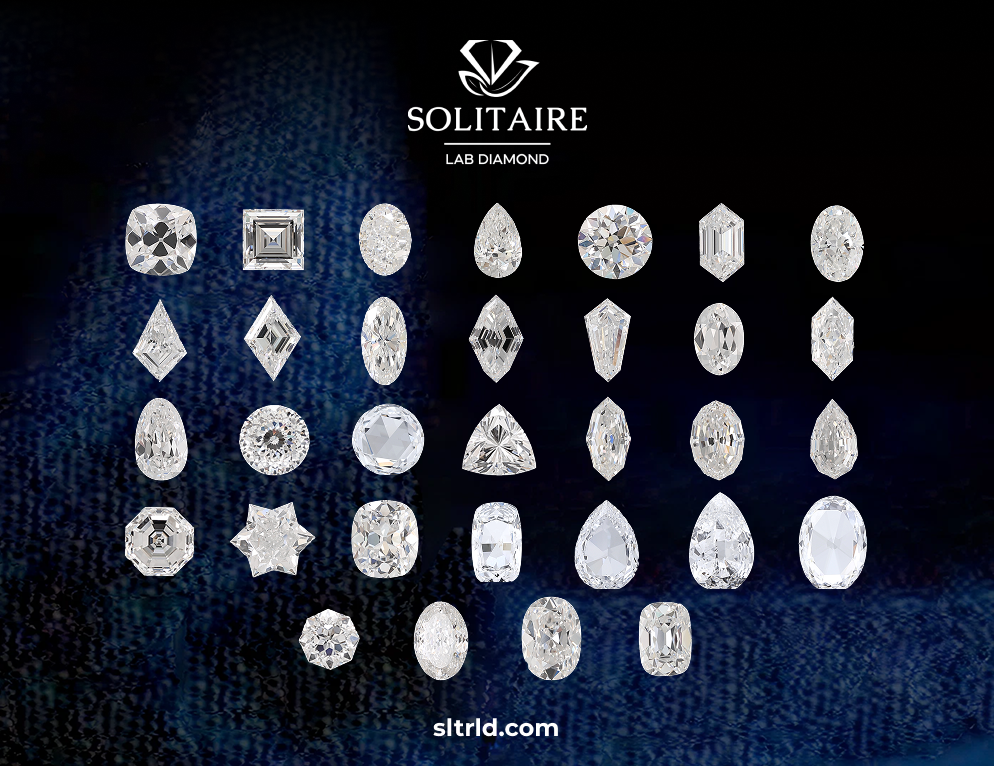
Trapezoid, shield, kite, hexagon, and other specialty outlines can be fashioned with Step-cut faceting, although brilliant and modified facet arrangements also exist. These shapes are used in custom, cluster, and designer jewelry, while availability and facet arrangements can vary considerably by supplier.
Some specialty shapes adapt the step-cut facet arrangement to non-rectangular outlines, so facet patterns and proportions can vary considerably.
For retailers building a designer or custom offering, these shapes represent a sourcing category worth developing alongside standard Step-cut inventory.
Evaluating clarity and color in Step-cut diamonds
Step-cut diamonds are less forgiving on clarity and color than brilliant cuts, and the sourcing criteria need to reflect that directly.
1. Clarity
The large, open facets of step-cut diamonds can make inclusions more visible than they are in many brilliant-cut stones. Clarity deserves particular attention in step-cut center stones. Rather than using a fixed clarity minimum, evaluate each stone for eye visibility, inclusion location, size, and type.
2. Color
Body color is noticeably more visible in Step-cut diamonds because the long, parallel facets reflect light in broad sheets rather than scattering it in ways that mask warmth. Higher color grades may be preferred for premium collections, depending on the setting, metal, and product positioning.
The setting metal can influence how readily body color is perceived. Yellow and rose gold can make warmer grades less noticeable, while white gold and platinum can make color differences more apparent.
Sourcing strategy: Center stones vs accent stones
Step-cut sourcing requires two different approaches depending on whether you are building center stone inventory or accent stone stock.
For center stones, Emerald and Asscher cuts are common step-cut options. Individual stone selection is the norm, with each stone evaluated based on its carat weight, proportions, facet pattern, symmetry, polish, clarity, color, and overall face-up appearance before adding the stone to inventory.
For remote sourcing, high-resolution images and video can help assess facet pattern, contrast, symmetry, inclusion visibility, and overall face-up appearance. Where available, standardized light-performance information can provide additional data.
For accent stones, Baguettes, Tapered Baguettes, and Carré cuts are often sourced as matched pairs, calibrated sets, or parcels when consistent dimensions are required. Consistency across matched accent stones is the critical sourcing criterion, covering outline dimensions, color grade, clarity range, and cutting style.
A mismatched accent-stone pair can become noticeable once set, making quality control and correction more difficult after production.
Center stones are typically evaluated individually, while calibrated accent stones can reduce matching and production time when consistent dimensions are available.
Lab-grown vs natural Step-cut diamonds
Natural and lab-grown step-cut diamonds both have a place in retail inventory, but they come with meaningfully different sourcing considerations. Here is how the two compare across the factors that matter most when you are making a stocking decision.
|
Factor |
Natural step cuts |
Lab-grown step cuts |
|
Supply |
Depends on availability and sourcing |
May be easier to replenish depending on supplier and specifications |
|
Calibrated sizes |
Matching may require more sourcing |
May be available in repeatable dimensions when the supplier maintains calibrated inventory |
|
Pricing |
Pricing varies by specifications and market |
Generally lower acquisition cost, but varies by specification and supplier |
|
Matched accents |
May require more sourcing effort |
Can be easier to source when calibrated inventory is available |
|
Documentation |
Depends on the grading laboratory |
Depends on the grading laboratory |
Lab-grown step-cut diamonds can make matched and calibrated accent-stone sourcing easier when consistent inventory is available. This allows retailers to specify dimensions and request matching stones with less selection effort.
Conclusion
The step cut diamond family covers more ground than most retailers stock, and each shape within it requires a different sourcing approach. The common thread across all of them is that step cutting reveals rather than conceals, which makes the evaluation criteria tighter than for brilliant cuts and the retail positioning more specific.
Step cutting is a faceting style rather than a single shape. Building inventory across the step-cut family means understanding which shapes serve as center stones, which serve as accent stones, and how the sourcing strategy differs between the two.
Lab-grown step-cut diamonds may offer retailers more scalable supply, calibrated sizing for matched parcels when consistent inventory is available, and generally lower acquisition costs that vary by specification and supplier.
If you are ready to expand your step-cut inventory with lab-grown diamonds backed by laboratory reports or quality assessments from recognized laboratories, browse Solitaire Lab Diamond's inventory.
Frequently asked questions
1. What is the difference between Emerald cut and Asscher cut diamonds?
An emerald cut usually has an elongated rectangular outline, while an Asscher-style diamond is typically square or nearly square with cropped corners and concentric step facets. Asscher-style proportions and facet arrangements can vary by cutter, so evaluate the individual stone rather than relying on the trade name alone.
2. Do step cut diamonds sparkle less than brilliant cut diamonds?
Step-cut diamonds produce a different kind of light performance rather than simply less brilliance. Brilliant cuts generally produce smaller, more numerous flashes of light, while step-cuts emphasize broader flashes and geometric contrast.
3. What clarity grade is best for step cut diamonds?
There is no single clarity grade that is best for every step-cut diamond. Because step cuts often have larger, more open facets, inclusions can be easier to see. Evaluate the stone's clarity grade together with inclusion size, type, location, and overall eye visibility.
4. Does GIA evaluate lab-grown step-cut diamonds?
Yes. GIA evaluates eligible colorless to near-colorless laboratory-grown diamonds through its Laboratory-Grown Diamond Quality Assessment service. Since October 1, 2025, qualifying stones are classified as Premium or Standard rather than receiving the same traditional color and clarity grading nomenclature used for natural diamonds.
Resources: