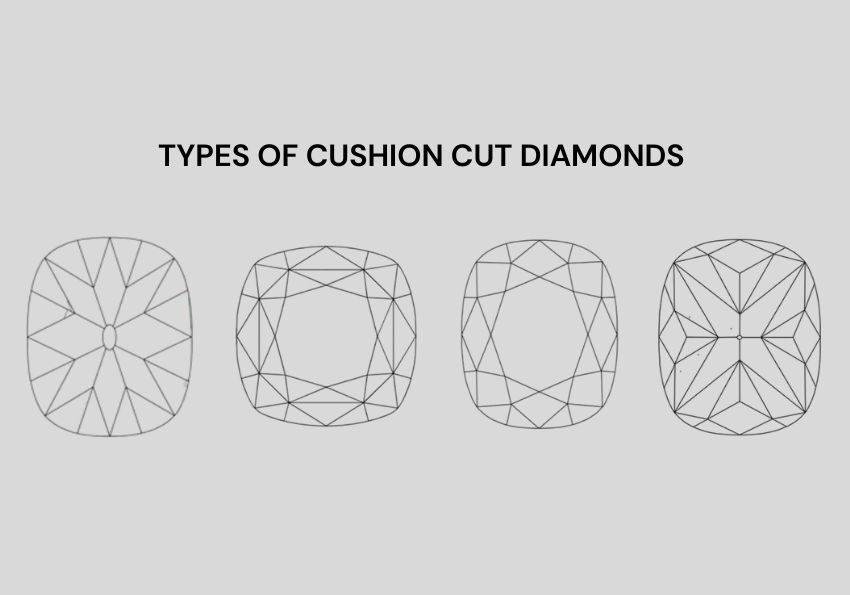
Cushion cut is a family of diamond styles, each with its own faceting pattern and visual personality. Two cushion diamonds can sit side by side with the same carat weight and look completely different.
This creates a critical challenge when fitting diamonds into finished or semi-finished jewelry. A cushion cut that works beautifully in a vintage halo setting may look completely out of place in a minimalist solitaire. Modified cushions with crushed ice sparkle can appear washed out in delicate pavé bands. Antique cushions with bold facets often clash with sleek, modern bezels. Yet certifications simply list all three as "cushion cut," leaving you to find compatibility issues only after the stone arrives and the setting is already underway.
In this guide, we'll walk through the main types of cushion cut diamonds, how each one performs visually in different setting styles, and which faceting patterns work best for specific design approaches.
What is a Cushion Cut Diamond?
The cushion cut evolved from the old mine cut, a diamond style that emerged in the 18th century when diamonds were cut by hand under candlelight. What makes the cushion recognizable today is the combination of soft, rounded corners and a pillow-like outline. Cushions can be square or rectangular, but the defining trait is that gently curved perimeter.
Beyond the outline, cushion cuts are characterized by a mix of large and small facets that create a blend of brilliance and fire. The exact look depends heavily on the faceting pattern beneath the table, where most of the variation occurs.
Here is a common misconception that all cushion cuts are basically the same, just with minor differences. That's not true. The faceting style matters far more than the outline. Two diamonds with identical measurements can perform completely differently depending on how the pavilion is cut.
Why Cushion Cuts Look So Different From One Another
The pavilion is the bottom half of the diamond, where light enters, reflects, and returns to your eye. In cushion cuts, the arrangement of pavilion facets has a massive impact on what you see.
Some cushions have chunky facets that produce bold, distinct flashes of color and light with a romantic inner fire. Others have splintery, subdivided facets that create a shimmering crushed ice effect, where light scatters into countless tiny reflections. The difference is not subtle. It changes the entire character of the diamond.
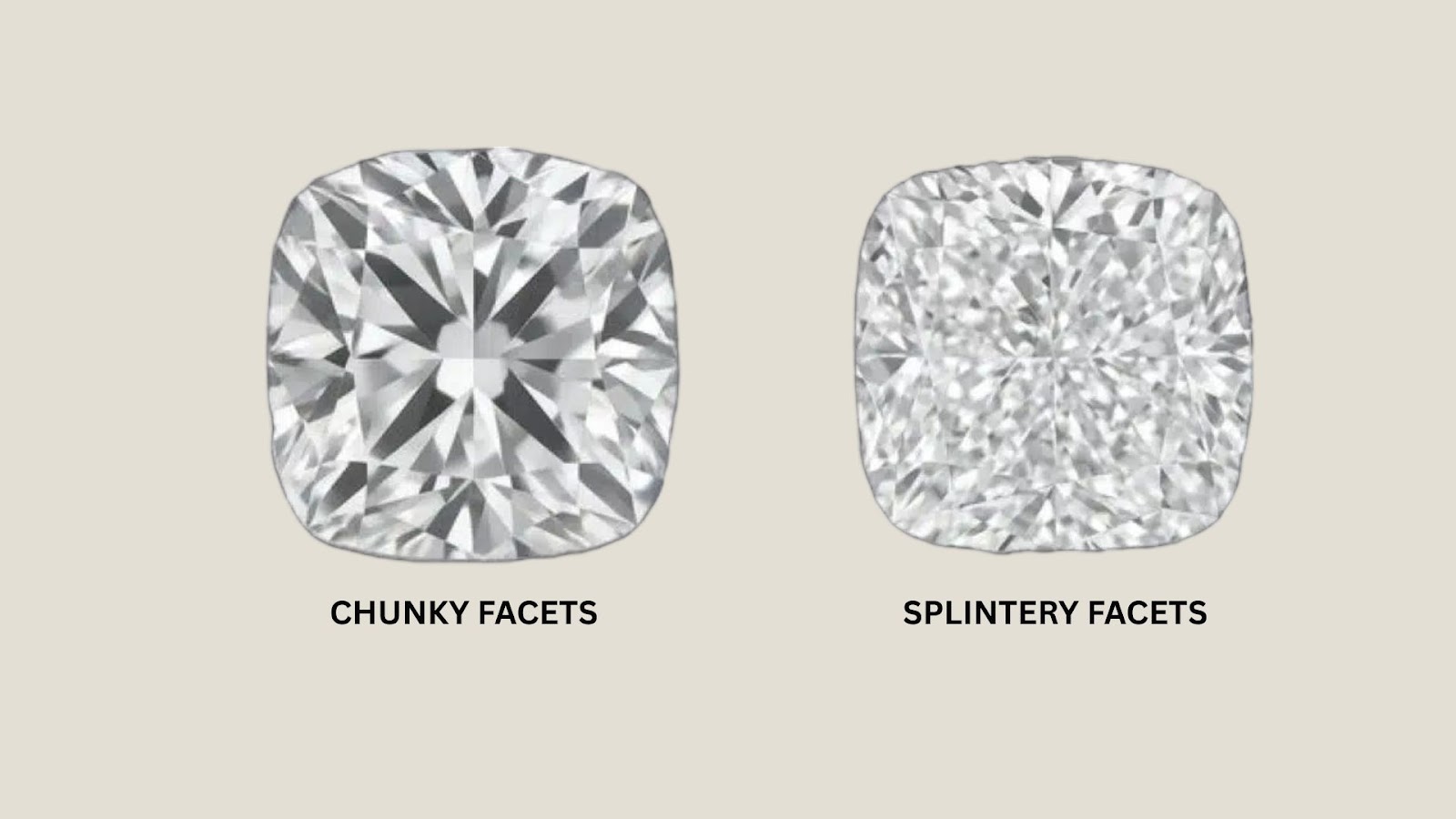
A cushion with fewer, larger facets will show more fire. A cushion with many small facets will emphasize scintillation, the sparkle you see when the diamond moves. Neither is objectively better, but they appeal to very different tastes.
This is why it is important to view cushion cuts in motion and under varied lighting. A static photo won't show you how the diamond behaves. That's why Solitaire Lab Diamond provides 360-degree views of every cushion diamond, allowing you to see exactly how each stone performs before making your decision.
What Are the Different Types of Cushion Cut Diamonds?
The categories below are widely used in the diamond trade. They describe how the diamond is faceted and how light behaves as a result.
1. Antique Cushion
This is the oldest style in the cushion family. Antique cushions have large, blocky facets, a high crown, and a small table. The cutting pattern is simple and geometric, which means you can often see individual facets with the naked eye.
The light performance here is different from modern diamonds. Instead of sharp, rapid sparkle, you get slower, deeper flashes of fire. The look is romantic and distinct, with a lot of visual character.
Antique cushions work best in vintage-inspired designs, halo settings with ornate metalwork, and bezel frames that complement their historical character. They have a strong personality but can feel out of place in ultra-modern or minimalist settings where their chunky facet pattern conflicts with clean, contemporary lines.
2. Cushion Brilliant
The cushion brilliant is the modern interpretation of the cushion cut. Its pavilion faceting is similar to a round brilliant diamond, with fewer extra facets compared to modified cushions.
The result is a bold, well-defined pattern of light return. You will see distinct flashes that are larger and more structured than what you get from a crushed ice cushion. The balance between brilliance and fire is excellent when the diamond is cut well.
This style is often considered the cleanest and most elegant modern cushion. It works especially well in solitaire settings and classic engagement ring designs where the diamond is the focal point.
Cushion brilliants offer the widest design versatility. They work in solitaires, three-stone settings, halos, and contemporary designs. This flexibility makes them a reliable choice when the setting style hasn't been finalized or when working with designs that may shift during development.
The challenge with cushion brilliants is that they require precise cutting. If the proportions are off, you can end up with dark areas in the center or uneven light return. When done right, though, this style is hard to beat.
3. Cushion Modified Brilliant
Cushion modified brilliants have additional facets below the table, particularly in the pavilion. These extra facets break up the light into smaller pieces, creating a shimmering, crushed ice effect.
The look is bright and busy. There is a lot of scintillation, meaning constant sparkle as the diamond moves. Many people choose this style because it appears lively in almost any lighting and often faces up slightly larger for the same carat weight.
Modified cushions work naturally in designs emphasizing softness and delicate details. Pavé bands, smaller halo settings, and romantic designs complement the gentle sparkle. They struggle in designs requiring bold contrast or clean geometric lines, where the dispersed pattern can read as weak rather than refined.
The trade-off is reduced facet contrast. Instead of bold flashes, you get a more diffused sparkle. If the proportions are not well controlled, modified cushions can look cloudy or lack depth. The quality range is wide, so careful evaluation is essential.
4. Hybrid Cushion Cuts
Hybrid cushions combine elements of both cushion brilliant and modified brilliant faceting. The goal is to get the defined structure of a brilliant cut with added center sparkle from extra facets.
Results vary significantly depending on the cutter. Some hybrids achieve a nice balance. Others end up looking inconsistent, with conflicting facet patterns that don't work together.
If you are considering a hybrid cushion, visual inspection is critical. You need to see how the faceting actually performs, not just rely on measurements or descriptions.
Now that you understand each cushion type individually, seeing how they compare directly can clarify which style fits your needs.
How to determine cushion cut diamond quality?
Here is how to evaluate cushion cut diamond quality effectively:
- Compare more than one stone to understand the variation in cushion cuts.
- Inspect the facet pattern first for clear, well-defined facets.
- Scan for dark zones and light leakage in the center and corners.
- Use table and depth as checkpoints, then judge performance visually.
- Check shape balance to ensure the outline is even and the corners match.
- Locate inclusions before judging clarity, especially under larger facets.
- Always view the diamond in motion in natural and spot lighting.
This approach will help separate well-cut cushion diamonds from stones that just look good.
Choosing the Best Cushion Cut Diamond
Cushion cut diamonds offer exceptional variety, but that variety requires informed evaluation. Understanding faceting, shape, and light performance is the key to selecting the right cushion diamond.
Compare styles in real lighting and ask the right questions about faceting patterns and proportions. The more you understand what you're looking at, the easier it becomes to source cushion diamonds that meet specific design requirements and quality standards.
Whether you're drawn to the romantic charm of antique cushions or the modern brilliance of modified cuts, understanding the differences between lab grown and natural diamonds can help you make a more informed sourcing decision.
Solitaire Lab Diamond specializes in precision-cut lab-grown cushion diamonds across all major styles, with 360-degree views so you can evaluate exactly how each stone performs in different lighting conditions. Explore our collection and contact us to discuss wholesale access or specific design requirements with our diamond specialists.