For decades, diamonds were explained through geology. Carbon formed deep within the Earth, transformed under pressure and heat, and slowly made its way to the surface. That story mattered because it helped buyers understand rarity, variation, and value in mined diamonds.
When nature controls the process, origin becomes the defining factor.
Lab-grown diamonds shift that focus. When diamonds are created in controlled environments, the key questions move away from where the carbon came from and toward how the crystal is grown and how consistent the results are.
In this context, the most important factor is not the size of the reactor or the length of the growth cycle, but a much smaller component at the very start of the process, which is the diamond seed.
Understanding how diamond seeds work, where they came from, and why their quality matters is fundamental. This guide breaks down everything you need to know about the component that makes modern diamond manufacturing possible.
What Is a Diamond Seed?
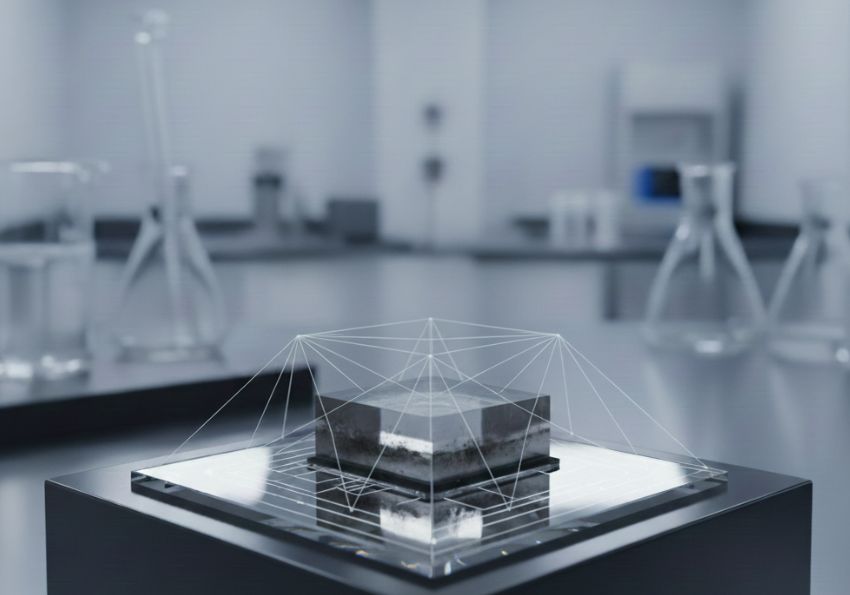
A diamond seed is a small piece of diamond material that acts as a starter crystal. It provides the initial building block and the structural framework for a larger gemstone to grow. Most of these seeds are incredibly small, often representing just a fraction of a carat.
Technically, the seed is made of the same substance it is designed to create. Diamonds consist of a pure carbon lattice structure (sp³ hybridization), exceeding 99.99% elemental carbon purity. This is the same ingredient that gives a diamond its famous hardness and clarity.
To make these seeds, diamonds are often sliced into thin shards or crushed into a fine powder. The seed acts like a template. It tells the incoming carbon atoms exactly how to arrange themselves in a repeating pattern.
Why is a Starting Template required?
It seems easier to start with loose carbon atoms and add heat or pressure. However, the physics of how crystals form makes this very difficult. This process is called nucleation.
Nucleation is the initial formation of a crystal from solution or vapor; without seeding, it favors graphite or polycrystalline forms due to higher energy barriers for diamond's ordered structure.
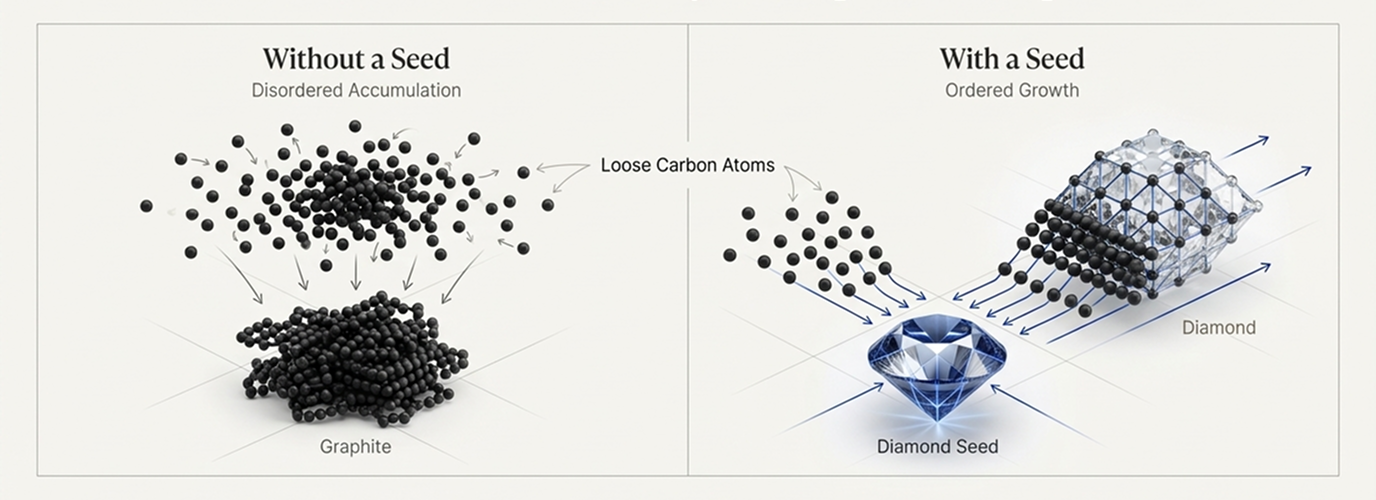
Without a guide, carbon atoms are essentially a hot mess. When they are subjected to intense heat and pressure without a framework to stick to, they tend to clump together into less orderly patterns.
This usually results in graphite, the material used in pencils, rather than a diamond lattice.
The diamond seed provides a stable anchor. It creates a specific point where the carbon knows to begin building a highly ordered diamond structure. This intentional seeding allows scientists to avoid the slow randomness that happens in nature.
By introducing this pre-formed scaffold, scientists eliminate the "slow randomness" found in nature. This enables manufacturing on an industrial scale because the seed tells the carbon atoms exactly where to build, forcing them into the sp3 bonding structure that defines a diamond's durability.
In essence, the seed sets the gem on a trajectory toward a flawless formation.
How does Chemical Vapour Deposition work with seeds?
One of the primary methods to grow these gems is Chemical Vapour Deposition, or CVD, a process that functions much like a high-tech 3D printer for carbon atoms.
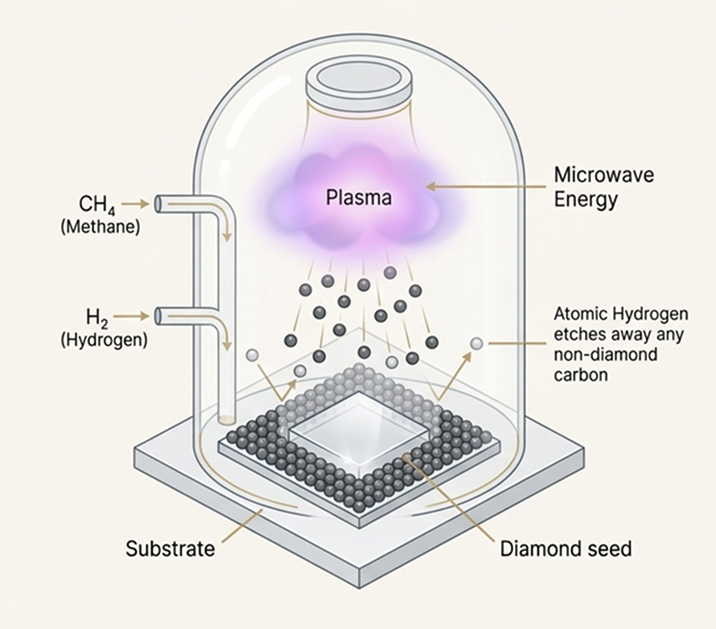
In a CVD chamber, diamond seeds are meticulously positioned on a substrate base. The chamber is then sealed, and an ultra-high vacuum is created to prevent contamination from the outside atmosphere.
A carbon-rich gas mixture, typically consisting of methane and hydrogen, is introduced into the chamber.
Using microwave energy or lasers, the laboratory transforms this gas into a plasma cloud.
This plasma breaks down the molecular bonds of the methane, freeing individual carbon atoms to migrate toward the surface of the seeds.
Over 2-4 weeks (up to 6 for larger stones), these atoms deposit onto the seed layer by layer, mimicking the oriented atomic patterns of the starter crystal.
During this process, hydrogen atoms promote the growth of the diamond lattice while simultaneously etching away any non-diamond carbon (graphite) that tries to form.
This controlled environment involves over 100 simultaneous chemical reactions, allowing the diamond to enlarge at a rate of 0.1-10 micrometers per hour until it reaches the desired carat weight.
How does the High Pressure High Temperature (HPHT) approach work with seeds?
The second major method is High Pressure High Temperature (HPHT). This technique is designed to mimic the extreme conditions found deep inside the Earth's mantle.
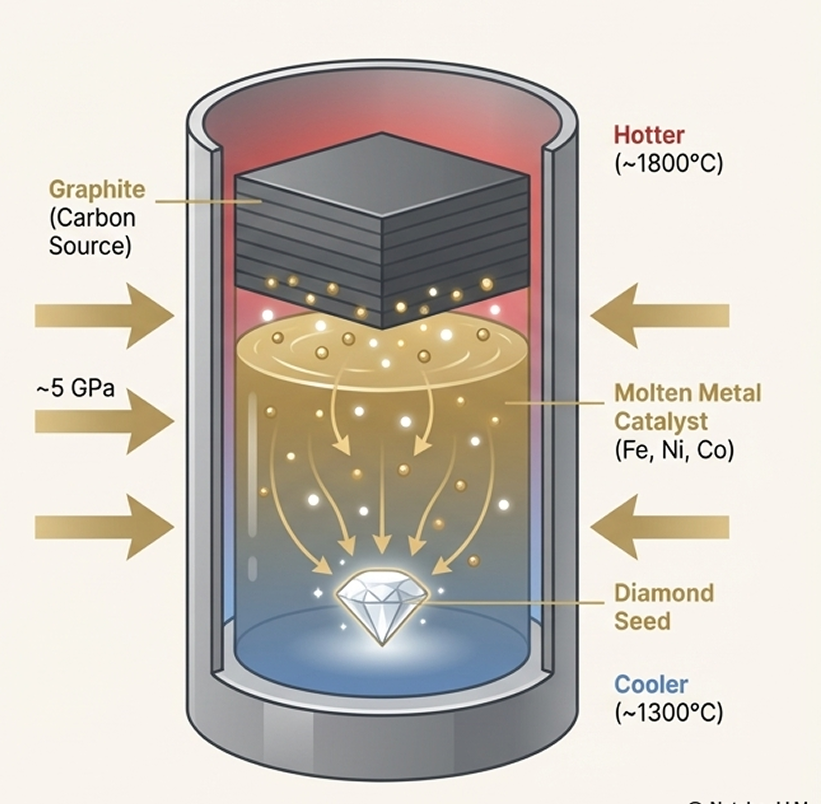
In this setup, diamond seeds are placed in a small growth cell along with a source of carbon, like graphite, and a metallic solvent catalyst. These catalysts are usually metals like nickel, cobalt, or iron.
The entire cell is subjected to immense pressures of 5-6 GPa (50-60 kbar) and temperatures of 1,300-1,700°C.
Under these conditions, the metal catalyst melts and dissolves the carbon source. As the mixture is controlled, the dissolved carbon precipitates out of the molten metal and crystallizes onto the diamond seed.
This is essentially a process of controlled precipitation. HPHT is often the preferred method for growing very large stones, especially those above three carats. It achieves great crystal uniformity because the diamond grows in a three-dimensional environment.
How Seed Quality Affects the Final Gemstone
In the laboratory, there is a simple rule. If you start with a poor foundation, you will end up with a poor diamond.
The quality of the diamond seed is the primary factor in the characteristics of the finished gem. Flawlessly formed seed crystals foster flawless growth.
However, any internal strain or imperfections in the seed can propagate through the new crystal as it grows.
Microscopic defects in the seed structure can manifest as inclusions or irregularities in the larger diamond. This negatively impacts the clarity grade and the brilliance of the gem. The color of the seed can also be an influence.
If a seed has a slight yellow or brown tint, usually from nitrogen impurities, that tint can sometimes transfer to the larger crystal. High levels of internal stress in a seed can even make the finished diamond more likely to fracture along crystal planes.
To produce premium inventory, technical experts must ensure seeds are free of contaminants and structural flaws from the very beginning.
What is the difference between Natural and Synthetic Seeds
Diamond seeds can come from two potential sources.
They are either natural diamond powders or synthetic diamond shards.
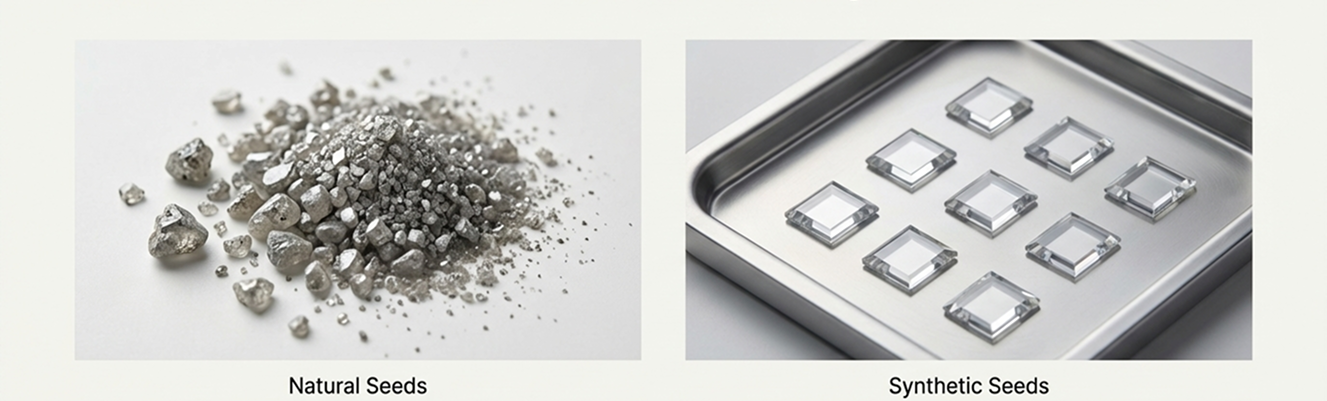
Natural seeds are created by milling small crystals that were salvaged from mining operations. While these natural seeds are effective, they come with challenges. Their availability is limited, and their quality can be very inconsistent.
Most modern industrial labs prefer synthetic diamond shards. These are plates or shards produced from previous lab-growth cycles. Using synthetic shards allows for a much more consistent and homogeneous supply. It also makes the process more traceable.
Synthetic seed production eliminates impurities before the main growth phase even begins. This leads to more predictable and flawless results because the starting material is engineered for perfection.
The Extreme Precision of Seed Metrology
Preparing a diamond seed is an exercise in extreme precision. Scientists use a field called metrology to measure and align these tiny crystals. One of the most critical requirements is crystal orientation.
The seed must be aligned within one to two degrees of the correct pattern. If the seed is misaligned, the result is often polycrystalline growth. This creates grain boundaries that ruin the optical and mechanical properties of the diamond.
Surface preparation is also vital. Seeds undergo multiple polishing steps to reach a mirror finish that is free from microscopic contamination.
Even tiny surface defects can propagate into growth distortions. There is also a specific size relationship to consider. A diamond seed is typically a small fraction (1-10% of the final volume, e.g., 0.01-0.1 ct seeds for 1-5 ct diamonds).
If a seed is too small, the growth process might consume it. If it is too large, it wastes valuable material and space inside the growth chamber.
For verification methods, see our guide on real vs fake diamonds.
Quick Summary
Every high-purity lab-grown gemstone begins with this single, remarkable foundation. While the seed represents only a tiny fraction of the final volume, its role is absolute in determining the clarity, color, and structural integrity of the resulting diamond.
It serves as the technological "parent" of the gem, setting the trajectory for a flawless crystalline formation rather than a chaotic or imperfect structure.
You can look at the surface sparkle and the cut, but the only way to be certain of its true value and structural health is to understand the precision of its origin.
The technical details of the seed’s preparation provide the real "biometric" proof of a diamond’s identity and excellence.
If authenticity, traceability, and verified quality are important to you, we invite you to explore our Lab Diamond collection. We prioritize transparency and technical excellence from the moment a seed is selected until the stone is certified by recognized gemological laboratories.
Browse our spectacular range of certified diamonds. Connect with our team today for wholesale access to certified lab-grown diamonds with full seed-to-stone traceability, specs, and over 2,500 exclusive styles.