
When you think about buying a diamond, you have likely heard of the 4Cs of diamonds. Carat, cut, clarity, and color. While they all matter, color is often the most misunderstood.
However, in gemology, color actually refers to the absence of color. The most valuable diamonds are usually colorless, like a drop of pure water.
Understanding the color scale is the best way to ensure you get a beautiful stone without overpaying for differences that your eyes cannot even see. Here’s everything you need to know to make an informed choice.
Why the Diamond Color Scale Starts at D?
One of the first questions many buyers ask is why the scale starts at the letter D instead of A. Before the modern system was established, the diamond industry was filled with inconsistent grading methods.
Some jewelers used A, AA, or AAA, while others used Arabic or Roman numerals. Terms like "blue-white" or "river white" were also common and often confusing.
To avoid any association with these inaccurate older systems, the creators of the GIA scale decided to start fresh. They chose the letter D because it was not currently associated with top-tier quality in any other system.
Today, this D-to-Z scale is the standard when discussing diamond color.
What are the color categories in diamonds?
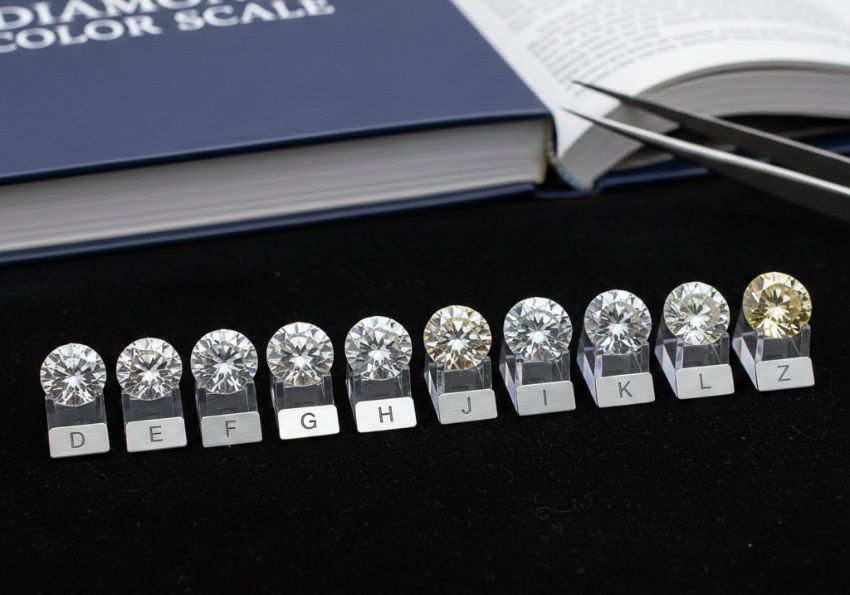
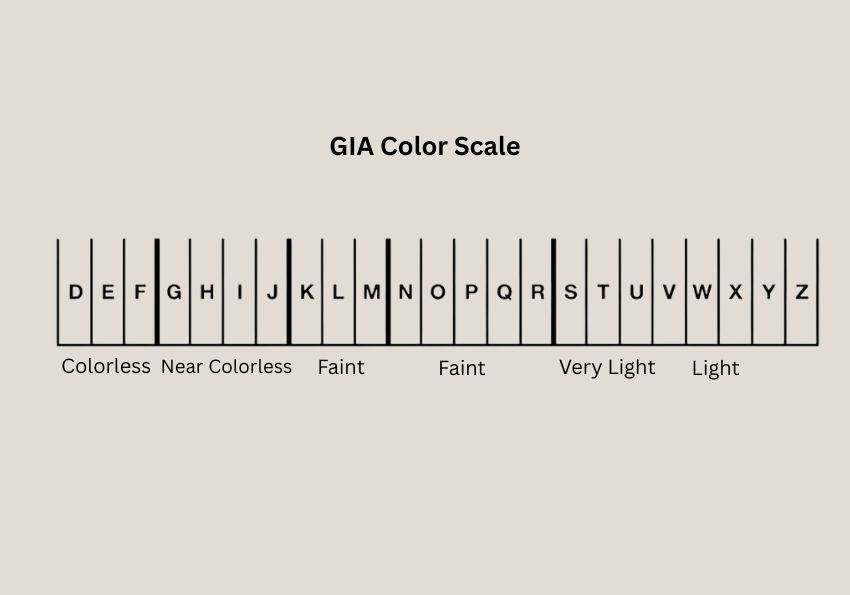
The scale is organized into five distinct groups. Each letter represents a narrow range of color rather than a single specific point.
1. Colorless Diamonds
These are the most chemically pure diamonds, with no noticeable color visible to the naked eye. Colorless diamonds are rare and valuable, showcasing brilliant sparkle and clarity.
- D: Completely colorless. This is the highest grade and the rarest.
- E–F: Nearly colorless with traces of color detectable only by an expert.
Ideal for: White gold, platinum, or high-end engagement rings. Perfect for collectors and investment pieces, as they highlight brilliance and offer timeless elegance.
2. Near Colorless Diamonds
These diamonds offer excellent value while still appearing colorless in most settings. Their subtle color is often invisible to the untrained eye.
- G–H: Appear colorless without specialized tools, offering great value.
- I–J: Slightly warmer, but still beautiful and brilliant when set.
Ideal for: Engagement rings, fine jewelry, and those looking for a balance of quality and price. The G-H range is particularly popular due to its excellent value.
3. Faint to Light Color Diamonds
Diamonds in this range show increasing warmth, with noticeable yellow, brown, or gray tints. The deeper the grade, the more visible the color.
- K–M: Faint yellow or brown, subtle and warm, often adding vintage appeal.
Ideal for: Yellow or rose gold settings that enhance the warmth of the stone. Ideal for those looking for something unique, budget-friendly, or with a vintage feel.
4. Very Light Color Diamonds (N–R)
Diamonds in this category show a very light but clearly visible color, typically yellow or brown.
- N–R: The color is noticeable without magnification and increases gradually across the range.
Ideal for: Budget-focused designs or jewelry styles where visible warmth is intentional.
5. Light Color Diamonds (S–Z)
These diamonds have a distinct and obvious color presence, usually yellow or brown.
- S–Z: While visibly colored, they lack the saturation required to be classified as fancy color diamonds.
Ideal for: Vintage-inspired, bold, or highly stylized designs where color is part of the aesthetic.
How Does Diamond Setting Affect the Perception of Color?
A diamond’s setting plays an important role in how its color is perceived, as the metal surrounding the stone can influence whether it appears white or warm. Because diamonds are highly reflective, they pick up and reflect the color of the metal around them.
If you select a diamond in the D to J color range, white metals such as platinum or white gold are usually the best choice. These cooler metals enhance the icy, colorless appearance of the diamond. Placing a colorless or near-colorless diamond in a yellow gold setting can sometimes cause the diamond to reflect warm tones, making it appear slightly lower in color than it actually is.
Diamonds in the K to M range often pair well with yellow gold. The warmth of the metal blends with the diamond’s faint tint, helping the color look intentional rather than like a visible grade difference.
The metal used in a ring setting plays a direct role in how a diamond’s color appears once it is set.
- White gold or platinum: Enhances the colorlessness of D–J grade diamonds, making them look cleaner and brighter.
- Yellow gold: Works best for diamonds with faint or warm tints (K–Z range), as the metal masks the diamond’s natural warmth.
- Rose gold: Adds a soft, warm blush that can subtly influence the diamond’s appearance.
- Prong color matters: Using white gold or platinum prongs, even on a yellow gold band, can reduce color reflection into the diamond.
Choosing the right combination of metal, prongs, and design helps control how a diamond’s color is perceived, whether the goal is a bright white look or a warmer, intentional style.
The Impact of Size and Shape
Not all diamonds show color in the same way. Carat weight plays a major role because larger diamonds have more body mass, which makes any hint of color much easier to see. If you are buying a stone over two carats, you may want to stay in a higher color range to maintain a white appearance.
Diamond shape is another factor. The classic round brilliant is excellent at hiding color because of how it reflects light.
In contrast, fancy shapes with pointed ends, such as marquise, pear, or oval cuts, tend to concentrate color in their tips.
If you are choosing one of these shapes, experts often recommend moving up one color grade to ensure the ends look as white as the center.
What is Diamond Fluorescence?
Fluorescence is the glow that some diamonds emit when exposed to ultraviolet (UV) light. About 25% to 35% of all diamonds exhibit this characteristic, and in the vast majority of cases, the glow is blue.
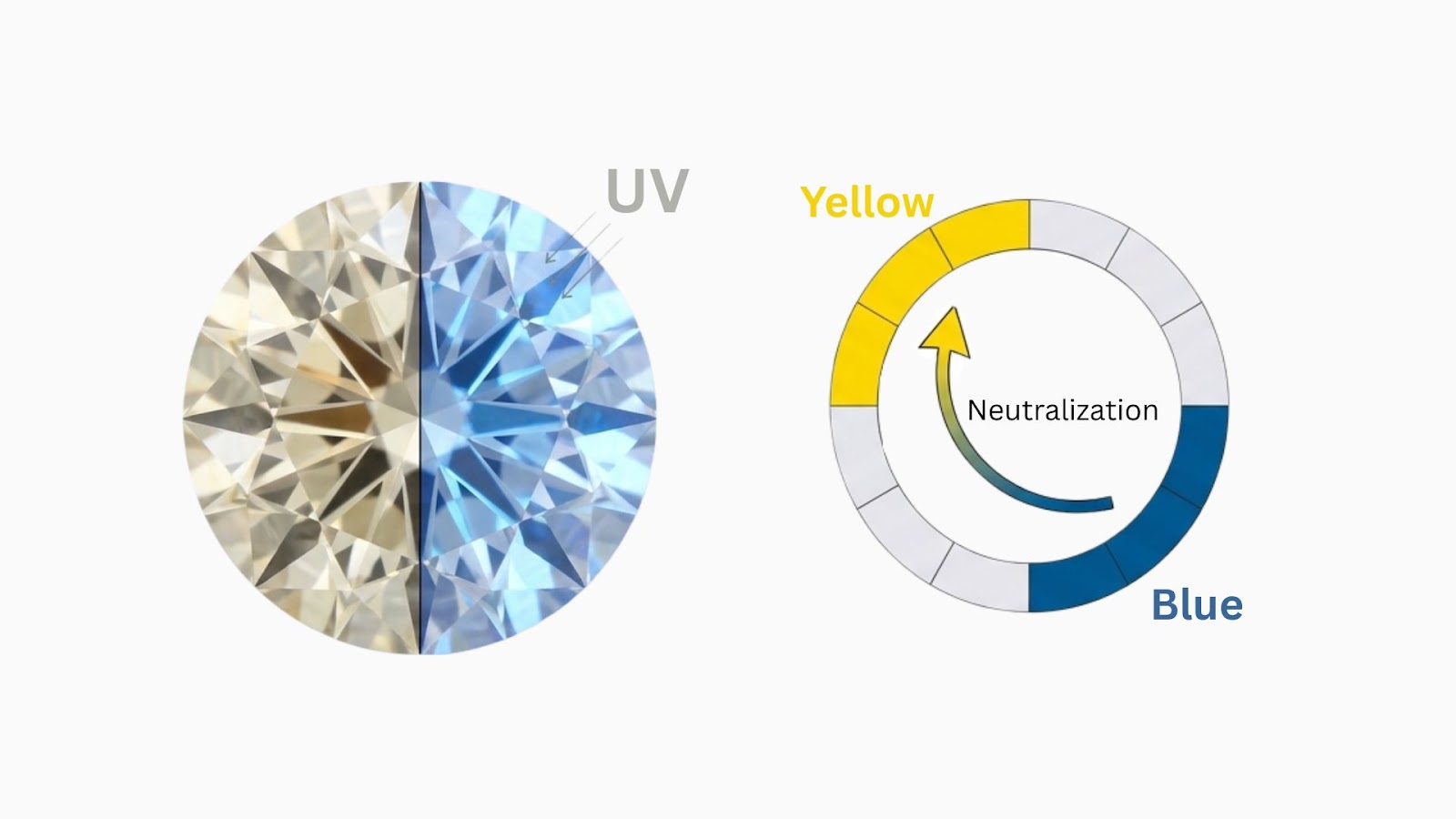
Blue fluorescence can actually be a benefit for diamonds with a slight yellow tint, specifically those in the I-to-M range. Because blue neutralizes yellow, the fluorescence can cancel out some of the yellow tones in natural sunlight, making the diamond appear whiter than its official grade suggests.
While there is a rare myth that strong fluorescence makes a stone look "oily," this occurs in fewer than 0.2% of stones and is rarely an issue for the average buyer.
Choosing Your Perfect Grade
When you are ready to make a purchase, remember that you are often paying for rarity. A D-color diamond is the rarest and most expensive, but a G or H color diamond can look virtually identical to the naked eye once it is mounted in a ring.
The G to J range is widely considered the "sweet spot" for many buyers. These diamonds look bright and white in a setting, but allow you to allocate more of your budget toward a better cut or a larger carat weight.
No matter which grade you choose, always insist on an independent grading report to verify that the color you are paying for is accurate.
Now that you understand how to navigate the diamond color scale, it is easier to make the right choice. If you are ready to find your ideal stone, visit Solitaire Lab Diamond to explore a curated collection of premium lab-grown diamonds.
Whether you are searching for a perfectly colorless D-grade stone or a high-value near-colorless diamond, their experts can help you find a diamond that matches your style and your budget.
FAQs
What color diamond should I choose for an engagement ring?
For an engagement ring, G-H color diamonds are ideal, offering a near-colorless look at a more affordable price. D-F diamonds provide the highest quality but come at a premium cost, ideal for those seeking the ultimate brightness.
Which diamond color grade is best?
The best diamond color grade depends on your preferences and budget. D-F grades are colorless and highly valued for their brightness. However, G-H diamonds offer excellent value and look just as white in most settings.
What is better to have a high clarity or a high color diamond?
It depends on your priorities. Clarity is crucial for clean visuals, while color affects the diamond's overall appearance. A high-quality cut can help mask slight imperfections, so balance clarity and color for optimal value.
How are colored diamonds graded?
Colored diamonds are graded based on their hue, tone, and saturation. Grading ranges from faint to vivid, with vivid being the most valuable. The more intense and pure the color, the higher the diamond's grade and value.
What's the rarest diamond color?
The rarest diamond color is red, followed by blue and green. These colored diamonds are extremely rare, with vivid, pure colors fetching the highest prices in the market due to their scarcity and unique beauty.