
Diamond color describes how colorless or tinted a diamond appears and is one of the most important factors in how your stone looks and how much it costs.
In white diamonds, color is graded on a standardized D–Z scale, where D is completely colorless and lower grades show increasing warmth. Small shifts on this scale can mean big price differences, even when they are hard to see with the naked eye.
Understanding what diamond color is, how it is graded, and how it affects appearance helps you choose a stone that looks beautifully white to your eyes without overspending on invisible upgrades.
What is Diamond Color?
Diamond color refers to the absence of color in a diamond, graded on a scale from colorless to light yellow or brown. It helps professionals evaluate a diamond’s quality and value.
For a white diamond, the color grade actually means how colorless it is. One of the 4Cs, diamond color is a measurable grade given to an individual stone to quantify its lack of hue along a standardized diamond color chart. A perfectly colorless diamond is a clear gemstone, much like a drop of water.
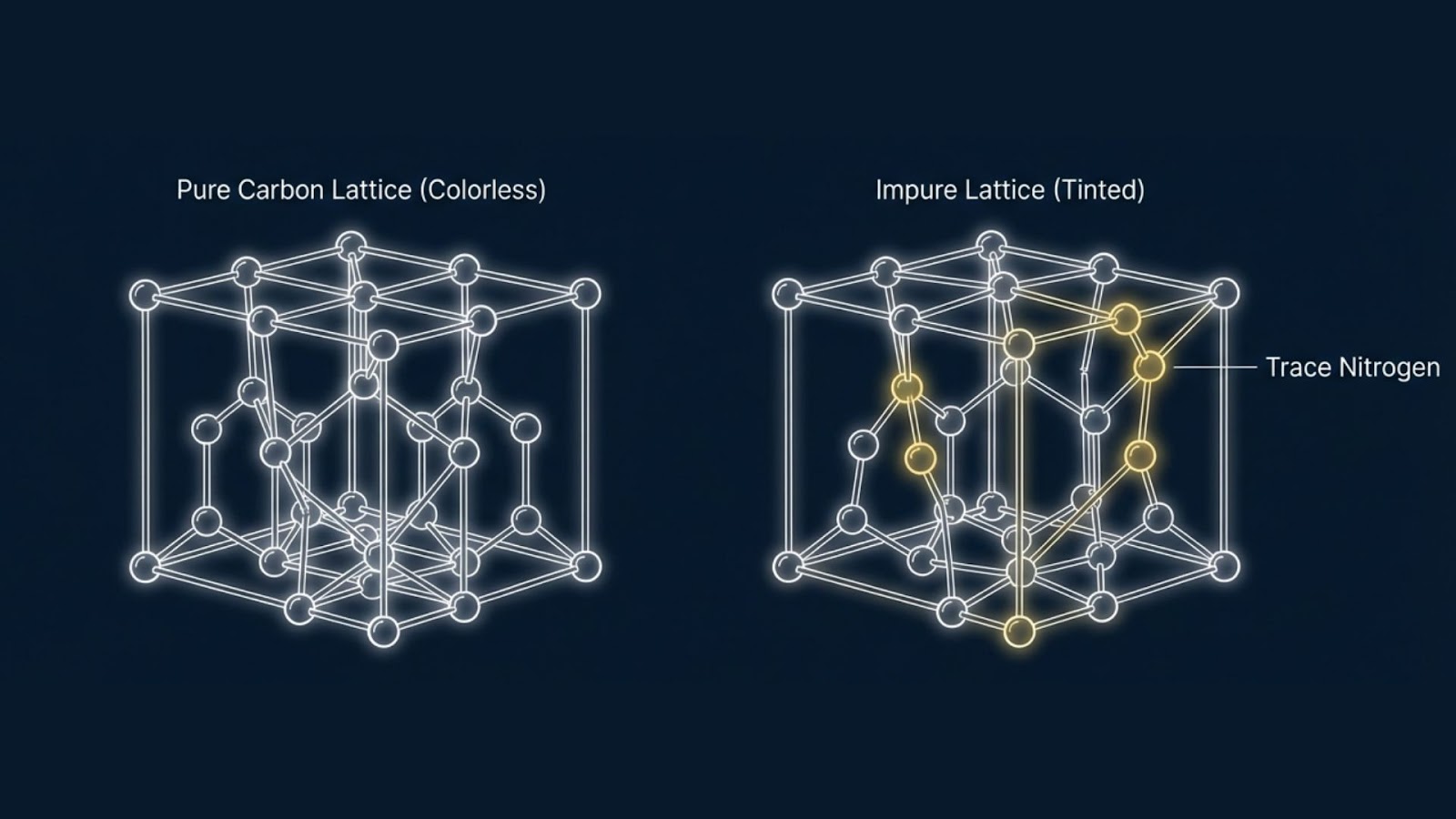
It is very rare to find a diamond that does not show any color at all. During the formation process, trace elements of other chemicals, such as nitrogen or boron, can cause coloration to occur. Most gem-size diamonds contain slight hues of yellow or brown due to these natural processes.
Knowing diamond color helps us understand how professionals evaluate a stone.
This rigorous evaluation leads directly to the industry's universal grading scale.
How Diamond Color Is Graded (GIA D–Z Scale)?
The Gemological Institute of America (GIA) diamond color scale is the global industry standard for grading. It provides a system of absolutes that ensures accurate and objective color-grading.
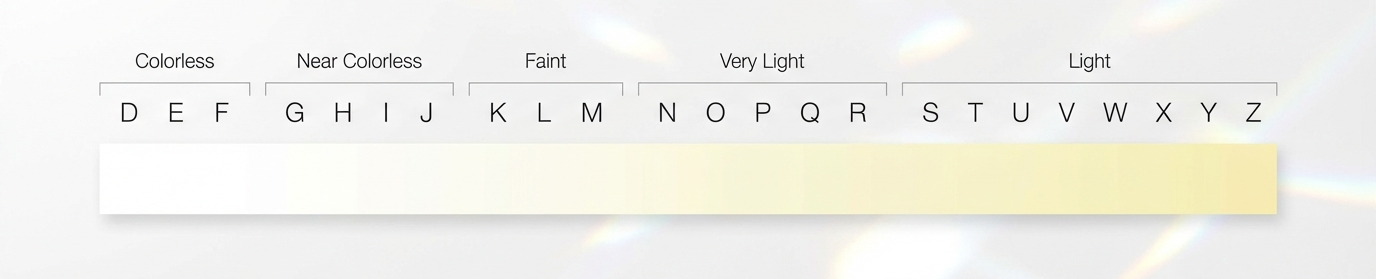
The scale ranges from D to Z. The GIA chose to start with the letter D to avoid confusion with older systems that used A, B, and C or Roman numerals. A grade of D represents a completely colorless stone, which is the rarest and most valuable. As the scale moves toward Z, diamonds show an increasingly noticeable yellow, brown, or gray tint.
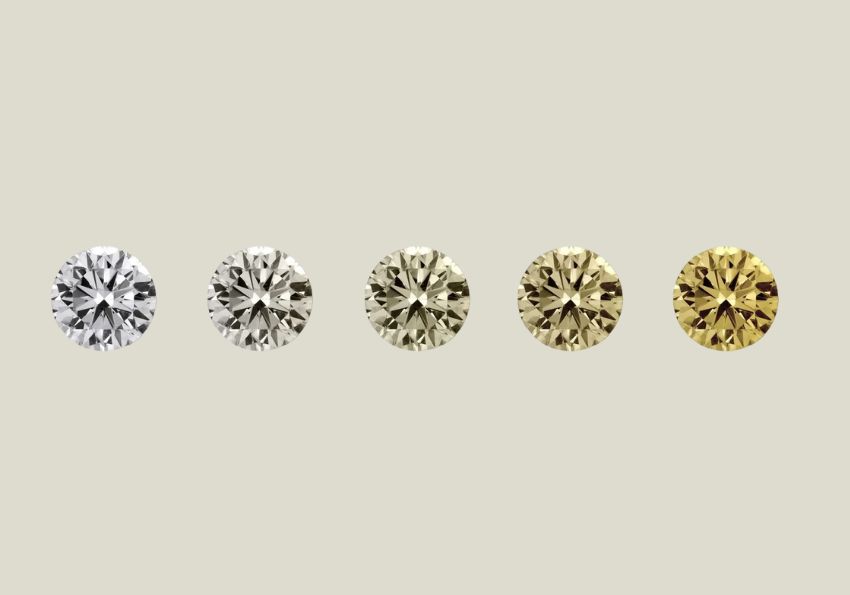
When examining a diamond color chart, the progression from D to Z shows an increasing warmth that becomes gradually more visible. The distinctions between adjacent grades are extremely subtle. Even trained gemologists rely on master stones for comparison.
Most consumers cannot distinguish between D and F, or between G and I, when viewing mounted diamonds. The visual differences become more apparent in larger stones and when diamonds are viewed side by side in controlled lighting conditions.
While the scale is standard, the origin of that color differs between natural and lab grown diamond.
To learn more about how diamond color affects your choice, explore the blog on diamond color grading.
How is Diamond Color Evaluated?
The correct way to evaluate diamond color is in precise, controlled conditions using specialized lighting. Here are standardized steps to follow to ensure accuracy:
- Diamonds are graded under daylight-equivalent light bulbs that include a specific UV component.
- Graders use a neutral, plain background to avoid surrounding colors interfering with the stone.
- The stone is placed table-down and pavilion-up against the background.
- This positioning isolates the diamond's body color from its sparkle and light return.
- Graders compare the stone to a set of masterstones with established color values
What are Fancy color diamonds?
Once a diamond’s color becomes more intense than the Z grade, or if it shows a hue like pink, blue, or green, it is classified as a fancy colored diamond.
These are graded on a different scale that focuses on the strength and purity of the color rather than its absence. While natural fancy colored diamonds are incredibly rare and expensive, lab-grown technology has made these vibrant stones much more accessible for those who want a unique look.
White vs Fancy Color Diamonds
White diamonds are valued for their lack of color, while fancy diamonds are prized for their unique and intense hues.
|
Feature |
White Diamonds |
Fancy Color Diamonds |
|
Color & Grading |
Graded D to Z for the absence of color |
Graded on a separate scale based on hue, tone, and saturation |
|
Cause of Color |
Mostly trace nitrogen or boron |
Variations in structure or different chemical trace elements |
|
Rarity and Value |
More commonly, the value decreases as the color becomes more noticeable. |
Only 1 in 10,000 possesses natural color; value rises with intensity. |
|
Pricing Factors |
Prices decline in alphabetical order as they move toward Z. |
Rare colors like red and green demand the highest prices |
With these distinctions in mind, let’s look at how to choose the right diamond.
How to Choose the Right Diamond Color?
Choosing a diamond color is about finding the right balance between beauty and budget.
- Consider the Metal Setting:
The metal color can significantly affect how a diamond’s color appears. White metals like platinum or white gold highlight any subtle color in the diamond, making higher color grades (D to H) the best choice. On the other hand, warmer metals like yellow or rose gold can help mask slight color tones, allowing you to choose a slightly lower color grade (I to K) without sacrificing the diamond's beauty. - Balance Color with Other Cs:
If you are working within a budget, don't worry too much about getting the highest color grade. Prioritize an excellent cut instead. A well-cut diamond reflects light brilliantly and often appears brighter and more colorless than its grade suggests. - Think About Size:
Color becomes more noticeable in larger diamonds, especially those over 1 carat. For bigger stones, investing in a higher color grade (G or higher) can help maintain a crisp, bright appearance. - Trust IGI Certification:
Always look for an IGI certificate when purchasing a diamond. IGI's thorough evaluations ensure transparency, giving you confidence in the diamond's true color and overall quality.
Making the final choice requires the right tools to view the stone.
Final Thoughts
Color grade is one of the most visible aspects of your diamond. The numbers on a certificate matter, but what you see with your own eyes matters more.
Before buying online, always request a magnified, 360-degree video of the actual stone. This lets you check for subtle tints that grading reports don't always capture, and it shows you how the diamond performs under different lighting angles.
Solitaire Lab Diamond’s website features a high-resolution 360-degree video so you can assess color, clarity, and cut from every angle before making a decision.
Pay attention to how color interacts with your setting choice. A near-colorless stone (G-H) that looks slightly warm against white gold might look perfectly crisp in yellow or rose gold.
Explore our collection of certified, ethically sourced lab-grown diamonds and see the difference that transparency makes.
After all, the best diamond is the one that looks colorless to your eye without breaking your budget.
FAQs
What diamond color is best?
The best diamond color is subjective, but D-F (colorless) diamonds are the most valuable due to their brightness. However, G-H diamonds offer great value with minimal visible difference.
What is the exact color of a diamond?
Diamonds range from colorless (D) to light yellow or brown (Z). The color is graded based on the presence of any visible hue, with D being completely colorless and Z showing noticeable color.
Which diamond color is better, D or G?
D is the highest color grade, completely colorless, while G is near-colorless. D diamonds are more expensive, but both appear white to the naked eye.
Which is better, a VS1 or VS2 diamond grade?
VS1 has fewer inclusions than VS2, but both grades are considered "very slightly included" and are clean to the naked eye, offering excellent clarity.
What color diamond has the most sparkle?
Diamonds with higher color grades, like D-F, tend to have the most sparkle because they allow more light to pass through. However, the cut quality impacts sparkle more than color.