When you walk into any jewelry trade show, you'll hear the same debate: round or fancy shapes, classics or trending cuts. But retailers who've been in this business long enough know the real question isn't about personal preference. It's about what moves off the shelf.
Choosing the best cut of diamond for your inventory is a buying decision with direct consequences on sell-through rates, margin, and how often your showcases need restocking. Stock the wrong mix and capital sits idle. Stock the right one, and your turnover speaks for itself.
Today's lab-grown diamond buyers do an inquiry before they walk through the door. They know their cut grades, they've read the certificates, and they'll ask about length-to-width ratios. Your sourcing needs to keep up with that.
This guide covers which cuts belong in your core inventory, which ones earn a smaller spot, and how to build a mix that actually performs.
Which diamond cuts drive the most retail sales?
Sell-through rate is the real measure of any inventory decision. Some cuts sell year-round without much effort. Others spike when a celebrity gets engaged and go quiet for six months.
Here's where to focus your buying:
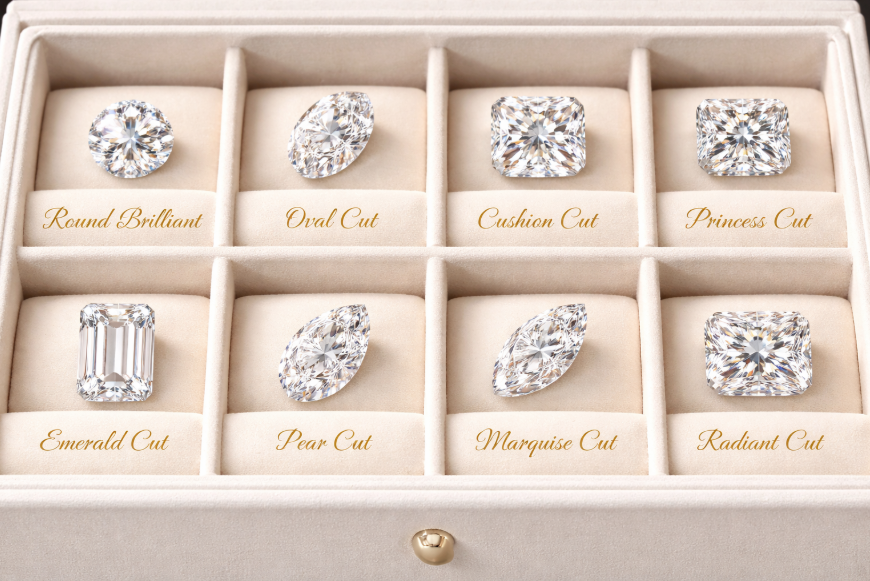
1. Round Brilliant
The round brilliant cut diamond is the highest-selling diamond shape. Its light performance is unmatched, and it fits virtually every style of setting.
Retailers should maintain consistent stock in 0.50ct, 1.00ct, and 1.50ct ranges. These are the sizes that sell the fastest. Going out of stock in round brilliants, especially in the 1ct range, is a missed sale you won't recover.
A round brilliant fits a solitaire, a halo, a three-stone, a pavé band, practically any setting. This is why it earns the biggest share of your buying budget.
2. Oval Cut
Oval cut diamond has been gaining ground steadily. The elongated face-up appearance is popular in engagement settings, and it offers a larger visual spread per carat compared to a round.
If you're building out your fancy shape inventory, oval should be your first investment. It sells well in-store, looks great in product photography, and attracts buyers who want a bit of personality in their stone without straying too far from what's familiar.
3. Cushion Cut
Cushion cut diamonds carry consistent demand across both classic and contemporary settings. They're available in square and elongated proportions, which gives retailers more flexibility when sourcing.
Square and elongated proportions give you sourcing flexibility. When a buyer is weighing a 1.50ct cushion against a 1.00ct round at the same budget, cushion gives you more stone for the money. That is a conversation worth having.
4. Princess Cut
The princess cut diamonds were a dominant shape through the early 2000s. That demand hasn't disappeared, but retailers who over-index here often find these stones taking longer to sell.
Keep two or three pieces in stock for the buyers who specifically ask. Just don't let it take up your shelf space that an oval or cushion could fill.
5. Emerald Cut
The emerald cut diamond is a step-cut shape, and it reflects light differently from brilliant cuts; you get broad flashes rather than sparkle. The buyer who picks an emerald cut usually knows exactly what they want. They're not browsing; they came in for this shape specifically.
Also, inclusions are far more visible in step cuts. When stocking emerald cuts, VS clarity or higher is worth the investment. A lower-clarity emerald cut is a harder sell than a lower-clarity cushion or oval.
6. Pear and Marquise Cut
Pear shape diamond have seen a demand recovery recently, largely driven by visibility in high-profile jewelry. Marquise has a smaller but consistent following.
You don't need a full selection of either. Two or three good pieces per shape is enough to cover the buyers who ask without locking up stock that may take months to sell.
7. Radiant Cut
Radiant cut diamond gives you the brilliance of a round in a rectangular outline. Buyers who are deciding between cushion and princess often land on radiant. Once they see it, it splits the difference well.
How cut grade affects retailers' inventory strategy
Cut grade on the certificate matters as much as shape. Most lab-grown buyers pull up two or three certificates on their phone before they ask the price.
Stocking below a Very Good cut grade in lab grown round brilliants is a risk. Excellent cut-grade stones turn over faster because buyers can validate the quality themselves through the IGI certificate.
For fancy shapes like oval, cushion, emerald, and pear, IGI does not assign an overall cut grade the way it does for rounds. In these cases, focus on:
- Polish: Excellent or Very Good
- Symmetry: Excellent or Very Good
- Length-to-width ratio appropriate for the shape (e.g., 1.30–1.50 for oval)
What IGI Certification tells retailers about cut quality
IGI certificates cover cut grade (for rounds), polish, symmetry, proportions, and fluorescence. For the US retail market, IGI-certified lab grown diamonds are widely recognized and trusted by end buyers.
When placing a wholesale order, review the certificate for table percentage, depth percentage, polish, and symmetry. These four points give you a reliable read on how a stone will perform in a setting and under light.
A well-cut stone does the selling for you. A poorly proportioned one just sits there looking heavy and dead under the light, no matter how many carats it is.
How to build a balanced cut portfolio for your store
There's no single formula, but there is a practical starting point for retailers building or refreshing their lab grown inventory.
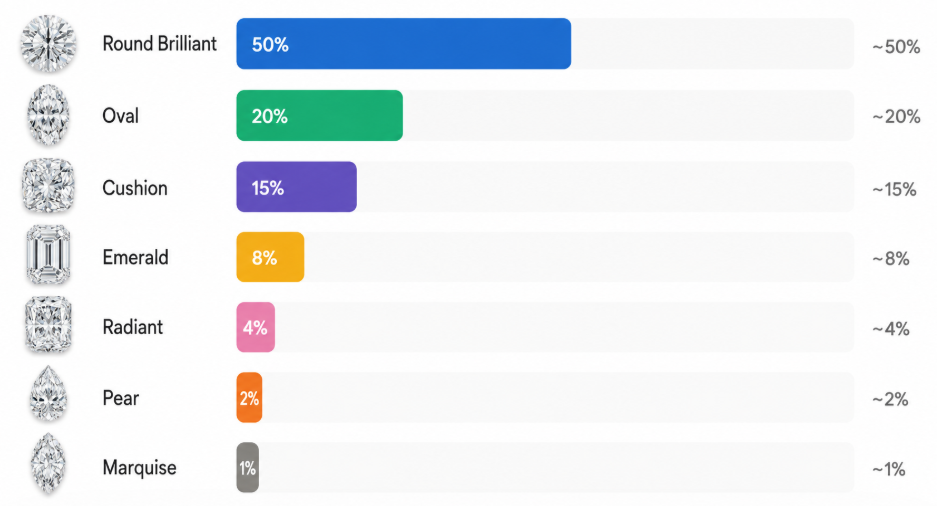
A Suggested Starting Split by Shape
|
Shape |
Suggested Allocation |
Sell-Through Speed |
Buyer Intent |
Recommended Clarity |
|
Round Brilliant |
~50% |
Fast |
Classic engagement ring buyers, first-time bridal shoppers, customers comparing brilliance |
VS2–SI1 for value; VS1+ for premium inventory |
|
Oval |
~20% |
Fast to Medium-Fast |
Buyers who want a larger face-up look, modern bridal shoppers, customers seeking elegance with personality |
VS2 or higher; prioritize clean appearance and symmetry |
|
Cushion |
~15% |
Medium |
Value-conscious buyers, shoppers comparing size vs. price, customers wanting a softer romantic look |
VS2–SI1 if eye-clean; VS1+ for elongated cushions |
|
Emerald |
~8% |
Medium to Slow |
Sophisticated buyers, step-cut lovers, customers who value clarity and understated elegance |
VS1 or higher recommended because inclusions are more visible |
|
Radiant |
~4% |
Medium |
Buyers deciding between cushion, princess, and emerald shapes; customers who want brilliance in a rectangular outline |
VS2 or higher; prioritize polish and symmetry |
|
Pear |
~2% |
Slow to Medium |
Fashion-forward buyers, customers seeking a distinctive engagement ring or statement piece |
VS2 or higher; check symmetry and tip alignment carefully |
|
Marquise |
~1% |
Slow |
Style-specific buyers, vintage-inspired shoppers, customers looking for maximum finger coverage |
VS2 or higher; prioritize symmetry and balanced proportions |
|
Special Orders |
As needed |
Request-based |
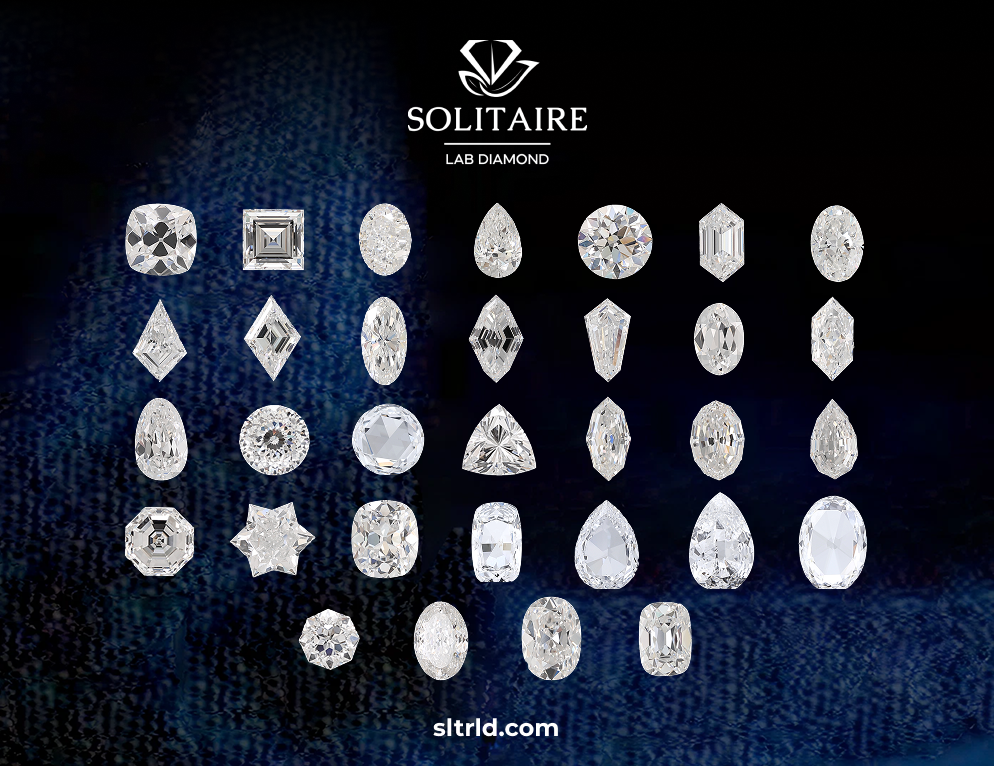
Customers asking for heart, Asscher, unusual ratios, or less common fancy shapes |
VS1–VS2 depending on cut style and visibility of inclusions |
This is a starting framework, not a rule. You can adjust based on what your customers actually buy.
Match your inventory to your customer profile
- Bridal-focused retailers: should skew heavily toward round and oval. These two shapes cover the majority of engagement ring demand.
- Fashion-forward or boutique retailers: can invest more in emerald and pear, where the aesthetic is a selling point in itself.
- Volume-focused or wholesale-adjacent retailers: should not overlook cushion. The lower price-per-carat makes it accessible to a wider buyer range without sacrificing quality optics.
Conclusion
The best cut of diamond for your retail inventory comes down to one thing: matching what you stock to what your market actually buys. Round brilliant is non-negotiable. Oval has earned its place as a core fancy shape. Cushion, emerald, pear, and marquise each serve a purpose, but in the right quantities.
Cut grade matters as much as shape. Retailers who stock Excellent or Very Good cut lab grown diamonds, backed by IGI certification, have a much easier time moving inventory than those who cut corners on grading to save a few dollars per stone.
Build your portfolio with a clear lead shape, a secondary fancy shape, and limited depth in niche cuts. That approach keeps your showcases moving, your cash flow healthy, and your wholesale relationship worth maintaining.
Ready to source IGI-certified lab grown diamonds across all the cuts that actually sell? Browse Solitaire Lab grown Diamond's wholesale inventory and find the right mix for your store.
The retailers who think carefully about what they stock spend a lot less time wondering why something isn't selling.
FAQs
What is the best cut of diamond for an engagement ring?
Round brilliant remains the top choice for engagement rings due to its light performance and universal setting compatibility. Oval is a strong second choice, particularly for retailers serving buyers who want something slightly less traditional.
Does cut grade matter for lab grown diamonds?
Yes. Cut grade matters for lab grown diamonds. And arguably more so than with natural diamonds, because lab grown buyers are typically more educated and comparison-shop on certificate details. Stocking Excellent or Very Good cut grade stones reduces friction at the point of sale.
How many shapes should a retail jeweler stock?
A retail jeweler should start with stocking an inventory of 3–4 shapes that cover the majority of demand. Round, oval, and cushion handle the bulk of it. Add emerald as a fourth shape once your core inventory is stable. Going too wide too early ties up capital in slow-moving stock.