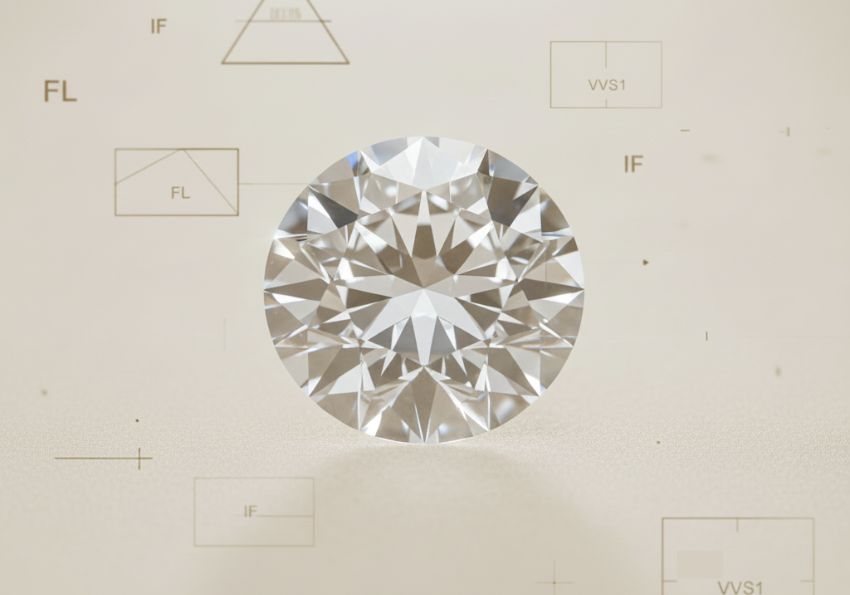
For any buyer, understanding clarity is a key step in evaluating a diamond's quality. Clarity refers to the visual purity of a stone, especially the internal characteristics called inclusions and surface defects known as blemishes.
Clarity is one of the four Cs of diamond grading, along with carat weight, color, and cut. While carat weight determines size and cut determines sparkle, clarity defines the individual character of the stone. This guide explains how clarity is graded, the impact on value, and choosing the right stone for your needs.
What is Diamond Clarity and Why Does It Matter?
Inclusions and blemishes are a result of the diamond's natural formation process deep within the earth.
Inclusions are materials like solids, liquids, or gases that were trapped inside the mineral as it grew. These might be crystals of a foreign material or even other diamond crystals. They can also manifest as structural imperfections, such as tiny cracks that make a stone look cloudy.
Blemishes are strictly surface-level features, such as scratches, pits, or nicks. Most inclusions do not harm a diamond's structural integrity, nor are they visible to the unaided eye. However, large "clouds" can interfere with the stone's ability to transmit light, and large cracks reaching the surface may make the stone more likely to fracture.
Beyond appearance, inclusions act as a diamond’s fingerprint. As lab-grown diamonds become more advanced, natural inclusions help confirm a diamond’s natural origin and make each stone unique.
The History and Standard of Clarity Grading
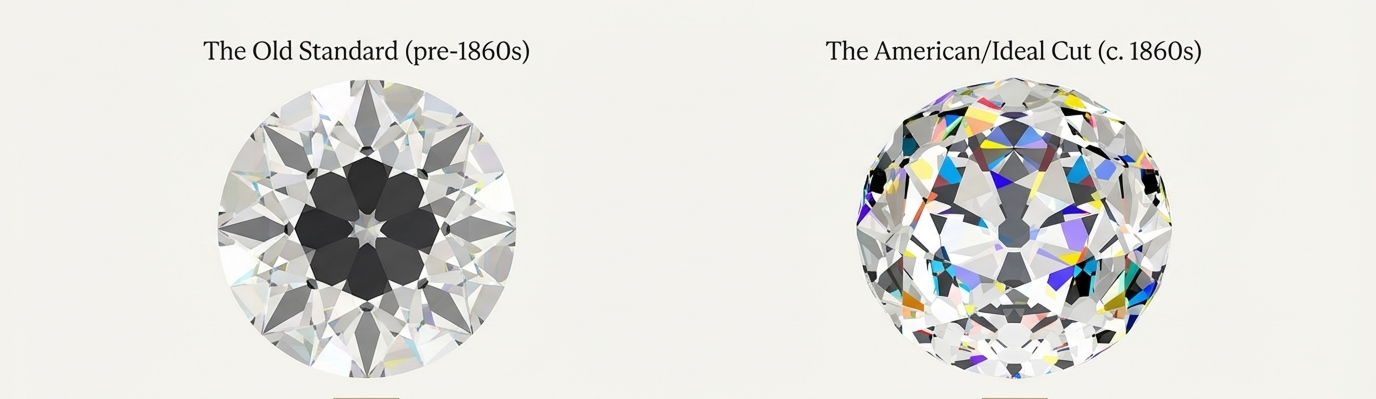
The Gemological Institute of America (GIA) standardized diamond clarity grading in the early 1950s, with Richard T. Liddicoat and his team developing the system released in 1953 as part of the GIA International Diamond Grading System™. This replaced inconsistent industry terms with an 11-grade scale from Flawless (FL) to Included 3 (I3), enabling universal comparisons.
The GIA Clarity Scale
Clarity is assessed under ten times (10x) magnification, which is the international industry standard. Professionals use binocular stereo microscopes or handheld loupes to inspect the stone.
The GIA scale is divided into six categories and eleven specific grades:
|
Category |
Grade |
Description |
|
Flawless |
FL |
No inclusions or blemishes visible under 10x magnification. |
|
Internally Flawless |
IF |
No inclusions visible under 10x; only small surface blemishes. |
|
Very, Very Slightly Included |
VVS1, VVS2 |
Minute inclusions that are difficult for even a skilled grader to see. |
|
Very Slightly Included |
VS1, VS2 |
Minor inclusions that range from difficult to somewhat easy to see under 10x. |
|
Slightly Included |
SI1, SI2 |
Noticeable inclusions that are easy or very easy to see under 10x. |
|
Included |
I1, I2, I3 |
Obvious inclusions that are clearly visible and may affect brilliance or durability. |
Note: Grades assessed by certified labs like GIA/IGI for resale consistency.
How Diamond Clarity is Graded
To determine a final grade, an expert grader looks at the most noticeable inclusions, often called "grade-setting inclusions. They evaluate five specific factors:
- Size: Larger inclusions are generally more visible and lead to a lower grade.
- Number: The quantity and cumulative effect of inclusions; multiple small ones can impact visibility more than a single larger one.
- Position: Where an inclusion is located matters significantly. Inclusions directly under the table (the large flat facet on top) are the most visible. Inclusions near the edges (the girdle) are less noticeable and can often be hidden by jewelry settings.
- Nature: This distinguishes whether the characteristic is internal (inclusions) or external (blemishes). Certain types, like "feathers" or "knots," may pose a risk to the stone's durability if they reach the surface.
- Color or Relief: ‘Relief' describes the contrast between the inclusion and diamond; high-relief (e.g., dark or colored) inclusions are more visible.
Rarity and Market Value
As clarity increases, diamonds become significantly rarer. Only about 20% of mined rough diamonds are gem-quality (typically VS2+ and above, suitable for fine jewelry), with FL/IF representing less than 0.1%.
Beyond appearance, inclusions serve as a natural diamond’s unique fingerprint, confirming origin, unlike lab-grown diamonds, which often achieve FL/IF clarity without such characteristics due to controlled growth.

For the majority of buyers, VS and SI grades offer the most practical value. These stones are often "eye-clean," meaning their inclusions are not visible to the naked eye when the gem is viewed from approximately six inches away.
Flawless diamonds are marketed as "investment grade," valued more for their rarity than for practical use in standard jewelry. To understand more about why diamonds are so expensive, it's helpful to know how rarity affects market value.
What are Common Misconceptions About Diamond Clarity
A common misconception is that clarity is the most important factor in a diamond's sparkle. In reality, cut is the primary source of light return, fire, and colorful dispersion. A well-cut diamond can actually hide small inclusions more effectively than a stone with a lower cut grade.
Another misconception is that all internal marks are "flaws" to be avoided. Smaller inclusions act as a diamond’s "natural biography" or fingerprint, providing a unique identifying mark and proof of natural origin.
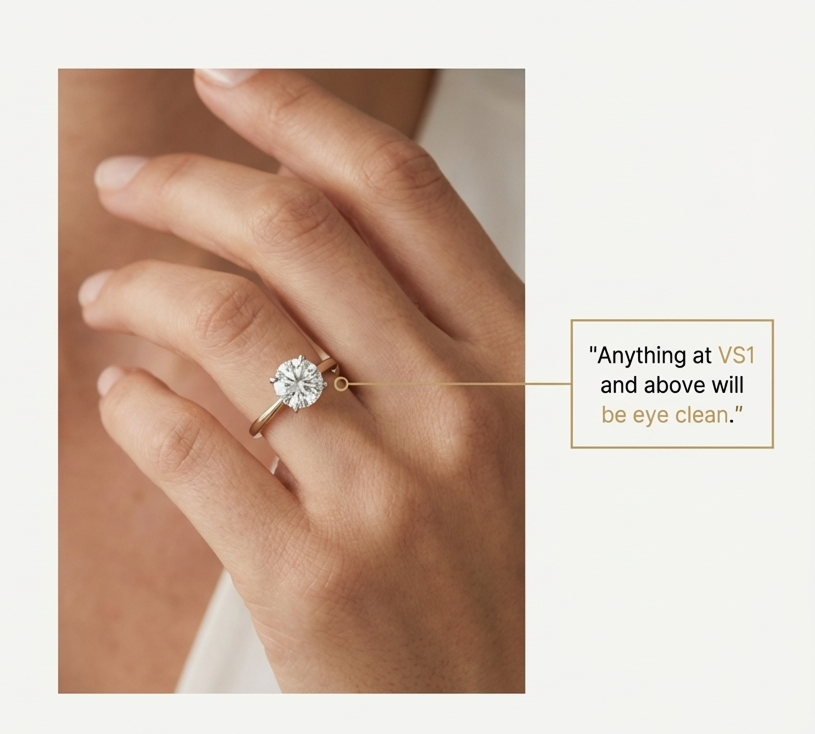
For the best visual impact, experts often recommend finding an "eye-clean" stone. One where inclusions are invisible to the unaided eye, rather than paying a massive premium for a technically flawless grade.
How You Can Do Clarity Enhancements
When you encounter a stone with a high clarity grade at an unusually low price, it may have undergone artificial treatments. While natural inclusions are part of a stone's history, some diamonds are modified to hide these characteristics through specific enhancement procedures.
- Laser Drilling: This involves using a laser to reach a dark inclusion, followed by an acid wash to remove the color. The GIA considers this treatment permanent and will provide a grading report for these stones, though the laser lines are noted as inclusions.
- Fracture Filling: A glass-like material is injected into surface-reaching cracks to make them less visible. This is not permanent and can be damaged by the heat of a jeweler's torch during routine repairs. The GIA will not grade fracture-filled diamonds because the treatment is not as durable as the stone itself.
Reputable sellers are required to disclose these treatments. Always insist on a laboratory report to ensure you are aware of any enhancements, as they significantly lower the market value and may require special care during regular wear.
How to Choose the Right Clarity Grade
Understanding diamond clarity helps you make a smarter purchase. While the GIA scale ranges from Flawless to Included, the best quality for your needs depends on how you balance clarity with cut, color, and carat weight.
FL and IF diamonds represent the highest quality, with no visible inclusions even under magnification. These grades are rare and command premium prices. However, VS and SI grades offer excellent quality for most buyers because they appear flawless to the naked eye while costing significantly less.
Lab-grown diamonds give you an advantage here. The controlled creation process often produces higher clarity at more accessible prices, making top-tier quality attainable without the traditional premium.
The key is knowing what "best quality" means for you. If you want technical perfection and rarity, choose FL or IF. If you want a beautiful, eye-clean diamond that maximizes your budget across all four Cs, VS2 or SI1 delivers outstanding quality.
Solitaire Lab Diamond provides detailed GIA/IGI grading reports, high-res imagery, and wholesale access to over 2,500 styles exclusive to top buyers. Browse our selection or learn more about sourcing quality lab-grown diamonds.