When shopping for lab-grown diamonds, you'll quickly encounter two acronyms: CVD and HPHT. These refer to how the diamond was grown. Both create real diamonds that are chemically identical to mined stones, but the growth method can affect subtle characteristics you might care about.
Here's what actually matters when comparing these two types, and when the difference is just technical noise.
For most buyers, the growth method matters less than the individual diamond's color, clarity, and cut quality. A well-grown CVD diamond and a well-grown HPHT diamond will look identical to your eye once they're cut and set.
That said, understanding the differences helps you spot potential issues and make smarter comparisons when you're looking at specific stones.
How HPHT Diamonds Are Made?
HPHT stands for High Pressure High Temperature. This method, developed in the 1950s, recreates the conditions deep underground where natural diamonds form. As the name suggests, this process tries to recreate the extreme environment found deep within the earth where natural diamonds are mined.

A diamond seed is placed in a massive press and subjected to around 1600°C and pressure exceeding 870,000 PSI. Carbon from graphite dissolves in molten metal and crystallizes around the seed. The whole process takes days to weeks.
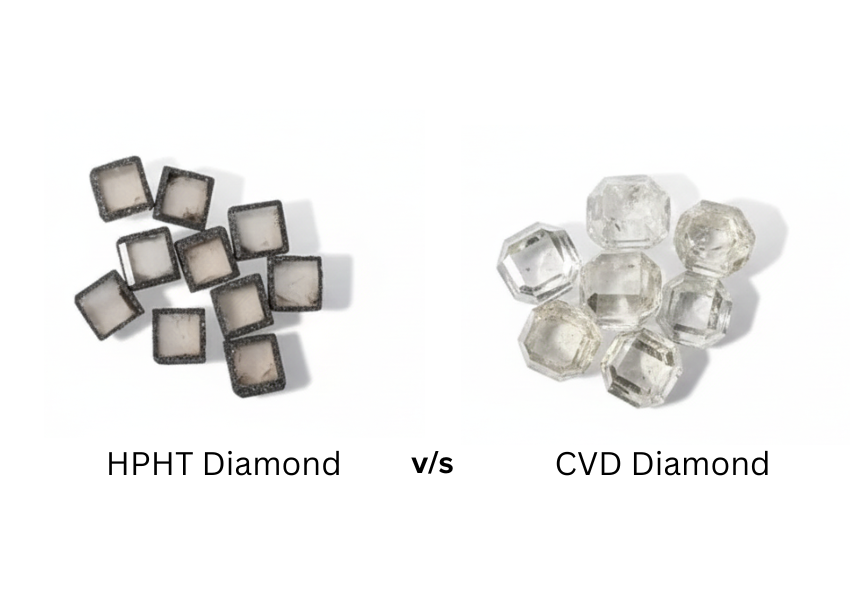
Because growth happens from multiple directions, HPHT diamonds naturally form in a cuboctahedron shape before cutting. The equipment is expensive and energy-intensive, which can make HPHT diamonds slightly more costly to produce.
How CVD Diamonds Are Made?
CVD stands for Chemical Vapor Deposition, a newer method developed in the 1980s. Instead of extreme pressure, it uses a controlled chemical process.
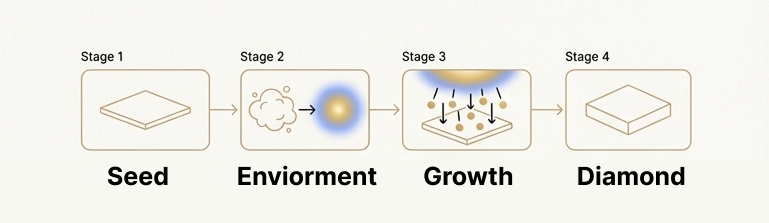
In a CVD setup, a thin slice of diamond, known as a diamond seed, is placed inside a vacuum chamber. This chamber is filled with a carbon-rich gas, usually methane. The gas is then heated to around 1500 degrees Fahrenheit, which turns it into plasma.
A thin diamond seed sits in a vacuum chamber filled with carbon-rich gas, usually methane. When heated to around 800°C, the gas breaks into plasma. Carbon atoms settle onto the seed layer by layer, like snow accumulating on a windowsill. This takes six to twelve weeks.
Many jewelers prefer CVD because the equipment is smaller and easier to scale. It is generally considered a more budget-friendly option for consumers. Especially those researching whether lab-grown diamonds are actually worth it compared with mined stones.
CVD vs. HPHT Lab Diamonds: Where You'll Actually See Differences
Once polished, you cannot tell CVD from HPHT by looking. Even trained gemologists need specialized equipment. But there are subtle quality patterns worth knowing about.
1. Color Tendencies
HPHT diamonds typically have excellent color control. Modern processes produce stones in the colorless range (D-F) consistently. Occasionally, trace boron creates a faint blue tint visible only from certain angles. This "blue nuance" is subtle and not always considered a defect.
CVD diamonds can develop a slight brown or gray tint if grown too quickly. Manufacturers manage this by adjusting growth conditions, but it's something to watch for. Around 80% of CVD diamonds receive a brief HPHT treatment after growth to eliminate these tones.
2. Clarity Characteristics
HPHT inclusions often include tiny metallic particles from the growth medium. These can contain iron or nickel, which means some HPHT diamonds show a slight magnetic response. This doesn't affect appearance but can help gemologists identify the growth method.
CVD inclusions are typically non-metallic, often small graphite pinpoints. Under magnification, you might see what graders describe as "black cotton" clouds or zigzag feather patterns from the layered growth.
3. Post-Growth Treatment
This is where things get confusing. Most CVD diamonds undergo a short HPHT heat treatment (15-30 minutes) after they're grown. This improves color and crystal structure but can occasionally introduce slight haziness under magnification.
Some buyers prefer "as-grown" CVD diamonds that skip this treatment, while others are fine with treated stones that offer better color at the same grade. Natural diamonds are also routinely HPHT-treated to improve color, so this isn't unique to lab-grown.
How does the Growth Method Affect Quality?
Once a diamond is cut and polished, you cannot tell whether it was made using CVD or HPHT just by looking at it. To the naked eye, they look the same. Only laboratory testing can identify how the diamond was grown. Still, each method has a few quality traits that are useful to know.
HPHT diamonds usually have good color control. In the past, some appeared slightly yellow, but modern techniques have largely solved that issue. In some cases, a faint blue tint can appear if boron is present during growth. This is called blue nuance and is usually only noticeable from certain angles.
CVD diamonds are known for their high purity. Because they grow layer by layer, they can sometimes develop a light brown tint if the growth process is rushed. Manufacturers adjust the gas environment to manage this, but fast growth can still affect color.
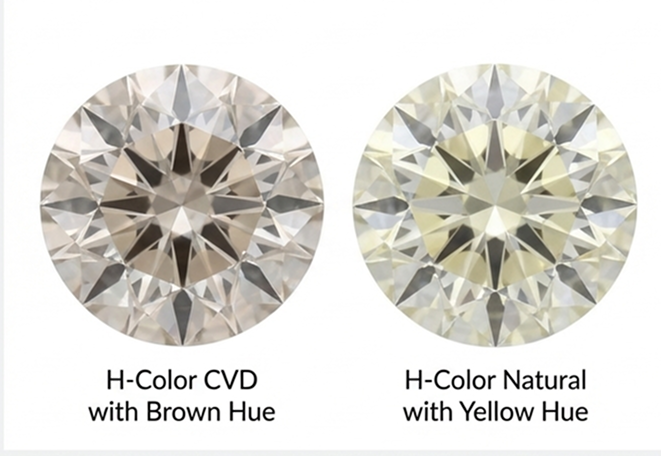
CVD diamonds can also have internal strain from the layered growth process. Under strong magnification, this may appear as slight haziness, even if the diamond has a high clarity grade.
What to Look For When Assessing Lab Diamond Clarity?
When assessing lab diamond clarity, first understand that all diamonds, whether natural or lab grown, can contain small internal features called inclusions. What you look for depends on how the diamond was grown.
In HPHT diamonds, clarity characteristics often include metallic inclusions. These come from the molten metal used during the growth process and can become trapped inside the crystal. Because they may contain iron or nickel, some HPHT diamonds can show a slight magnetic response.
CVD diamonds usually do not contain metal. Instead, you may see tiny dark pinpoint inclusions made of graphite. Under magnification, graders may also notice features described as black cotton-like clouds or zigzag feather patterns created during layered growth.
When you have selected a high-quality lab-grown stone, the setting you choose makes a huge difference in how it looks on the hand. A solitaire setting is often considered the perfect choice for showcasing these diamonds.
A solitaire design features a single center stone with no side diamonds or complex halos to distract the eye. This allows the maximum amount of light to enter the diamond from all angles, which is the best way to highlight the exceptional clarity and color that lab-grown stones can achieve.
Whether you choose an oval, emerald, or round cut, the solitaire setting keeps the focus entirely on the sparkle of the gem. It is a timeless, elegant look that never goes out of style and fits the modern, ethical appeal of lab-grown diamonds.
Quick Recap!
Both CVD and HPHT produce real diamonds that will last forever and look identical to the naked eye. The technical differences exist, but they shouldn't dominate your decision.
You can choose based on the actual stone in front of you: its color, clarity, cut, and how it looks in the lighting where you'll wear it. The label "CVD" or "HPHT" on the certificate is just one data point, not a quality standard on its own.
Working with a knowledgeable source helps bring all of these factors together. Solitaire Lab Diamond focuses on presenting certified lab-grown diamonds with detailed grading information and clear visuals, allowing each stone to be evaluated on its own merits.
No matter how a diamond is grown, it remains a real diamond that will last a lifetime. The growth method is just the starting point, not the final standard of quality.