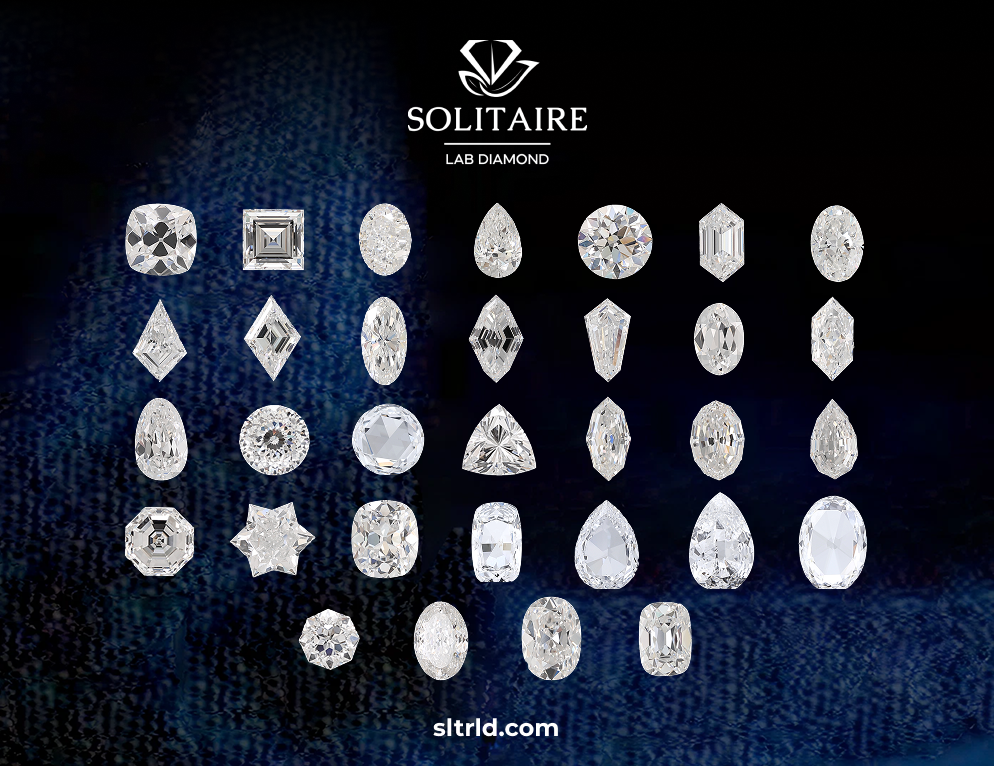
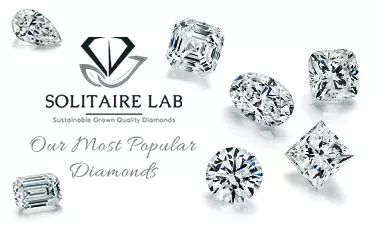
If there is one diamond shape that defines the entire industry, it is the round brilliant cut. Its 58 precisely arranged facets are an engineering solution, calculated to return the maximum amount of light through the table, producing unmatched fire, brilliance, and scintillation.
First mathematically optimized by Marcel Tolkowsky in 1919, the round brilliant became the global standard for diamond cutting. It remains the most popular diamond shape across both natural and lab-grown categories, and it is the only shape to which GIA assigns an official cut grade.
This guide covers the anatomy of the round brilliant diamond, its light performance, and the key benchmarks professionals use to evaluate stone quality.
What is the anatomy of a Round Brilliant diamond?
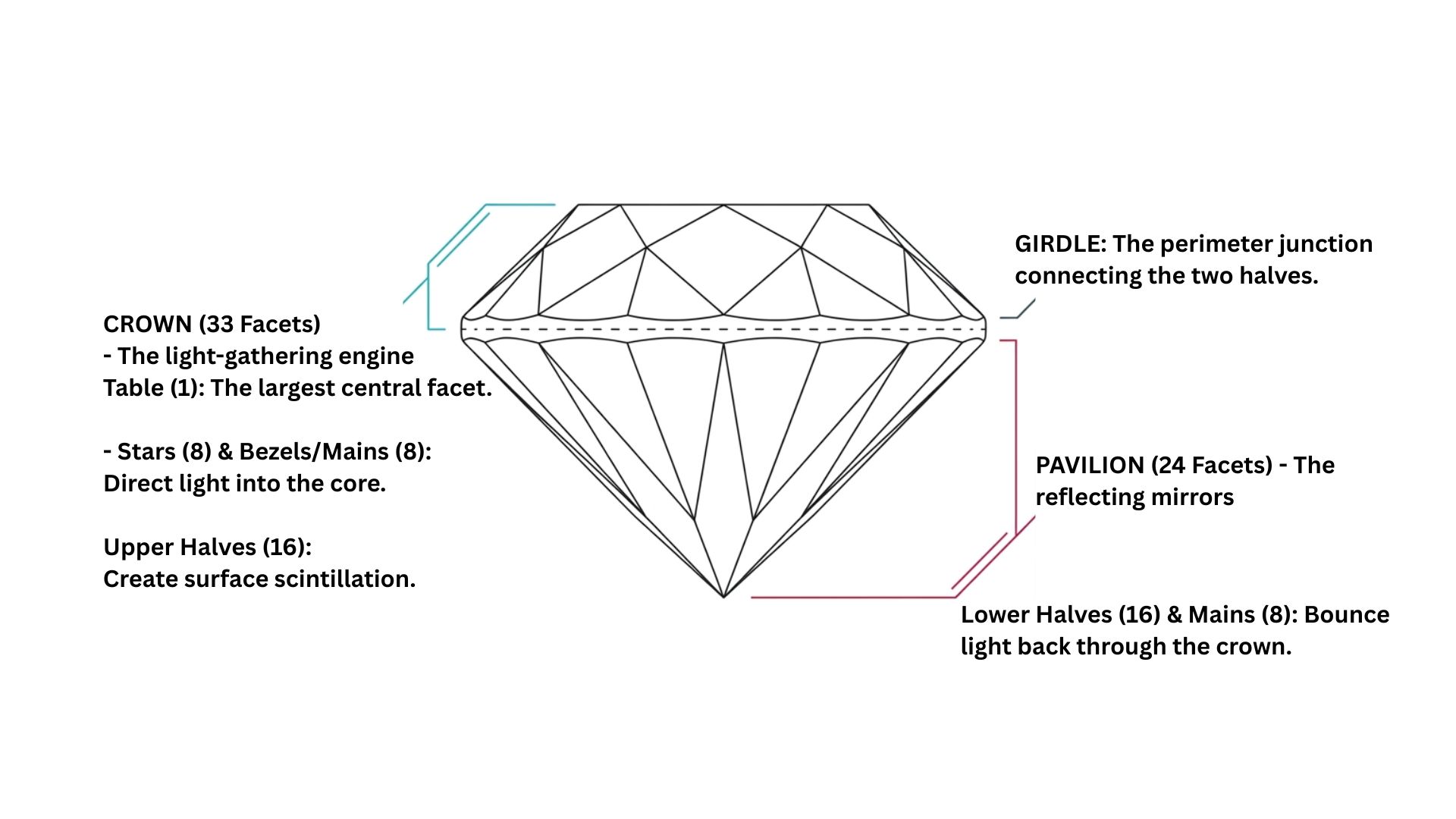
The round brilliant is built on geometry. A standard stone has 57 or 58 facets, arranged in three zones. The crown captures incoming light. The pavilion reflects it upward. The girdle defines the diameter and protects the edge from chipping.
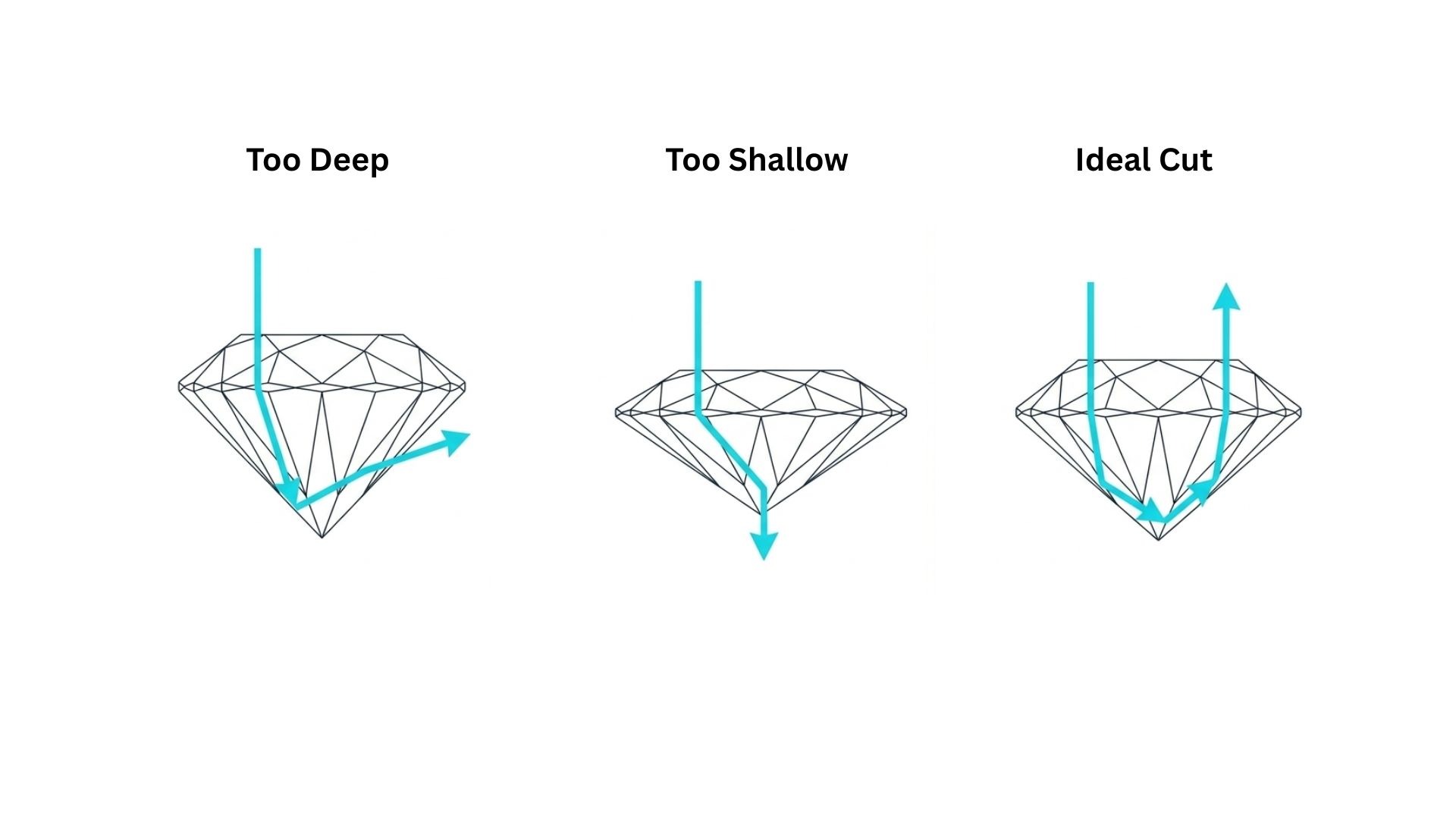
Proportion is what separates a well-cut round brilliant from an average diamond. Table size, crown angle, and pavilion depth all interact to control how light travels through the stone. A pavilion that is too deep or too shallow can trap or leak light. In both cases, the diamond’s brilliance is understated.
The round outline is easy to shape, but the facet pattern beneath is what drives performance. Two stones can look identical face-up yet perform completely differently under light, which is exactly what grading reports and expert buyers are trained to identify.
What is the ideal cut grade for a Round Brilliant diamond?
Cut is the only one of the 4Cs fully controlled by human craftsmanship. Color and clarity are natural. Cut is a decision, and a poor one cannot be easily reversed.
GIA grades round brilliants on a five‑tier scale:
- Excellent
- Very Good
- Good
- Fair
- Poor
An Excellent grade means the diamond meets strict benchmarks for brightness, fire, scintillation, and pattern symmetry. Each step down indicates progressively less efficient light return.
However, not all Excellent‑graded stones perform the same. Within the Excellent tier, proportions, angles, and facet layout can vary, so two “Excellent” diamonds may look different in live lighting.
For peak optical performance, many designers use a “sweet spot” of proportions. The pavilion angle carries the most weight. Too steep and you get dark areas in the center. Too shallow and light leaks straight through the bottom. The crown angle and table size also affect how a diamond balances brightness and colorful fire.
Minor facets play a role, too. Lower girdle and star facets sized within common design ranges can enhance scintillation, while a thin‑to‑medium girdle helps protect the edge without hiding extra weight.
Carat weight does not equal visual size. A well‑cut 1.00 ct excellent diamond can look larger and more lively face‑up than a 1.20 ct fair‑cut diamond, because light return drives perceived size and sparkle, not the number on the report.
Diamond Certification: GIA and Other Standards
A grading report records measurable characteristics under controlled conditions. It is not a guarantee of beauty. It is a baseline for comparison.
GIA is the most widely accepted grading authority in the industry. Its reports cover cut, color, clarity, and carat weight, assessed independently using standardized equipment. Because GIA operates as a non-profit with no stake in diamond sales, its reports carry credibility that retailer certifications cannot match.
A GIA Triple Excellent is a reliable starting point, not a final verdict. Two GIA XXX stones can still differ in light performance depending on their exact proportions.
For lab-grown diamonds, IGI has become the practical standard alongside GIA. Any other certification from a less established lab warrants additional scrutiny before you commit to pricing or plan for resale.
Comparing Round Brilliant Cut to Other Shapes
Choosing the right diamond shape affects not only appearance, but also sparkle, durability, and overall value. Here’s a practical comparison of the most popular diamond cuts to help guide your decision.
|
Diamond Shape |
Faceting & Structure |
Light Performance |
Key Advantages |
|
Round Brilliant |
57 or 58 facets with mathematically optimized geometry |
Maximum light return, strongest fire, brilliance, and scintillation |
Industry standard, highest resale value, most balanced performance |
|
Radiant |
70 facets with hybrid emerald and brilliant faceting |
Strong fire with splintered sparkle pattern |
Better at hiding inclusions, more affordable than round cuts |
|
Oval |
Elongated brilliant faceting |
High brilliance with possible bow-tie shadow |
Larger visual size per carat, elongates the finger |
|
Princess |
Square or rectangular angular design |
Bright sparkle with strong corner light return |
Modern, geometric appearance |
|
Cushion |
Rounded corners with pillow-like silhouette |
Broad flashes of light with softer sparkle |
Vintage-inspired, romantic appearance |
|
Emerald |
Step-cut facets with rectangular structure |
Hall-of-mirrors effect emphasizing clarity |
Elegant, sophisticated, highlights transparency |
Each diamond shape offers a unique balance of beauty, performance, and practicality, so the best choice depends on your priorities, whether that’s brilliance, size appearance, durability, or style.
Choosing the Right Setting for Your Round Brilliant Cut Diamond
The setting does not just hold the diamond. It controls how much light reaches the stone and how the finished piece reads in the hand.
- Solitaire: The purest choice that keeps focus entirely on the diamond. Four-prong versions allow more light in, while six-prong offers better security with a slight trade-off in light exposure.
- Halo: Surrounds the center stone with smaller diamonds, increasing perceived size without increasing the center stone carat. It is best for buyers who want visual impact at a controlled price point.
- Pavé: Lines the band with small diamonds, adding brilliance along the shank without competing with the center stone. Pairs well with rounds because the overall sparkle reads cohesive rather than busy.
For any setting, open designs that allow light under the pavilion will always outperform closed or bezel-heavy alternatives in terms of light performance.
Tips for Buying a Round Brilliant Cut Diamond
When buying a round brilliant cut diamond, it's essential to make informed decisions based on quality and trust.
- Buy from certified sources only. Whether through a physical jeweler or an online platform, verify that they provide GIA or IGI grading reports. No report means no baseline for comparison or resale.
- Prioritize cut over carat. A smaller, well-cut stone outperforms a larger, poorly proportioned one every time. Budget accordingly.
- Check the proportions yourself. Do not rely on the grade alone. Look for a table between 54 and 58 percent, a crown angle of 34 to 35 degrees, and a pavilion angle near 40.75 to 41 degrees. Those numbers are printed right on the report.
- Request performance imagery. Ask for Ideal Scope or ASET images before committing. Any reputable seller should send them without hesitation.
- Inspect in multiple lighting conditions. Sunlight, indoor lighting, and low light all reveal different things. A stone that only performs under spotlights is not a well-cut stone.
- Understand the return policy before buying. Confirm warranty terms, return windows, and customization policies in writing. For a high-value purchase, this is non-negotiable.
If you are also evaluating CVD vs HPHT lab-grown options, review that guide before finalizing your sourcing decision.
FAQs
What does RBC stand for in diamonds?
RBC stands for Round Brilliant Cut. It is the most popular, most studied, and most standardized diamond shape in the global market. The defining traits are a circular outline and a mathematically optimized 57 or 58-facet structure engineered to maximize light return, brilliance, and fire.
How does fluorescence affect a Round Brilliant diamond?
Fluorescence is a diamond's reaction to UV light, graded on the GIA report from None to Very Strong. Faint or Medium fluorescence usually has little visible effect on appearance. Strong or Very Strong fluorescence can occasionally make a stone look slightly milky or hazy under certain lighting, but many strongly fluorescent diamonds remain bright and clear in everyday wear. Always inspect the specific stone before deciding.
How big does a 0.5ct, 1ct, 1.5ct, or 2ct Round Brilliant diamond appear on a finger?
A 0.50 ct round brilliant usually looks about 5 mm wide on the hand, a 1.00 ct round brilliant diamond around 6.5 mm wide, a 1.50 ct round brilliant diamond near 7.4 mm wide, and a 2.00 ct round brilliant diamond roughly 8.1 – 8.2 mm wide. Face up size can vary slightly depending on the cut and proportions.
What should I look for when buying a Round Brilliant diamond?
Prioritize cut quality when buying a round brilliant diamond. Confirm a GIA or reputable lab report with a very good or better grade. Balance color, clarity, and carat, and compare stones for best performance.
Where can I find GIA-certified Round Brilliant diamonds?
You can find GIA-certified round brilliant diamonds at Solitaire Lab Diamond. You can also verify the diamond’s authenticity by entering its unique report number into the official GIA website database before finalizing a purchase.
Why the Round Brilliant Cut is Timeless
The round brilliant cut has held its position at the top of the diamond market for over a century, not because of tradition alone. The engineering holds up. No other shape matches it consistently across brilliance, fire, scintillation, and resale value.
Whether natural or lab-grown, a well-proportioned round brilliant remains the most reliable choice across engagement rings, solitaires, and fine jewelry.
For trade buyers and professionals, the fundamentals are straightforward. Prioritize cut grade, verify proportions, request performance imagery, and let the grading report do its job. The shape does the rest.
If you are ready to source, explore the Solitaire Lab Diamond's full collection of certified round brilliant lab-grown diamonds. Compare cut grades side by side and find stones that actually meet the benchmarks covered in this guide.