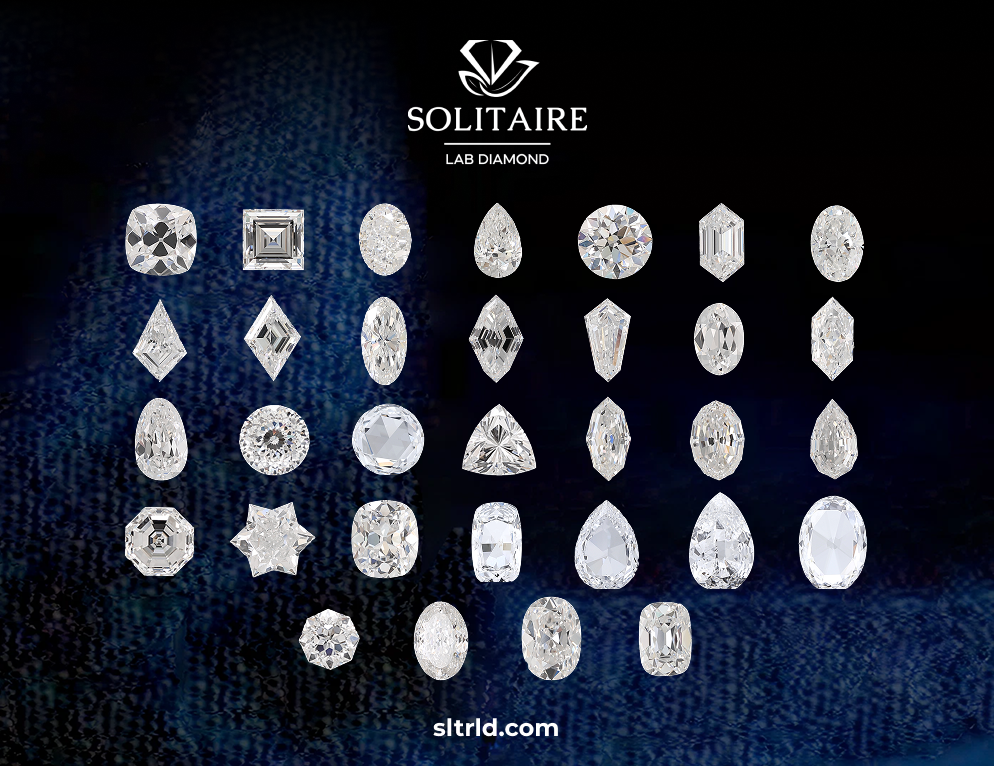
If you have ever had a client ask for something triangular and were unsure whether they meant a trillion, a trilliant, or just any three-sided stone, you are not alone. The trillion cut diamond has a naming history that still confuses experienced buyers and suppliers. It also has two structurally different versions that are not interchangeable in matched pairs, and many retailers are still figuring out the best use for each.
If you are still mapping out where trillion cuts sit relative to other diamond shapes, the diamond shapes chart is a useful starting point before going further.
This guide is for jewelers, designers, and trade buyers deciding whether to stock trillion cuts, which version to carry, and how to source them without creating problems later.
What is a trillion cut diamond?
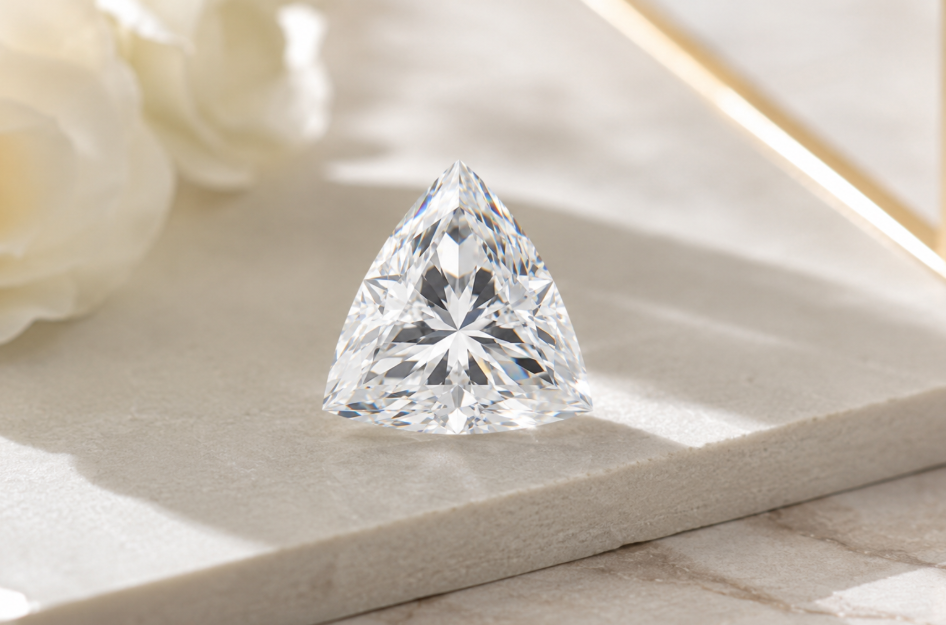
A trillion cut diamond is a triangular stone with three equal sides, a flat table, and a shallow depth designed to maximize face-up presence. It comes in two structurally different variations depending on the application.
Trillion-cut diamonds are available in several facet arrangements. Stones with fuller, slightly curved outlines and more complex faceting are often selected as center stones, while straight-sided versions are commonly used as matched accents. However, facet count alone does not determine performance, so buyers should also evaluate proportions, symmetry, light return, and visual matching.
The terms “trillion” and “trilliant” have a complicated trade history and are now commonly used for triangular brilliant-style diamonds. Because suppliers may use the terms differently, you should confirm the stone’s outline, facet arrangement, measurements, and intended application before ordering.
Once you understand what makes a trillion cut unique, the next step is knowing which specifications matter most when evaluating or sourcing one.
Key specifications of trillion cut diamonds
Getting the specification right before you source saves time, returns, and difficult client conversations. These four areas are where trillion cut sourcing goes right or wrong.
1. Center stone vs. accent stone
This is the most common sourcing error with trillion cuts, as many retailers stock the wrong version for the application.
|
Feature |
Center Stone |
Accent Stone |
|
Purpose |
Main focal diamond |
Side or supporting diamond |
|
Typical shape |
Often slightly curved or fuller outline |
Often straighter outline for matching |
|
Facet arrangement |
Optimized for brilliance |
Optimized for consistency |
|
Selection priority |
Light performance and visual appeal |
Matching outline, symmetry, and size |
|
Common use |
Solitaires, pendants, statement rings |
Three-stone rings, halos, side stones |
|
Buying focus |
Individual beauty |
Well-matched pairs |
Choose the stone based on its intended application. Center stones should maximize brilliance and visual impact. Whereas accent stones should be selected as closely matched pairs with consistent outline, symmetry, measurements, and facet arrangement.
2. Proportions and symmetry
Commercial guides often use approximately 32–48% depth and 50–70% table as initial screening ranges. These figures are not universal cut standards. Final evaluation should include the diamond’s outline, girdle, symmetry, facet pattern, and actual light performance.
Symmetry is the variable that separates a sellable trillion cut from one that creates problems. All three sides must be equal in length, all three points must meet cleanly, and the facet layout must be even. An asymmetrical trillion looks noticeably uneven when viewed face-up.
3. Corner vulnerability and liability
The three-pointed corners are structurally the weakest part of this shape. The sharp corners are the most common damage point, and they are difficult to repair without recutting the stone.
Inadequate corner protection can increase the risk of damage and returns. V-prong and bezel settings are generally recommended because they provide the best protection for the stone's vulnerable corners. This is a retail liability consideration, not just a setting preference.
4. Grading reports
GIA does not assign a cut grade to trillion cut diamonds. Symmetry and polish are the primary grading proxies, the same framework used for other fancy shapes including modified brilliant cut stones.
For lab-grown trillion cut inventory, target very good or excellent in both symmetry and polish. For accent stone pairs, symmetry consistency is just as important as individual grades. Even a slight mismatch becomes noticeable once the piece is finished.
Evaluating the 4Cs in trillion cut diamonds
The 4Cs apply here, but there are a few specifics that change how you source and price this shape.
1. Cut
No GIA cut grade exists for this trillion cut diamond shape. Use symmetry and polish as your evaluation framework, paying attention to how kite-shaped facets are distributed across the stone. Video or in-person inspection is strongly recommended, especially when sourcing remotely.
2. Color
Trillion-cut diamonds show color more readily than round brilliant cut diamonds. The broad, shallow profile does not scatter light the same way, so color reads more visibly face-up than most buyers expect.
- Center stones: Many retailers prefer G color or higher for center stones, as anything below reads noticeably off-white face-up.
- Accent stones: H to I is workable in yellow or rose gold, where slight warmth reads as intentional.
- Matched pairs: Both stones must fall within one color grade of each other; a visible mismatch between two side stones is difficult to explain after the piece is finished.
3. Clarity
The broad table on a trillion cut makes inclusions more visible than they would be in a deeper stone. The certificate clarity grade alone is not enough here; eye-clean evaluation on every stone is very important.
For center stones, many buyers begin around G color or better, although lower grades may work depending on the metal and the desired appearance. For clarity, VS2 or eye-clean SI1 can offer good value, but each stone should be inspected because inclusions near the points may create durability concerns.
4. Carat weight
Trillion-cut diamonds are typically shallow, they often appear larger face-up than round diamonds of the same carat weight. The bold face-up presence makes it a strong margin and retail value story worth communicating to your clients. Price per carat runs below round brilliants, giving you room on margin without sacrificing the sharp brilliance and visual impact.
Accent stone pricing is typically calculated as a matched pair. You can factor this into your per-unit cost from the start.
Choosing the right diamond is only part of the process. The setting also plays an important role in protecting the stone and showcasing its shape.
What are the best settings for trillion cut diamonds?
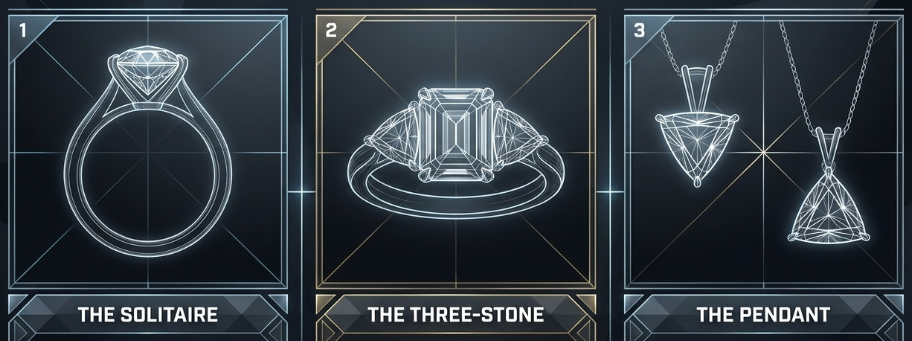
The best setting depends on how the diamond will be worn and how much protection the pointed corners need. Here are the most common choices.
1. Three-prong solitaire
One prong per corner is the most common center stone configuration. Corner prongs must be V-shaped, and standard round prongs do not adequately protect the points and create a return risk over time.
2. Three-stone designs as accent stones
Trillion cut side stones flanking a round, oval, or emerald center stone add visual length along the finger, making it one of the most commercially consistent uses of this shape. Matched pairs need symmetry consistency and color matching within one grade. Setting depth for accent trillions needs to account for the main stone's profile, as misalignment here is one of the most common fitting issues.
3. Pendants and fashion jewelry
Trillion cut works well in pendants where the triangular outline reads clearly on its own. A point-down orientation creates a classic drop look with strong sparkle; point-up reads more geometric and modern. For retailers testing the shape across different style categories, pendants are a lower-risk starting point.
Once you've evaluated quality and setting options, the final decision is choosing between natural and lab-grown stones.
Trillion cut lab-grown vs. natural diamonds
While both natural and lab-grown trillion cuts share the same basic appearance, they differ in availability, pricing, and sourcing. The table below highlights the key differences that matter most for retailers and designers.
|
Factor |
Natural trillion diamonds |
Lab-grown trillion diamonds |
|
Availability |
May be less consistent in specialty sizes |
Often available in a wider and more repeatable size range |
|
Grading reports |
Available from major laboratories |
Available from major laboratories, though report terminology may differ |
|
Matched pairs |
May require more sourcing time |
Often easier to source in closely matched specifications |
|
Cutting consistency |
Depends on the cutter and supplier |
Depends on the cutter and supplier |
|
Pricing |
Influenced by rarity and market conditions |
Generally lower, but subject to supplier and market changes |
Natural trillion cuts exist, but consistent supply, especially for matched accent pairs, is the persistent problem. Lab-grown trillion cuts significantly reduce this sourcing challenge. Modern cutting technology replicates the facet pattern with precision.
IGI issues grading reports using traditional color and clarity grades. And GIA now uses a laboratory-grown diamond quality assessment that classifies eligible lab-grown diamonds as either "Premium" or "Standard".
Report formats and grading terminology vary by laboratory. You should review the specific grading report rather than assuming all laboratories use identical standards.
Final thoughts
The trillion cut started this guide with a naming problem and two structurally different versions. That is still the most important thing to get right before anything else. Know which version your clients need, source the right cut for the application, protect the corners in every setting, and match your accent pairs properly.
The trillion cut offers strong commercial potential for retailers. It faces up larger than its carat weight, has prices below round brilliants, and it works well as both a center stone and accent stone.
Lab-grown trillion cuts can make matched pairs and repeat inventory easier to source, depending on supplier inventory and quality control. You get the visual impact of a natural trillion with predictable grades, predictable cost, and no sourcing scramble.
If you are ready to build out your trillion-cut inventory, browse Solitaire Lab Diamond's certified lab-grown trillion cut selection.
Frequently asked questions
How do I source matched pairs for trillion cut accent stones?
To source matched pairs, prioritize matching outline, facet arrangement, symmetry, color, and measurements so both stones appear visually identical once set. Lab-grown trillion cuts make this significantly easier than natural sourcing.
Does GIA assign a cut grade to trillion cut diamonds?
No. GIA does not assign an overall cut grade to trillion cut diamonds or other fancy shapes. You should evaluate factors such as symmetry, polish, proportions, and overall light performance when assessing quality.
Do lab-grown trillion-cut diamonds receive grading reports from GIA or IGI?
Yes. Both natural and lab-grown trillion-cut diamonds may receive grading reports or quality assessments from laboratories such as GIA and IGI. The report format and grading terminology vary by laboratory.
Resources: